



The Economic Cost of an Inconclusive Election
Written By: Daphna Aviram-Nitzan, Roe Kenneth Portal
A constrained budget, reduced civilian spending and investment in drivers of growth, widening social disparities, and a decline in investment: An inconclusive election that leaves a caretaker government in office and prevents the passage of a state budget is likely to have far-reaching economic consequences.

A Unity Government: A Remedy for Political Deadlock?
Written By: Yohanan Plesner , Prof. Ofer Kenig, Dr. Dana Blander
The results of Israel's 2026 elections have brought the possibility of forming a unity government back into public debate. However, cooperation between the main political rivals is neither a simple solution nor one without democratic and electoral costs.

The President’s Role in Assigning the Task of Forming a Government
Written By: Prof. Ofer Kenig, Dr. Dana Blander
The results of Israel’s 2026 elections have left unresolved the question of who will be able to form a government that can secure the confidence of the Knesset. Against this backdrop, the president’s role in deciding which candidate to task with forming a government has taken on greater significance, with far-reaching public and political implications.

The Rise in Voter Turnout in Arab Society in the Elections for the 26th Knesset
Written By: Dr. Arik Rudnitzky
The elections for the 26th Knesset were marked by extraordinary electoral mobilization among Israel’s Arab minority, reflected in a sharp rise in voter turnout. What explains this increase?

Israelis should envy the U.S. midterm elections
Written By: Dr. Assaf Shapira
Two years after electing their president, Americans have an opportunity to change the balance of power in Washington. Israel's electoral system, on the other hand, limits the ability of Israelis to exercise their democratic rights to their full potential.

What Can the New Knesset Do in the Meantime?
Written By: Dr. Assaf Shapira
The 26th Knesset has been elected and will be sworn in on November 10, but a new government has yet to be formed, and it remains unclear whether one will be formed at all or whether Israel will head to another election. What can the Knesset do in the meantime? Can a new Knesset speaker be elected, and how? Which parliamentary committees can be established, and can the Knesset pass legislation and exercise oversight of the government during this period? And what changes if new elections are called?

Final Results for Israel's 2026 Elections
Written By: Prof. Ofer Kenig
On October 27, Israeli citizens voted to elect the 26th Knesset. With all votes counted and the final results in, this preliminary analysis examines the distribution of seats among the parties, how many women and new members will serve in the new parliament, and how voter turnout in Israel compares internationally.

IDI President Yohanan Plesner on CNN’s Newsroom: Israel’s Preliminary Polls and Possible Scenarios
Written By: Yohanan Plesner
IDI President Yohanan Plesner joins CNN’s Newsroom to discuss the latest preliminary results from Israel’s 2026 election and the options available to both blocs for forming a government, as neither appears to have a clear path to a majority.

IDI’s Dr. Arik Rudnitzky on Kan English Radio: Record Arab Voter Turnout in Israel’s 2026 Election
Written By: Dr. Arik Rudnitzky

Alleged Funding of Foreign Influence in the Election: What Could This Mean for the Election Results?
Written By: Dr. Guy Lurie, Dr. Assaf Shapira
Following the directive issued by the chair of the Central Elections Committee to investigate suspicions of funding and influence by foreign actors, we explain the legal procedures that apply in such cases.

Special Post-Election Briefing with 92NY, IDI, and TOI: Understanding Israel’s Election Results
Written By: Yohanan Plesner , Prof. Tamar Hermann
Israelis have cast their ballots for the 26th Knesset, but the results remain inconclusive. In this special online briefing, experts discussed the scenarios on the table, possible paths to forming the next government, and whether Israel could be heading toward another election.
The briefing brought together IDI President Yohanan Plesner, Prof. Tamar Hermann, Director of IDI’s Viterbi Family Center for Public Opinion and Policy Research, and David Horovitz, Founding Editor of The Times of Israel, for an in-depth conversation presented by 92NY, IDI, and The Times of Israel.
The conversation was moderated by Amanda Borschel-Dan, Deputy Editor of The Times of Israel.

Minority Governments: A Possible Way Out of Political Deadlock?
Written By: Yohanan Plesner , Prof. Ofer Kenig, Dr. Assaf Shapira
Does political deadlock mean a new election? Not necessarily. Israeli law actually allows the formation of a minority government. Although rare in Israel, this type of government exists in parliamentary democracies and could help Israel avoid repeat elections – the question is whether it would be able to govern effectively.

IDI’s Prof. Tamar Hermann joins CNN on the morning of Israel’s 2026 national elections.
Written By: Prof. Tamar Hermann
Today, October 27, 2026, Israelis headed to the polls to elect Israel’s 26th Knesset.
Speaking to CNN, Prof. Tamar Hermann, Academic Director of IDI’s Viterbi Family Center for Public Opinion and Policy Research, discussed the ideological differences among the parties and shifts in public opinion in the final stretch of the campaign.

IDI President Yohanan Plesner on CNN, breaking down initial results on Israel’s 2026 election night.
Written By: Yohanan Plesner

IDI President Yohanan Plesner on the Bloomberg Brief to discuss Israel's 2026 National Elections
Written By: Yohanan Plesner

Election Day for the 26th Knesset: Everything Voters Need to Know
Written By: Dr. Assaf Shapira
When and where can Israelis vote? What do they need to bring to the polling station? Can they vote at a polling station other than the one to which they are assigned? What should they do if ballot slips are missing or they suspect a threat to election integrity? All the answers ahead of the election for the 26th Knesset.

What If WhatsApp Goes Dark on Election Day?
Written By: Dr. Tehilla Shwartz Altshuler
Much of Israel's election operations and infrastructure is carried out on WhatsApp, which is vulnerable to coordinated efforts to interfere with an opponent's get-out-the-vote efforts and erroneous blocking of accounts identified as spam. Key steps must be taken by Meta, WhatsApp's parent company, to protect electoral integrity on October 27.

Flash Survey: If No Party Can Form a Coalition, Highest Share of Israelis Prefer New Elections Over Alternatives
Written By: Prof. Tamar Hermann, Dr. Lior Yohanani, Yaron Kaplan
Among both Jewish (35%) and Arab (46%) Israelis, a plurality say that they prefer repeat elections over a unity government with a rotation (Jews: 28% / Arabs: 9%) or a minority government (Jews: 23% / Arabs: 25%).

Extremist violence endangers Israel’s future
Written By: Yohanan Plesner , Prof. Amichai Cohen, Dr. Eran Shamir-Borer
The brutal attacks by Jewish extremists are a moral abomination. If they aren’t stopped, all Israelis will also pay the price.

IDI Goes Behind the Scenes of Election Polling with Israel’s Top Pollsters
Written By: Prof. Tamar Hermann, Dr. Lior Yohanani
In every election race, including Israel's 2026 Election, we look to polls to understand which parties are gaining or losing support and how many seats each could win in the Knesset. Yet how can polls conducted at the same time in the same country show different results? At IDI, we convened Israel’s leading pollsters to look behind the scenes of the polls we all consume. The discussion covered how different survey methods affect results, why transparency matters, and how the electoral threshold complicates projections. The discussion also highlighted an important distinction, often overlooked by the public and media: polls do not forecast Election Day results. They measure public opinion at the time they are conducted.

The Israel Police’s Responsibility for the Proper Conduct, Fairness, and Integrity of the 26th Knesset Election
Written By: Deputy Commissioner (ret.) Moti Levi, Adv. Mirit Lavi

What Happens to Invalid Votes?
Written By: Dr. Assaf Shapira
What are invalid votes? Do they affect election results? Is there a difference between a blank ballot and other invalid votes? How many invalid votes have been recorded in each election? And how does Israel compare with other parliamentary democracies?

The October 7 inquiry Israel still needs
Written By: Dr. Dana Blander
Israelis will vote on Election Day, more than three years after the October 7 massacre, as some of the most consequential questions about the attack remain unanswered. The establishment of a state commission of inquiry is a critical for the country.

Jewish Israelis: Next Gov't Should Take on Haredi Conscription; State Commission of Inquiry
Written By: Prof. Tamar Hermann, Dr. Lior Yohanani, Yaron Kaplan
Passing a law requiring ultra-Orthodox men to serve in the IDF and establishing a State Commission of Inquiry into the Oct. 7 attack get highest level of support among Jews; exploring negotiations with Palestinians gets highest level of support among Arab Israelis.

Postponing Knesset Elections: Conditions and Restrictions
Written By: Dr. Guy Lurie, Dr. Assaf Shapira
Holding elections on schedule is one of the fundamental principles of democracy. Yet in certain emergency situations, there may be no choice but to postpone them. Under what circumstances does the law permit elections to be delayed and what safeguards are in place to ensure that such a decision is made solely on substantive grounds?

ChatGPT Was on My Medical Team
Written By: Dr. Tehilla Shwartz Altshuler
My doctors recommended surgery. ChatGPT had a different perspective. As artificial intelligence increasingly joins human experts in decision making spheres, we must be aware of the way in which AI does more than act as a thought partner – it shapes the very environment in which our decisions are made.

Polymarket and Synthetic Simulations: Election Forecasts That Are Not Polls
Written By: Dr. Tehilla Shwartz Altshuler, Dr. Guy Lurie, Dr. Rachel Aridor-Hershkovitz
Polymarket, Synthetic Simulations, and the Need to Expand Transparency Requirements Beyond Election Polls
Election Campaign Financing in Israel
Written By: Dr. Assaf Shapira
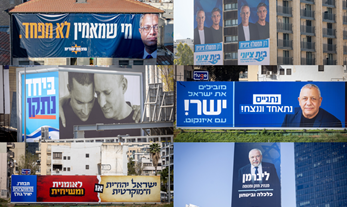
In every Israeli election, parties spend tens of millions of shekels each on their campaigns. Where does the money come from, and when is it paid? How do the rules differ for large and small parties, and for established and new ones? Is there a spending ceiling? And what happens when a party runs a deficit?
Patterns of Fasting and Synagogue Attendance on Yom Kippur
Written By: Dr. Ariel Finkelstein, Ya'ari Padan, Adv. Shlomit Ravitsky Tur-Paz
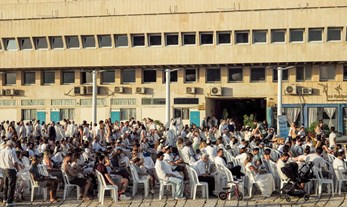
Approximately three-quarters of Jewish Israelis fast on Yom Kippur and a majority of Israelis attend synagogue on Yom Kippur.
Giving Israeli Voters a Stronger Voice
Written By: Dr. Assaf Shapira
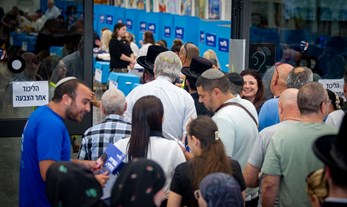
Israelis vote for party lists and only in elections for Knesset and local government. Adding a candidate-based component to Knesset elections and considering reforms that expand the number of elected institutions would improve Israel's democratic system.

