

Storm Byron is a Warning
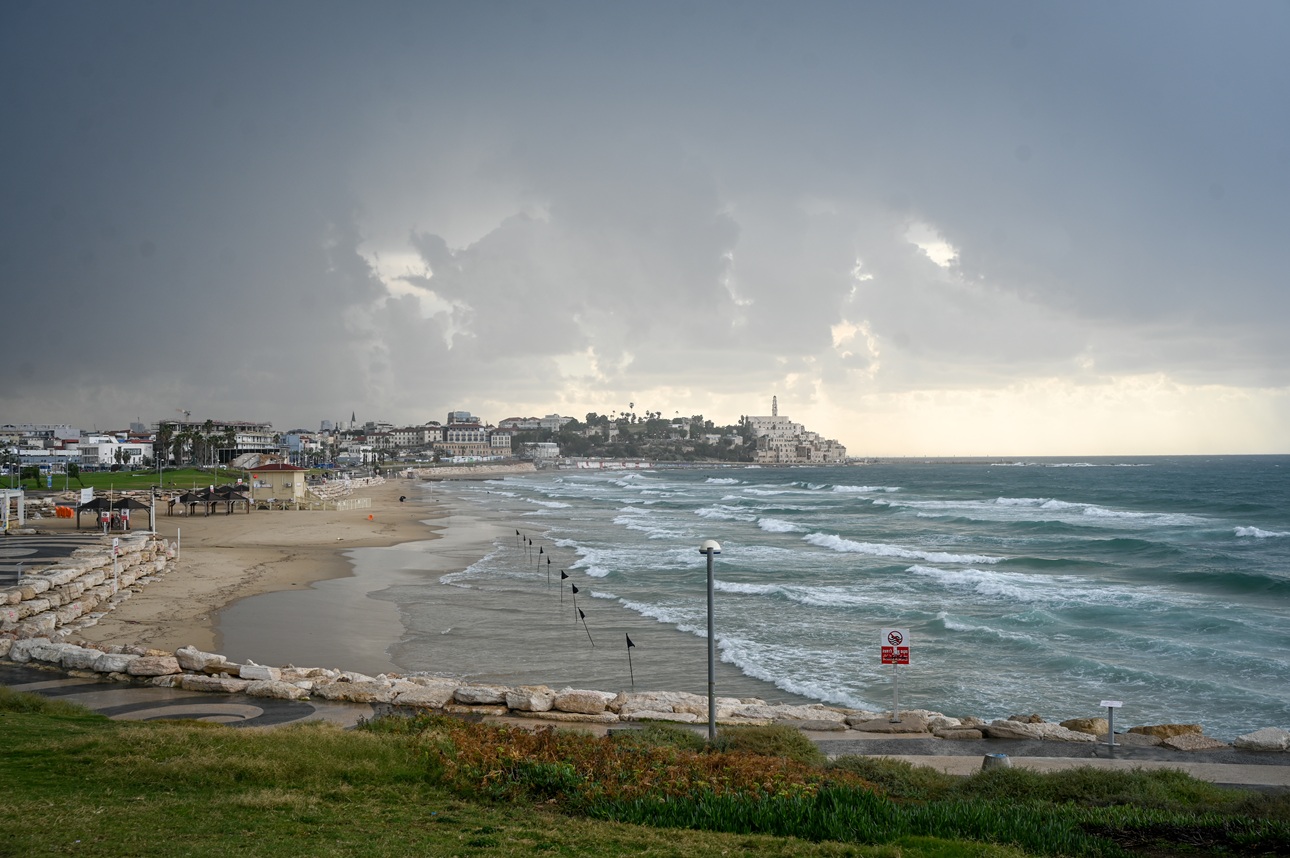
Photo by Avshalom Sassoni/FLASH90
“Byron” sounds like the name of an American friend coming to visit you in Israel. The kind you take for a tour of Masada and the Church of the Holy Sepulcher, and in the evening go bar-hopping together in Tel Aviv. But Byron is not a friend, it is a warning. Five years ago, in a cooperation agreement between Israel, Greece, and Cyprus, a decision was made to assign names to extreme weather events in the Eastern Mediterranean region, in order to provide early warnings and increase public and governmental awareness for advance preparedness. This type of extreme weather is a reminder of why the alliances we have today with our neighbors to the west are so important, and how beneficial stronger and broader alliances to our east can be to our future.
Earlier this week, the UN released a troubling report written by hundreds of researchers and climate scientists from dozens of countries, containing grim predictions regarding the pace of climate change. According to the latest assessments, the rate of global warming is faster than previously estimated, and the planet’s climate is about to enter unfamiliar territory that is difficult to predict and hard to model. One manifestation of this is a rise in the frequency and intensity of weather events that fall outside the norm and put existing infrastructures to the test. For us in the Middle East, the meaning is more extreme summer and winter seasons. In the summer, prolonged, unbearable heat waves; in the winter, extreme rainfall events alongside long weeks without precipitation.
As these words are being written, many Israelis posting on social media, calling out the supposed “fear-mongering industry” by those issuing warnings – and, indeed, it can feel as if someone promised a Category 5 hurricane that wipes Tel Aviv out to sea. It is too early to say what the immediate damages of Storm Byron will be, since the event is still unfolding, and we hope it passes safely. But Byron is just one link in a chain of extreme events already taking place in our region, simply without the publicity the current event is receiving.
Ask farmers what their planting season looks like, and how many crops have already withered because of the extended summer and lack of rainfall. Ask water-sector professionals about the depletion of drinking water sources such as the Kinneret, groundwater reservoirs, the drying streams. (And no, the rainfall Byron brings will not help; it may even cause damage. Drainage basins and agricultural lands do not respond well to huge quantities of rain dumped all at once.)
It is evident that in the case of Byron, at least in terms of alerts and advance warnings, the relevant national and local authorities have done the work and are well prepared. But warnings and preparations for individual events are not a substitute for a series of preventive actions and long-term measures designed to prepare for the dramatic climate change in our region, and all that comes with it. The Israeli public shares this sentiment - in a public opinion survey we conducted at the Israel Democracy Institute about two months ago, a majority of the Israeli public (68%) called on the government to prepare for the effects of global warming. And indeed, just as regional cooperation took place to name and prepare for the storm, the government can be cooperating with regional partners to plan and mitigate the impact of climate change.
In the absence of sufficient action by the government, local authorities that are particularly vulnerable (for example, coastal plain cities exposed to flooding) must conduct mapping and assessment of climate risks within their jurisdictions, cooperate with neighboring authorities, consult with professionals and experts, and obtain the government resources needed for long-term preparedness and prevention of harm to life and property. These include fixing existing faults such as opening drainage routes and mitigating urban heat islands, alongside future-oriented planning, including updating national master plans to incorporate responses to flooding, and designing urban infrastructures that are adapted to the expected changes.
The climate crisis sometimes leaves us feeling that no matter what we do, it is stronger and more powerful than we are. But it is a mistake to think this way. Such an attitude will only worsen our situation in the long run. International experience shows that a broad toolkit is available to decision-makers for reducing its negative impacts and preventing climate catastrophes.
And perhaps Byron really is a friend—the kind who notices that something isn’t quite right with you, places a hand on your shoulder, and says softly: maybe we should deal with this before things get worse?
This article was published in The Times of Israel