

Who Travels to Uman for Rosh Hashanah?
A summary of research that looks at the scale and demographic profile of Jewish Israeli visitors to the Tomb of Rabbi Nachman of Breslov in Uman.
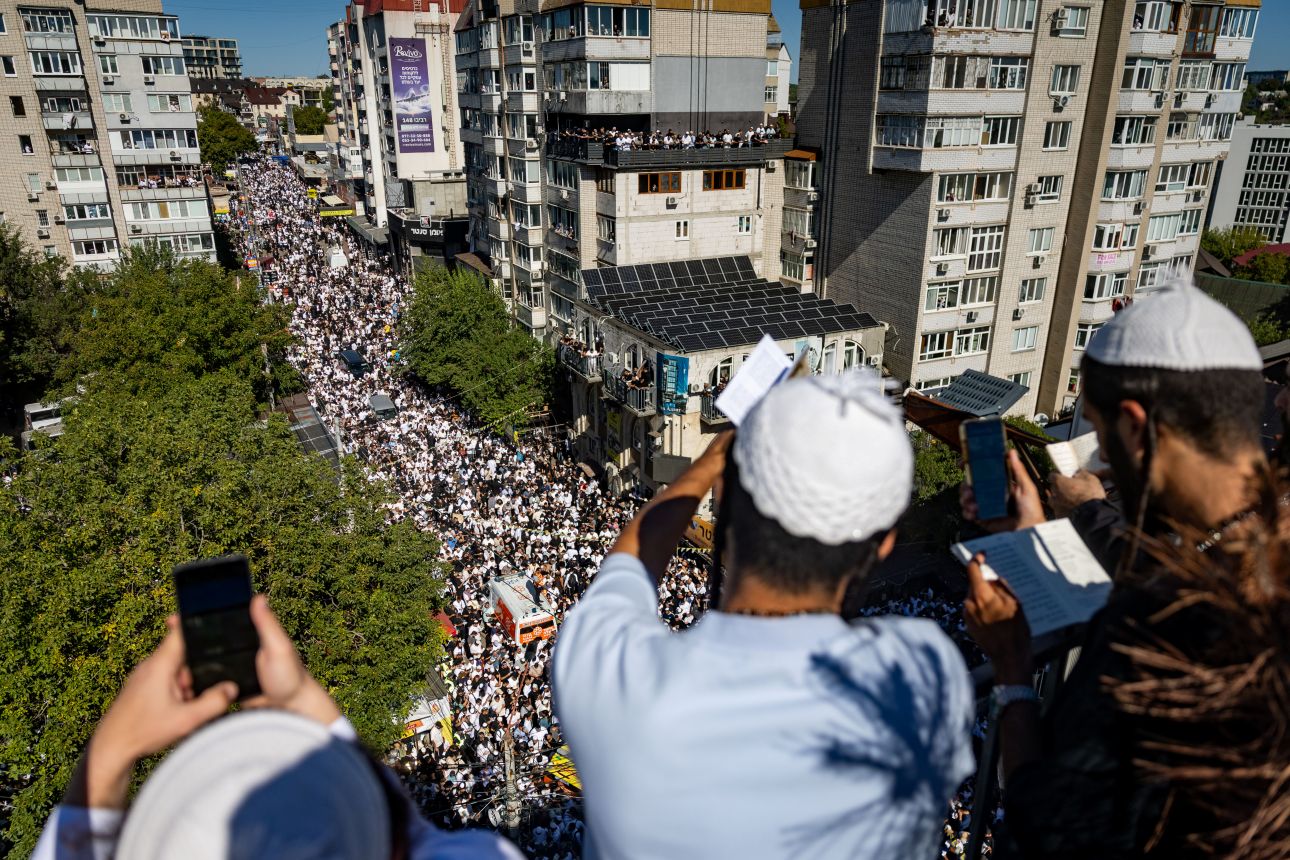
Photo by Chaim Goldberg/Flash90
Introduction
Rabbi Nachman of Breslov (1772–1810) was the founder of Breslov Hasidism, which he led at the end of the 18th and beginning of the 19th centuries. His tomb, known among Breslov Hasidim as the “holy tziyun,” is located in the city of Uman, Ukraine, where he lived toward the end of his life. For decades, it has been a pilgrimage destination for Israelis and Jews from around the world. During his lifetime, and particularly as he approached the end of his life, Rabbi Nachman expressed a desire for his followers to be with him on Rosh Hashanah. His disciples interpreted this as a call to visit his grave during the holiday. As a result, according to various estimates, approximately 50,000 people still visit his tomb every Rosh Hashanah. Many others, however, visit the site on other days and at other times of year.
This executive summary presents the key findings of the extent of pilgrimage to and visits to Rabbi Nachman’s tomb among Israeli Jews, as well as the demographic profile of those who visit the site. It is based on an analysis of data collected by the Israel Democracy Institute in July–August 2026 for a forthcoming study that will be published by IDI in several months, edited by Ariel Finkelstein, Shlomit Ravitsky Tur-Paz, and Ya’ari Padan.
Key Findings
- 8% of Jewish Israelis aged 18 and over have visited the tomb of Rabbi Nachman of Breslov in Uman at least once in their lives.
- 49% of those who have visited Uman return once every few years, while another 22.5% visit at least once a year.
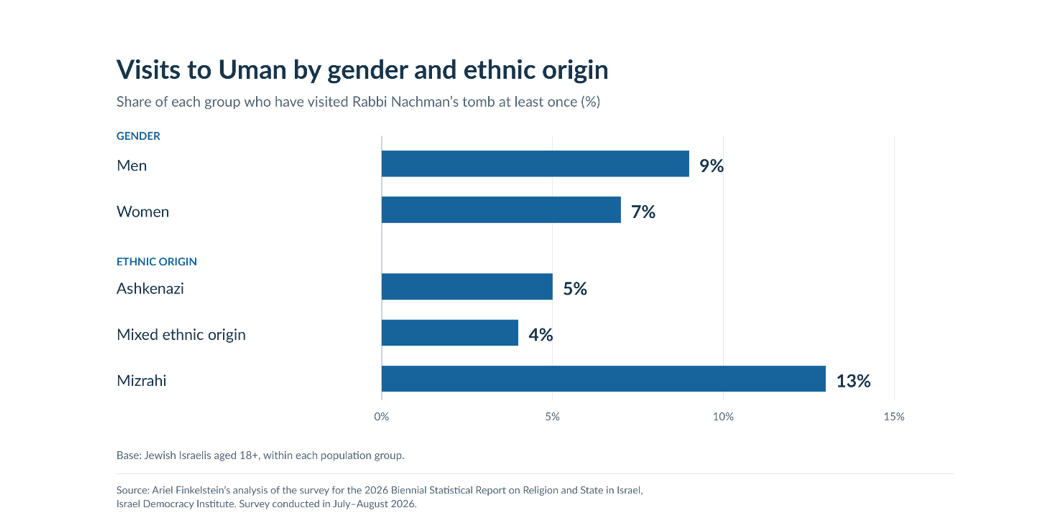
- 13% of Mizrahi Jews in Israel have visited Uman, a substantially higher share than among Ashkenazi Jews (5%) and those of mixed ethnic origin (4%).
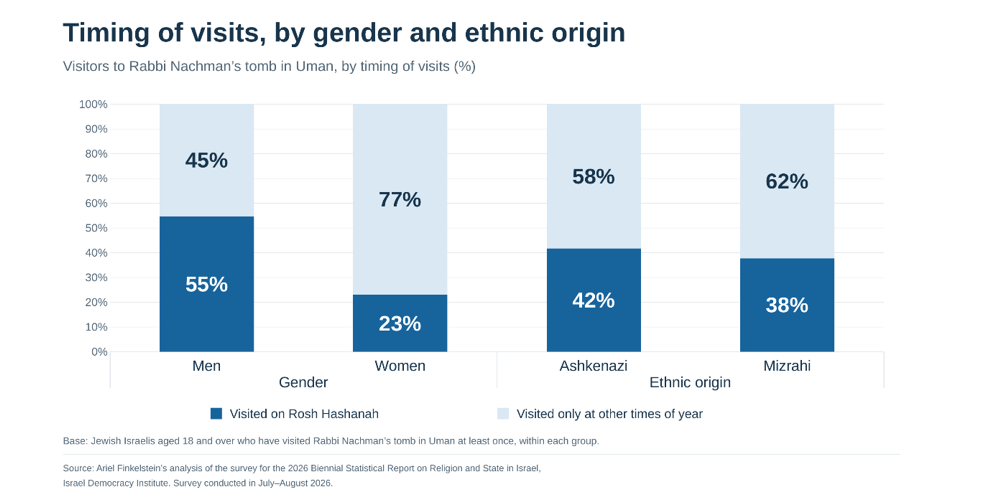
- 59% of Israeli visitors to Uman have never visited during Rosh Hashanah, but only at another time of year. Of all those who have visited Uman, 41% have visited during Rosh Hashanah: 26% have visited only during Rosh Hashanah, while 15% have visited both during Rosh Hashanah and at another time of year.
- 55% of Israeli men who have visited Uman have done so during Rosh Hashanah (some of them also at another time of year). Among women who have visited Uman, only 23% have visited the tomb of Rabbi Nachman during Rosh Hashanah, while the remainder have visited at other times of year.
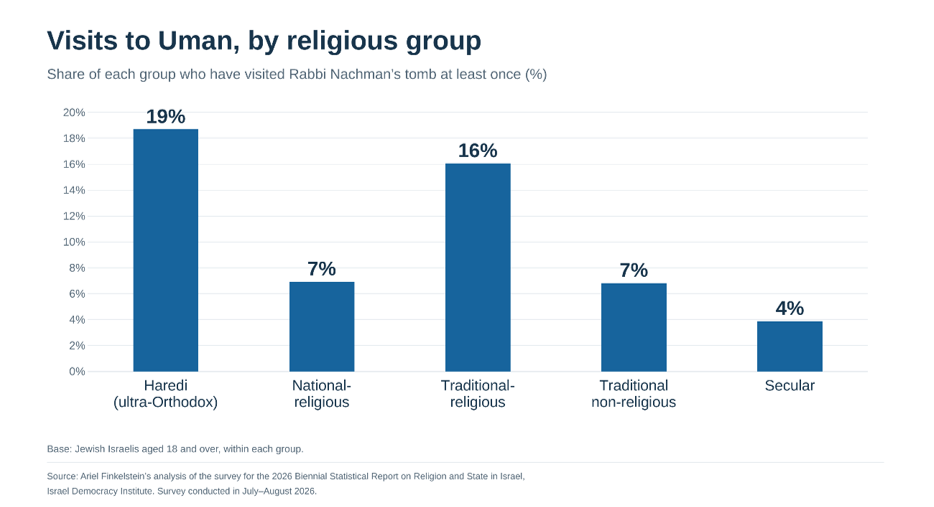
- 19% of all Haredim in Israel have visited Uman, as have 23% of all traditional Jews, 7% of national religious Jews, and 4% of secular Jews.
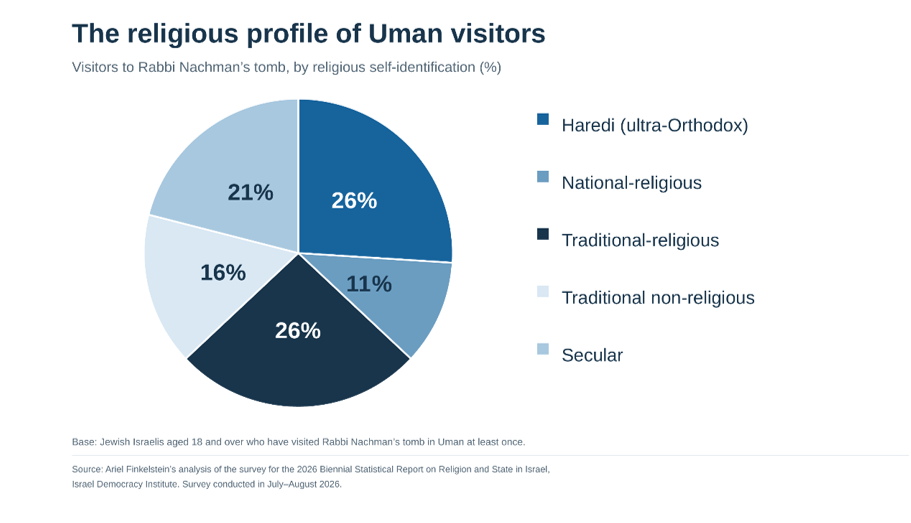
- 42% of Israeli visitors to Uman are traditional (26% traditional-religious and 16% traditional non-religious), 26% are Haredi (ultra-Orthodox), 21% are secular, and 11% are national-religious.
- The share of adults over age 45 who have visited Uman is relatively low, at 6%, compared with 10% among those aged 44 and under.
- There is a correlation between lower income and a higher rate of visits to Uman: 12% of those with low incomes have visited Uman, compared with 9% of those with average incomes and 6% of those with high incomes.
Click here to review additional findings in Hebrew.