

You have been added to our mailing list.

Our next newsletter will be sent to your e-mail.

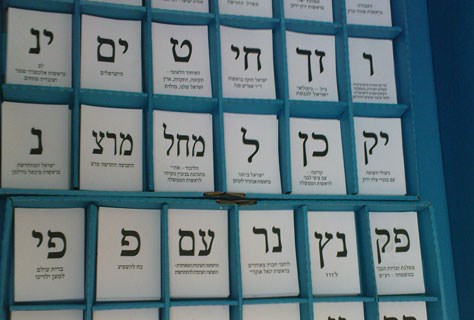
Where do you fit in on Israel's political landscape?
Which of the parties that ran for the 19th Knesset has views most similar to your own?
Find out by using the 2013 Israeli Election Compass, a research-based tool developed by the Israel Democracy Institute's Guttman Center for Surveys and Kieskompas.nl, in partnership with The Jerusalem Post.
close
Frequently Asked Questions
What is the Election Compass?
The 2013 Israeli Election Compass is a free online application which provides users with the opportunity to compare their opinions to those of the political parties running in the 2013 Israeli Knesset election. Based on the user's answers to a series of statements, the Compass calculates the user's position on the political landscape and shows the user his or her placement relative to those of the major political parties competing in this election, as objectively as can be calculated on the same political landscape.
Does the Election Compass tell me how to vote in the upcoming election?
No. The 2013 Israeli Election Compass does not advise users on how to vote. The Compass is not comprehensive in so far as it does not address every issue which differentiates political parties in this election campaign, rather it is based on a reasoned selection of 30 statements. The purpose of the Compass is to generate public interest in the upcoming Knesset elections and to provide objective information based on the political parties' platforms. Each voter can decide for him/herself which party can best represent his or her views.
Who created the 2013 Israeli Election Compass?
The 2013 Israeli Election Compass is an academic project developed by a team of Israeli political scientists from the Guttman Center in the Israel Democracy Institute. The project is modeled after a similar application available online in the Netherlands and throughout Europe, called Kieskompas. Kieskompas founder and director, Professor André Krouwel of the Free University Amsterdam, acted as consultant and quality control monitor to the 2013 Israeli Election Compass project, which stands up to the international standards of such applications.
Is the Election Compass affiliated with any of the political parties?
No. The 2013 Israeli Election Compass is an independent, non-profit and strictly non-partisan endeavor. The Compass seeks to provide the Israeli electorate with an objective and transparent analysis of the political landscape. The 2013 Israeli Election Compass uses recognized scientific methods to place political parties on the political landscape, based on their platforms, their official websites, and their statements to the media. All the information collected by the academic team is available to the public.
Who decided on the survey statements used in the Compass?
The selection of statements is based on a scientific methodology known as Content Analysis. Based on the assumption that the issues that are frequently addressed by political parties are the ones more important to voters, the academic team responsible for the project has selected the 30 statements included in the 2013 Israeli Election Compass in order to reflect salient issues in the election campaign and surrounding public debate. It is important to stress that the political parties have had strictly no influence whatsoever over the selection of topics, nor on the phrasing of the statements. A public opinion survey conducted by the research team, using a representative sample of the adult Israeli population, helped to finalize the wording of the statements and to attribute them to dimensions and themes.
Who decided on the positions of the political parties on each statement?
The academic team was in charge of coding the positions of each party. In each step of this calibration process, every effort was taken to ensure that the highest standards of scientific rigor and academic integrity were met. The team has analyzed the information made available to the public by political parties in order to assess their positions on the various statements. After establishing the party positions according to their platfroms, websites, and other sources, letters were sent to all parties included in the Compass detailing the statements and positions, and asking for a response. The team examined all responses received and decided which reservations made by the parties to accept. All the texts used for the coding are directly accessible through the 2013 Israeli Election Compass application.
Why are some of the political parties not represented in the Compass? Why can't I see all of the parties in my results?
The 2013 Israeli Election Compass does not include all political parties competing in this election, but only parties that have a reasonable chance of passing the electoral threshold according to public opinion surveys. In addition, the Compass takes into account the public statements of all political parties included in the Compass in the process of assessing their positions, but if two political parties fall exactly on the same position on a given issue, it is possible that the two of them will not appear clearly enough on the graph. In that case, the symbols of the two political parties will actually be on top of one another and the display will not be optimal. If you select 'Party position per statement', you can easily check the exact positions of all the political parties per statement.
How were the people presented in the Compass as party leaders selected? Why are only some of the party leaders included in the question about the ability to manage the affairs of the country?
The people chosen to appear in the Compass as party leaders are those positioned on top of their list (no. 1 in the list submitted to the Central Election Committee). The party leaders chosen for the questions about candidates are those that are heading big parties (expected according to public opinion surveys to receive at least 8 seats in the next parliament), and those regarded as possible prime ministerial candidates.
For more IDI resources on the 2013 elections click here.
close
Team
IDI Academic team
Prof. Tamar Hermann
Dr. Raphael Ventura
Dr. Nir Atmor
Chanan Cohen
Ashira Menashe
Nechama Horwitz
Yuval Lebel
Yousif Haj Yehia
Kieskompas BV
André Krouwel - Consultant
Monaa Quartey - Project Manager
Hanane Abouellotfi - Content Manager
Hoppinger BV
Technical realization: Hoppinger.co
close
Disclaimer
The Israeli Election Compass 2013 is intended to provide users with accessible information about the political parties' positions on various issues, and to enable users to compare parties' positions with their own. The Compass does not advise users on how to vote. It is not comprehensive in so far as it does not address every issue which differentiates political parties in this election campaign. Its purpose is to generate interest in the election campaign, and to promote discussion about the 2013 Knesset election and about politics in general.
The political parties' positions have been determined by a team of researchers from the Guttman Center at the Israel Democracy Institute. Every effort has been made to ensure accurate calibrations of political parties' positions on the various issues represented in the Compass according to data available to the public. Party positions were determined by scientific analyses of available party platforms. In some cases, it is possible that the placement of a party on the political landscape does not represent its current (or future) position on a specific issue. Coding was based on the platforms as they were known at the time that the Compass was built. Thus, it is possible that a party has changed its position on a specific issue, or published a new and more detailed platform, after the launch of the Israeli Election Compass 2013. Due to the aforementioned reasons, there may be minor discrepancies on some issues between the political parties' positions as represented in the Compass, and the positions as currently presented by the parties in the election campaign.
For more IDI Resources on the 2013 Elections, click here.