

Viterbi Family Center for Public Opinion and Policy Research

The Viterbi Family Center for Public Opinion and Policy Research holds the largest, most comprehensive database on public opinion surveys in Israel. Over a span of 60 years and through more than 1,200 surveys, the center has applied rigorous, innovative and pioneering research methods to document the attitudes of the Israeli public regarding thousands of issues in all aspects of life: politics, culture, ideology, religion, education and national security.  Previously known as the Guttman Center, it was renamed in 2021 in honor of Dr. Andrew J. Viterbi.

The center surveys attitudes and measures social indicators, helping policymakers understand trends in Israeli society and craft sound policies that are grounded in data.

The Viterbi Center's expansive archive of over 1,200 surveys spanning more than six decades, which is open to the public, is known as the Guttman Data Israel database, in honor of the late Professor Louis Guttman, who bequeathed the original collection of surveys to IDI.

Data Israel

Findings from the four regular questions in the Israeli Voice Index:
Optimism about the future of democratic rule, about the future of national security, about Israel's economy and about social cohesion

Click here


72% of Jewish Israelis and 58.5% of Arab Israelis say there is danger to the integrity of Israel's elections. Israelis are split on how best to handle Iran. Laws passed in the legislative blitz prior to Knesset dissolution were broadly unpopular.


28% of Israelis think Israel's security is a central consideration for President Trump, down from 44% last month. 72% of Israelis think Israel should maintain a permanent security zone in South Lebanon. A plurality (50.5%) of Israelis think it is inappropriate to advance legislation with a substantive impact on Israel's system so close to elections.

44% of Israelis think Israel's security is a central consideration for President Trump, representing a sharp decline from the last measurement. 61% of Israelis think Prime Minister Netanyahu should not run in the upcoming Knesset elections; 35% think he should.

64% of Jewish Israelis and 48.5% of Arab Israelis think ending the Iran war is not compatible with Israel's security interests. 51% of Israelis think the US administration has greater influence over Israel's defense decisions than the Israeli government. A plurality of Israelis believe settler violence against Palestinians is handled too leniently.


Over three-quarters of the Jewish public supports continuing the war, while among Arabs, only 19% support it – this marks a decline in both publics since the first week of the war. Among both Jews and Arabs, Operation Roaring Lion has improved assessments of the level of solidarity in Israeli society as a whole. Both Jews and Arabs think that Iran’s resilience has proven to be somewhat stronger or much stronger than anticipated by the operation’s planners.

Just before the launch of the war, 53% of Jews and 29% of Arabs supported direct military involvement with the US in an attack against Iran, while 41% of Jews and 58.5% of Arabs supported responding only in the event of a direct Iranian attack against Israel. After Operation Roaring Lion was launched, in close coordination with the US, the overwhelming majority of Jews (93%) and minority of Arabs (26%) supported it.

44% of the total sample supports direct military involvement in a potential US attack on Iran while 50% support participating only if Israel is attacked by Iran. The largest share (49%) think that Israel’s security will be harmed by reduced military aid from the US, down to zero, while 39.5% think it will not be harmed. Rise in optimism for the future of all four topics: democratic rule, national security, economy, and social cohesion.


Around three-quarters of Jews and one third of Arabs think it is safer to live in Israel than countries abroad. There has been a decline by about 10 percentage points in the share of Israelis who support a state commission of inquiry into the events of October 7. A small majority of Israelis (54%) think Prime Minister Netanyahu was aware of the link between his close advisors and Qatar.

50% of Israelis do not think President Herzog should grant Prime Minister Netanyahu a pardon; 41% think he should. 45% of Israelis think Israel’s security forces and law enforcement agencies are too lenient in their treatment of settler groups involved in acts of violence against Palestinians; 22% think they are too harsh; 21% think their treatment is appropriate. 61% of Jews think the decision to sell F-35 war planes to Saudi Arabia harms Israel’s security.

The largest share of respondents think that the United States has the greater influence on security decisions relating to Israel—almost double the share of those who think that the reins of security are in the hands of the Israeli government. The majority of Israelis think that Israel’s security is one of US President Trump’s central considerations.

A special survey released as Israel prepares to mark two years since the start of the war on October 7, 2023 finds: 66% of Israelis say the time has come to end the war in Gaza – up 13 percentage points since this time last year. The top reason Israelis say the war should end is the endangerment of the hostages, among both Jews (50.5%) and Arabs (34.5%). 64% of Israelis think Netanyahu should take responsibility for Oct. 7 and resign, either now (45%) or after the war (19%).

Heading into the Jewish New Year, Israelis express a poor national mood, though are less pessimistic about the year ahead as they were at this point last year.

About two-thirds of the public support a deal that would include the release of all the hostages in exchange for the cessation of hostilities and the withdrawal of the IDF from all of the Gaza Strip. A majority of Jewish and Arab Israelis oppose Jewish settlement in Gaza. Around one-third of the general public think that Israeli society will be able to bear the burden of prolonged fighting for only a few more months.

78% of Jewish Israelis and 22.5% of Arab Israelis think that, given the circumstances of the fighting in Gaza, Israel is making efforts to avoid causing suffering to the Palestinian population there. Nearly half of the Israeli public thinks that the security forces and enforcement agencies are too lenient in their responses to violence by groups of settlers against both the IDF and Palestinians.

58% of Jews and 71% of Arabs think Israel's security is a key consideration for President Trump. A majority of Jews (60%) think that Israel has achieved most or all of its goals, while only 37% of Arabs concur. A plurality of Jews are optimistic that a deal to end the war in Gaza will be reached soon (50%) and that there is a high likelihood of a regional peace process beginning (48%). Among Arabs, a plurality think there is a LOW likelihood of both scenarios (49% Gaza / 45% regional peace process).

48% of Jews do not think that the operation will lead to the return of the hostages, and 50% of Arab Israelis share this assessment. 50% of Jews also do not think that the operation will lead to an end of Hamas’s rule. Among Arabs, 41% do not believe that the operation will result in the defeat of Hamas.

62.5% of Jewish Israelis are pessimistic that a deal for the release of all the hostages will be reached soon; a larger share of Israelis (45%) think that Israel should strike Iran’s nuclear facilities even without American backing; As we approach Israel’s 77th Independence Day, 48% of Israelis think Israel has had more successes than failures throughout the years.

Prioritization of the hostages has been increasing steadily over time, with 68% prioritizing the hostages and 25% prioritizing toppling Hamas in the current survey; 49% of Israelis do not think achieving both war goals simultaneously is possible. A majority of Israelis, (56.5%), say the government should obey the Supreme Court decision on Ronen Bar's dismissal. 

Around half of Israelis think that it's unlikely that President Trump will turn away from Israel, if he thinks its policies are not aligned with US interests, while close to 40% think chances are fairly high or high; 73% of the total sample support continuing with the second stage of the hostage agreement and securing the release of all the hostages.

More Israelis (43%) think Hamas' interests have been served better in the first stage of the ceasefire agreement than Israel's (21%); however, a majority still supports proceeding to the next stage (70%) if the first stage is completed as agreed; a vast majority of Israelis (72.5%) think the ceasefire agreement was achieved thanks to President Trump's intervention.

A majority of Israelis (57.5%) support a comprehensive deal for the release of all the hostages in return for an end to the war in Gaza; Most Israelis think the current situation in Syria serves Israeli interest (52.5%); 68% of all Israelis, as well as 60% of Likud voters, are opposed to a law exempting Haredim from military service, even if this would mean a dissolution of the Knesset and new elections.

48% of Israelis think PM Netanyahu cannot fully function as a wartime prime minister while testifying on trial, a large majority of Israelis think Trump will prioritize Israel's security, and a clear majority (61%) think the main reason behind the ICC's decision to issue arrest warrants is the Court's longstanding anti-Israel bias.

Israelis are deeply divided on how to move forward in the conflict in Lebanon. While 54% of Jewish Israelis support continued fighting against Hezbollah, 88% of Arab Israelis are in favor of pursuing a diplomatic solution.

Israelis are divided on the question of the main reasons for Netanyahu's demand that Israel continues to control the Philadelphi Corridor. While over half of the Jewish respondents (58.5%) think this decision is based on military and strategic considerations, 66.5% of Arab-Israeli respondents thing it is due to political reasons. 

Across the Left, Right and Center, rates of Jewish Israelis who say the feel "anger," "disappointment" or "frustration" are considerably higher than those expressing satisfaction, pride, or trust. A large majority of Israelis (70%) support the establishment of an inquiry into the events of Oct. 7th, but do not agree on the timing of such an inquiry. 

Across the total sample, 56% of Israelis support a deal to release all the hostages and end the war in Gaza; 29.5% support a deal to release some hostages in exchange for a temporary ceasefire; 14.5% don't know.

Across the issues of US-relations, the war in Gaza, evacuees from the south and the north, fighting Hezbollah, and public diplomacy efforts abroad—both Jewish and Arab Israelis give the government low grades.

The majority of the Jewish public (56%) think that securing a deal for the release of the hostages is the highest priority; a higher share of Jewish respondents think Trump would be better for Israel as US president; most Israelis think that celebrations of Israel's 76th Independence Day should be more restrained and less prominent this year.

Slightly more than half of Jewish respondents think that the government is doing all it can to bring the hostages home; only a minority of Arabs concur. Only a minority of Israelis think the government will complete its four-year term and a majority of Israelis think that Hamas has succeeded in refocusing international attention on the Palestinian problem.

Most Israelis would like to see the exemption given to the Haredi community changed; when asked whether the Israel can continue relying on the US's support, public opinion was divided, with an inclination toward continued reliance; around half of Israelis think Israel's standing in the international arena is not good.

59% of Jewish Israelis oppose a deal that would lead to the establishment of a Palestinian state with guarantees from the US and peace agreements with Arab states such as Saudi Arabia; when asked to choose, 51% of Israelis said they think the main goal of the war should be bringing the hostages home and 36% think it should be toppling Hamas; half of Israelis think the ICJ ruling, issuing temporary measures, to be harsh.

About two-thirds (66%) of Israelis say they do not think Israel should agree to US demands to shift to a phase of the war with a reduced heavy bombing in populous areas. 75% of Jewish Israelis oppose meeting the demands, compared to only 21% of Arab Israelis.

Among Jewish Israelis, 75% on the Left support making progress toward a two-state solution to the conflict in return for American assistance, compared to 45% in the Center and only 21% on the Right.

IDI's fifth War in Gaza survey finds that among Jewish Israelis, toppling Hamas and releasing the hostages are pivotal war-goals. The majority of respondents do not think that the government currently has a clear action for the day after the fighting ends, and there is rising support (56%) for an amendment to the Nation-State Law, to safeguard equality for non-Jewish citizens. 

The October 2023 edition of the Israeli Voice Index shows that a significant majority of Jewish Israelis trust the heads of the IDF over PM Netanyahu. If elections were to be held today, a majority of Israelis (55%) would vote for the same bloc they voted for in the last elections.

As we mark the 30th anniversary of the Oslo Accords this month, a larger share of Jewish respondents think it was incorrect to enter into that process, while the percentage of respondents who selected "don't know" was exceptionally large. 

As it is widely known that negotiations have been underway between Israel and Saudi Arabia under the auspices of the United States, we asked two questions regarding the expected impact of the negotiations and a possible agreement on domestic matters.

41.5% of coalition voters and 6% of opposition voters said that the Court lacks the authority to perform judicial review over Basic Laws passed by Knesset. 73% of Israelis agree that in order to bridge the divisions between the political camps, attempts should be made to reach a compromise. 

The July 2023 edition of the Israeli Voice Index finds that 58% of Israelis believe the country is in a "state of emergency." Only a small minority of Israelis believe that IDF reservists, who fail to report for duty in protest of the judicial overhaul, should be dismissed.

As the government completes its first six months in office respondents were asked to rate its performance in various fields.

Trust in the Supreme Court remains steady, while the share of Israelis who trust the Knesset has almost doubled since last year. Opinions on the likelihood of the government completing its term are fairly evenly divided in the Jewish public.

This month we found a slight rise in optimism regarding both the future of democratic rule in Israel and the future of national security. However, almost two-thirds of Arab Israeli respondents replied they are worried that they or family members will be victims of violent crime.

This month saw a decline in optimism regarding both the future of democratic rule in Israel and the future of national security. 21% of Israelis have participated in at least one act of protest against the judicial reforms.

44% of Israelis are optimistic about Israel’s external security– only 28% are optimistic regarding Israel’s internal security.

The Index reveals that regarding the proposed plan to overhaul the judicial system, 43% describe the initiative is “bad” – while 31% describe it is “good.” A quarter of respondents said that they do not have an opinion on the Levin plan. A large majority (64%) are in favor of dialogue between the different political camps regarding the proposed legislative changes in an attempt to reach compromise.

The most common opinion in the Israeli public is that formation of the new government will have a negative effect both on Israel’s international standing and on the civil status of Arabs in Israel.

The majority of Israelis think that the Supreme Court should retain its ability to strike down legislation that contravenes the country’s Basic Laws – and only 16% said that the Judicial Selection Committee that appoints justices should be politicized by increasing the number of elected officials serving on it.

The Israeli Voice Index finds that while 56% of Israelis expressed trust in the upcoming election, 39% said they question if the results “precisely reflect how the public voted.”

Only 32% of Jewish Israelis support advancing a ‘two-state’ solution as a means for resolving the conflict with the Palestinians. When it comes to thwarting the possibility of a nuclear-armed Iran, half of the public thinks Israel can attack Iran’s nuclear facilities even without American agreement.

Half of Israelis intend to vote for the same party they voted for in the previous (2021) elections and almost one-quarter of respondents say that they have not yet decided which party to vote for in the November 1st election

After President Biden's visit to Israel, more Israelis are convinced of his commitment to ensuring Israel’s security when negotiating with Iran.

The Israeli Voice Index for July 2022 found that the main factor influencing Israelis’ consideration when voting is the party’s platform on economic issues and its plan for coping with the high cost of living (44%). 24% of respondents say that the party head is their top factor in deciding which slate to vote for

The Center of the Israeli political map is fluid and is still developing a systematic and uniform ideological worldview. What do we know about its voters?

Ahead of President Biden’s visit to Israel, a special IDI survey finds that Israelis are wary about the prospect of a new deal with Iran and split on the possibility that the presidential visit will lead to normalization with Saudi Arabia.

51% of Israelis are satisfied with the decision to hold new elections and 62.5% will vote for the same party as the last election; 57.5% of Israelis think that there is a low likelihood of a stable government being formed after the election

One year since the formation of the Bennett-Lapid government: assessment of government’s performance tied to parties Israelis voted for

50% of Jewish Israelis support allowing Jews to pray on the Temple mount – 38% because it is proof of Israel’s sovereignty over the site and 12% because it is a religious commandment.

As Israel prepares to mark Holocaust Remembrance Day (Thursday), IDI’s Viterbi Family Center for Public Opinion and Policy Research examined how Jewish Israelis relate to this solemn day.

A special IDI survey finds that while Israelis are divided on whether hametz (leavened foods) should be forbidden on Passover from public institutions such as hospitals, over 96% of Jewish Israelis say they plan on holding a Seder this year.

The Israeli Voice Index for March 2022 focused on Israeli’s security in wake of recent terror attacks and found that the majority of both Jewish and Arab Israelis are pessimistic about Israel’s security situation in the foreseeable future.

The Israeli Voice Index for February 2022 found that almost half of Israelis (48%) support the current policy of western countries to impose harsh sanctions on Russia but not to engage directly with military force. 37% of those surveyed believe that a military intervention is the preferred course of action.


A large majority of Israelis justify surveillance in cases of suspicion of security transgressions, criminal or pedophilic activity. Only a minority justifies such measures in cases of anti-government activity.

54% of Israeli say that the pandemic has caused them to change their daily routine, and 45% said that they have made significant changes such as switching jobs or halting their studies. As 2021 drew to a close, more than a quarter of those participating in the survey said they are considering or intending to leave their current workplace in the foreseeable future.


62% of Israeli Jews think that Iran poses an existential threat and 58% would support an attack on Iran’s nuclear facilities also without American consent


Most Israelis think that their country's international standing has either remained the same as it was under former Prime Minister Benjamin Netanyahu (37%) or improved (28%) since Prime Minster Naftali Bennett and Foreign Minister Yair Lapid assumed office.

After more than 100 days in office – Israelis want the new government to prioritize stabilizing the economy and combatting COVID by imposing restrictions on the unvaccinated

Ahead of the Jewish New Year, 60% of Israelis define the national mood as "pessimistic." 52% of Jewish Israelis may skip their holiday meals if they include unvaccinated guests.

41.5% of Jewish Israelis think that the solution to maintain the status-quo with the Palestinians is acceptable– 34% think the same of a two-state solution

26% of Israelis think that Foreign Minister and Alternate Prime Minister Yair Lapid is the “most influential” figure in the government; in second place with 19% was Prime Minister Naftali Bennett and in third with 11% was Mansour Abbas.

If a new government is formed Israelis think that strengthening unity and closing socioeconomic gaps are the highest priority

With coalition negotiations faltering, the April Israeli Voice Index finds that 70% of Israelis think the country is on the way to a fifth election.

February Israeli Voice Index finds that 32% of Israelis support suspending the PM's trial if he wins the election and forms the next government. Also growing support on the Center-Right for Arab-Jewish political cooperation

A large majority of Israelis think Netanyahu’s efforts to forge ties with Arab Israelis are insincere - 25% of Arab Israelis think they should nevertheless cooperate.

53% of Israelis agree or strongly agree that dealing with Israel’s special problems requires a strong leader who will not worry about the Knesset, the media or public opinion.

Our monthly Index found that both Prime Minister Netanyahu and Alternate Prime Minister Benny Gantz have low or very low credibility among Israelis. 

When it comes to the their country's interests, Israelis increasingly think that Donald Trump is the preferable US presidential candidate.

With the Jewish New Year approaching, Israelis are pessimistic on the country's outlook but hopeful on peace with UAE; 41% of Israelis think the upcoming year will be worse than the last; 68% of Israelis think that Israel will be heading to elections when the budget compromise between Likud and Blue and White expires in December.

IDI's latest coronavirus survey found 45% of Israelis pessimistic about the country's ability to overcome the COVID-19 crisis. The survey also found that if opened, 74% of Israelis plan on sending their children to school

The Israeli Voice Index for July 2020 found that 58% of Israelis identify with the protests against the government’s economic policies while 45% identify with the elements focused on personal opposition to Prime Minister Netanyahu

A special survey, the tenth in this series, by the Guttman Center for Public Opinion and Policy Research at the Israel Democracy Institute examined public opinion about government policies relating to the coronavirus outbreak and the economic fallout from the pandemic.

The Israeli Voice Index for June 2020 found that Israeli public opinion is divided over the question of whether the government should apply sovereignty in the West Bank and, if it goes forward, what such a plan should look like

The Israeli Voice Index for May 2020 found that 50% of the public supports applying Israeli sovereignty over parts of the West Bank (Judea and Samaria) with the U.S. administration’s support (25%) and without American backing (25%)

The Israeli Voice Index for April 2020, found that 52% of Jewish Israelis support Prime Minister Benjamin Netanyahu's stated policy of extending Israeli sovereignty in the West Bank, however only 32% believes Israel will move forward with this in the coming year.


The corona crisis has had serious economic repercussions for many households, including for members of Israel's ultra-Orthodox community. Survey findings indicate that while most of the ultra-Orthodox plan to cut back on their current expenditures, there are also quite a few households in which one of the spouses plans on increasing the scope of his or her employment, and in about one-fifth of the households- one of the spouses who has not previously worked, intends to now join the workforce.

The Israeli Voice Index for March 2020 found that 76% of Israelis are concerned that they or a family member will contract the coronavirus – up from 34% in February.

5 days to the Elections: Jewish Israelis are Paying Less Attention. A Majority of Arab Israelis are Following with the Same or Increased Interest. 30% of the Public Predicts a Fourth Election.

January's Israeli Voice Index found 32% of Israelis believe Netanyahu's investigations will be the issue with the greatest impact on voters in the upcoming Knesset elections.

A majority of Israelis gave high grades when assessing Israel’s preparedness for war in three areas: the IDF’s combat readiness, the resilience of the population on the home front, and the political echelon’s decision-making ability concerning the objectives and management of the war. At the same time, Israelis do not think highly of the preparedness of the home front regarding protection of civilian facilities.


The November 2019 Israeli Voice Index finds that 35% of Israelis think PM Netanyahu should resign and stand trial – of the Likud voters - 37% agree

October 2019 Israeli Voice Index revealed a decline in Israelis’ assessment of President Trump’s commitment to Israel’s security. The survey also found that 62% of Israelis support the parties they voted for in the last elections joining a Blue and White led coalition.

September 2019 Israeli Voice Index found that a majority of Israelis prefer a unity government. Additionally the majority of Israelis do not think the State should offer Benjamin Netanyahu a plea bargain or that he would agree to one.

The August 2019 Israeli Voice Index found that Jewish Israelis show a strong preference for a unity government while Arab Israelis prefer a center-left wing government led by Gantz and that over the past five months there has been a steady decline in the public’s optimism about the future of Israel’s democracy and security

This special survey examines attitudes of right wing voters on a number of issues related to September's election including the possibility of a unity government and recent proposals that would limit judicial review and oversight of Knesset and government decisions. 

Prime Minister Benjamin Netanyahu is awarded high grades for improving Israel’s international standing (60%), enhancing the country's military strength (56%), and successfully contending with the Iranian threat (50.5%) but poor grades for failing to increase solidarity between Israel's different segments of society (51%) and on the question of personal integrity (49%).

The June 2019 Israeli Voice Index, conducted by the Guttman Center at the Israel Democracy Institute, finds that the majority of the Israeli public does not think the process begun in Bahrain will lead to a peace agreement with the Palestinians, but Israelis do believe that steps towards economic peace can bring stability to the region.

Conversion is a central theme of the upcoming holiday of Shavuot when the biblical story of Ruth the Moabite – widely considered the first convert to Judaism – is traditionally read. In the spirit of the holiday, we decided to examine what types of relationships Jewish Israelis are ready to have with non-Jews. We also looked into what Jewish Israeli think about the topic of conversions in general and the conversion process in Israel in particular.

The Israeli Voice Index finds that 58% of Israelis think that signing a peace agreement will positively contribute to Israel’s international status, while 56% think that if Israel would withdraw unilaterally from the West Bank it would NOT improve Israel’s international status

A special survey finds that the 62% of the Israeli public is opposed to the Immunity Law, 47% think that if the law passes it should only be applied to new cases, and 39% oppose strengthening the Knesset at the expense of the courts

On the eve of Israel’s 71st Independence Day, 82% of the Israeli public thinks that the national balance of achievements shows more successes than failures and 62% think legal proceedings against Prime Minister Netanyahu should not be stopped, notwithstanding his success in the elections

  • Default Image

    Prof. Tamar Hermann

    Academic Director

    Read More

    Prof. Tamar Hermann is a Senior Research Fellow at the Israel Democracy Institute and the Academic Director of the Viterbi Family Center for Public Opinion and Policy Research. The Center applies rigorous, innovative and pioneering research methods to document the attitudes of the Israeli public regarding thousands of issues in all aspects of life: politics, culture, ideology, religion, education and national security.

  • Default Image

    Dr. Lior Yohanani

    Manager of Quantitative Research

    Read More

    [email protected]

    Dr. Yohanani is a political sociologist whose research focuses on security, ethnicity, and immigration. His doctoral dissertation at Rutgers University examined why diaspora soldiers (“lone soldiers”) volunteer in the Israeli military and why and how the state recruits soldiers from abroad.

    During his post-doctoral fellowship at Tel Aviv University, Dr. Yohanani explored the attitudes and relationships between Jewish and Arab students at higher education institutions in Israel.

    Concurrently with his work at the IDI, Lior teaches a course titled "War and Terror in the Global Era" at Tel Aviv University".

  • Default Image

    Omer Schwartz

    Senior Researcher

    Read More
  • Default Image

    Yaron Kaplan

    Researcher

    Read More

    [email protected]

    Holds a master’s degree in sociology and anthropology from Bar Ilan University, specializing in social psychology, and has extensive experience in conducting and analyzing market research and opinion polls. Previously served as a quantitative researcher at consulting firms and research institutes.

  • Default Image

    Inna Orly Sapozhnikova

    Researcher

    Read More

    [email protected]

    Has a master's degree in economics from a university in Moscow, with extensive experience in applied quantitative research (market research, public opinion, and evaluation).

  • Default Image

    Ido Dolev

    Research Assistant

    Read More

72% of Jewish Israelis and 58.5% of Arab Israelis say there is danger to the integrity of Israel's elections. Israelis are split on how best to handle Iran. Laws passed in the legislative blitz prior to Knesset dissolution were broadly unpopular.

28% of Israelis think Israel's security is a central consideration for President Trump, down from 44% last month. 72% of Israelis think Israel should maintain a permanent security zone in South Lebanon. A plurality (50.5%) of Israelis think it is inappropriate to advance legislation with a substantive impact on Israel's system so close to elections.

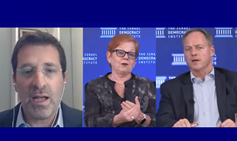
IDI President Yohanan Plesner and Prof. Tamar Hermann, Academic Director of IDI's Viterbi Family Center for Public Opinion and Policy Research, join Dr. Natan Sachs from the Middle East Institute to discuss Israel’s upcoming elections, why they are viewed as especially consequential, the role of Arab parties in future coalitions, and what might change under a different government.

44% of Israelis think Israel's security is a central consideration for President Trump, representing a sharp decline from the last measurement. 61% of Israelis think Prime Minister Netanyahu should not run in the upcoming Knesset elections; 35% think he should.

Four key issues are expected to take center stage in Israel's 2026 elections, representing a referendum on the future of the country's democratic character, the balance between religion and state, and the question of a liberal civic consensus in an era of unprecedented polarization.

64% of Jewish Israelis and 48.5% of Arab Israelis think ending the Iran war is not compatible with Israel's security interests. 51% of Israelis think the US administration has greater influence over Israel's defense decisions than the Israeli government. A plurality of Israelis believe settler violence against Palestinians is handled too leniently.


49% of Jewish Israelis say Israel's strategic and security situation is better than before the war with Iran, while among Arabs, 49% say it is worse. 92% of Jews gave the IDF a high rating on their management of the war; only 38% gave the government high ratings. Among Arabs, 34.5% gave the IDF high ratings; only 10% gave the government high ratings.

Over three-quarters of the Jewish public supports continuing the war, while among Arabs, only 19% support it – this marks a decline in both publics since the first week of the war. Among both Jews and Arabs, Operation Roaring Lion has improved assessments of the level of solidarity in Israeli society as a whole. Both Jews and Arabs think that Iran’s resilience has proven to be somewhat stronger or much stronger than anticipated by the operation’s planners.

A majority of Jews (82%) and just over one-half of Arabs (52%) think that the interests of the US and Israel are very strongly or fairly strongly aligned in the joint operation in Iran. Around 70% of Jews think that Iran’s nuclear project and the threat of ballistic missiles can be eliminated. A smaller, though still large, share (61%) believes that the regime of the ayatollahs can be overthrown; Arabs are more pessimistic - just over a quarter, but less than a third, think that each of these goals can be achieved.

Just before the launch of the war, 53% of Jews and 29% of Arabs supported direct military involvement with the US in an attack against Iran, while 41% of Jews and 58.5% of Arabs supported responding only in the event of a direct Iranian attack against Israel. After Operation Roaring Lion was launched, in close coordination with the US, the overwhelming majority of Jews (93%) and minority of Arabs (26%) supported it.

44% of the total sample supports direct military involvement in a potential US attack on Iran while 50% support participating only if Israel is attacked by Iran. The largest share (49%) think that Israel’s security will be harmed by reduced military aid from the US, down to zero, while 39.5% think it will not be harmed. Rise in optimism for the future of all four topics: democratic rule, national security, economy, and social cohesion.


Around three-quarters of Jews and one third of Arabs think it is safer to live in Israel than countries abroad. There has been a decline by about 10 percentage points in the share of Israelis who support a state commission of inquiry into the events of October 7. A small majority of Israelis (54%) think Prime Minister Netanyahu was aware of the link between his close advisors and Qatar.

release of the IDI's Israeli Democracy Index earlier this week, we're pleased to present the findings of a special chapter on Israeli public opinion ahead of 2026 national elections in Israel.

50% of Israelis do not think President Herzog should grant Prime Minister Netanyahu a pardon; 41% think he should. 45% of Israelis think Israel’s security forces and law enforcement agencies are too lenient in their treatment of settler groups involved in acts of violence against Palestinians; 22% think they are too harsh; 21% think their treatment is appropriate. 61% of Jews think the decision to sell F-35 war planes to Saudi Arabia harms Israel’s security.

The following is a summary of the key findings of IDI research on Israelis who express a desire to move abroad, including a sociodemographic profile, considerations and purpose of wanting to leave, and additional analysis. The research is based on a survey of a representative sample of Israeli adults, including 720 Jews and 187 Arabs. The data were collected April 6-17, 2025 by CI Marketing and Research.

The largest share of respondents think that the United States has the greater influence on security decisions relating to Israel—almost double the share of those who think that the reins of security are in the hands of the Israeli government. The majority of Israelis think that Israel’s security is one of US President Trump’s central considerations.

A special survey released as Israel prepares to mark two years since the start of the war on October 7, 2023 finds: 66% of Israelis say the time has come to end the war in Gaza – up 13 percentage points since this time last year. The top reason Israelis say the war should end is the endangerment of the hostages, among both Jews (50.5%) and Arabs (34.5%). 64% of Israelis think Netanyahu should take responsibility for Oct. 7 and resign, either now (45%) or after the war (19%).

Heading into the Jewish New Year, Israelis express a poor national mood, though are less pessimistic about the year ahead as they were at this point last year.

About two-thirds of the public support a deal that would include the release of all the hostages in exchange for the cessation of hostilities and the withdrawal of the IDF from all of the Gaza Strip. A majority of Jewish and Arab Israelis oppose Jewish settlement in Gaza. Around one-third of the general public think that Israeli society will be able to bear the burden of prolonged fighting for only a few more months.

78% of Jewish Israelis and 22.5% of Arab Israelis think that, given the circumstances of the fighting in Gaza, Israel is making efforts to avoid causing suffering to the Palestinian population there. Nearly half of the Israeli public thinks that the security forces and enforcement agencies are too lenient in their responses to violence by groups of settlers against both the IDF and Palestinians.

58% of Jews and 71% of Arabs think Israel's security is a key consideration for President Trump. A majority of Jews (60%) think that Israel has achieved most or all of its goals, while only 37% of Arabs concur. A plurality of Jews are optimistic that a deal to end the war in Gaza will be reached soon (50%) and that there is a high likelihood of a regional peace process beginning (48%). Among Arabs, a plurality think there is a LOW likelihood of both scenarios (49% Gaza / 45% regional peace process).

Prime Minister Netanyahu received a trust rating of 46% among Jewish Israelis and 10% among Arab Israelis (total sample: 40%). The official with the highest trust rating among Jewish Israelis (and therefore the total sample) was IDF Chief of Staff Eyal Zamir, at 68.5%. There were low levels of trust among Arab Israelis across all officials, though Mossad Director David Barnea received the highest rating, at 36%.

82% of the Jewish public supports Israel’s attack on Iran and the timing of the attack. 65% of the Arab public opposes both the attack and the chosen timing. Some two-thirds of the Jewish public believe that Prime Minister Netanyahu’s motives for launching an attack at this time were mainly objective and security-related. Two-thirds of the Arab public think that his motives were mainly subjective and political.

48% of Jews do not think that the operation will lead to the return of the hostages, and 50% of Arab Israelis share this assessment. 50% of Jews also do not think that the operation will lead to an end of Hamas’s rule. Among Arabs, 41% do not believe that the operation will result in the defeat of Hamas.

Polls reveal that despite apparent polarization, Israelis are remarkably united on almost every issue of importance, prioritizing hostage release, ending Haredi draft exemptions, and anchoring a constitutional framework—leaving only their leaders out of step with the national consensus.

62.5% of Jewish Israelis are pessimistic that a deal for the release of all the hostages will be reached soon; a larger share of Israelis (45%) think that Israel should strike Iran’s nuclear facilities even without American backing; As we approach Israel’s 77th Independence Day, 48% of Israelis think Israel has had more successes than failures throughout the years.

Prioritization of the hostages has been increasing steadily over time, with 68% prioritizing the hostages and 25% prioritizing toppling Hamas in the current survey; 49% of Israelis do not think achieving both war goals simultaneously is possible. A majority of Israelis, (56.5%), say the government should obey the Supreme Court decision on Ronen Bar's dismissal. 

Around half of Israelis think that it's unlikely that President Trump will turn away from Israel, if he thinks its policies are not aligned with US interests, while close to 40% think chances are fairly high or high; 73% of the total sample support continuing with the second stage of the hostage agreement and securing the release of all the hostages.

A survey on women's representation conducted among men and women in Israel. Findings show that most (65%) consider equal representation when deciding on which party to vote for; 71% think the number of women in the Knesset, the government and in senior positions should be increased. 

An analysis of the potential voting patterns for future elections, voter transitions between parties, and an exploration of the potential electoral power of the Democrats party in upcoming elections. 

More Israelis (43%) think Hamas' interests have been served better in the first stage of the ceasefire agreement than Israel's (21%); however, a majority still supports proceeding to the next stage (70%) if the first stage is completed as agreed; a vast majority of Israelis (72.5%) think the ceasefire agreement was achieved thanks to President Trump's intervention.

A majority of Israelis think there is a fair or high chance President Trump will exert pressure on Israel if the government in Israel does not align with his initiatives in the Middle East; A large majority (72.5%) also think the release of the hostages was achieved thanks to his intervention.

A majority of Israelis (57.5%) support a comprehensive deal for the release of all the hostages in return for an end to the war in Gaza; Most Israelis think the current situation in Syria serves Israeli interest (52.5%); 68% of all Israelis, as well as 60% of Likud voters, are opposed to a law exempting Haredim from military service, even if this would mean a dissolution of the Knesset and new elections.

48% of Israelis think PM Netanyahu cannot fully function as a wartime prime minister while testifying on trial, a large majority of Israelis think Trump will prioritize Israel's security, and a clear majority (61%) think the main reason behind the ICC's decision to issue arrest warrants is the Court's longstanding anti-Israel bias.

Dr. Lior Yohanani, Manager of Quantitative Research at the Viterbi Family Center for Public Opinion and Policy Research at the Israel Democracy Institute, spoke about the findings with KAN reporter Naomi Segal. 

Israelis are deeply divided on how to move forward in the conflict in Lebanon. While 54% of Jewish Israelis support continued fighting against Hezbollah, 88% of Arab Israelis are in favor of pursuing a diplomatic solution.

IDI conducted a short survey on the Israeli public opinions in relation to the upcoming elections for president in the US. Who do Israelis prefer, Harris or Trump? These are the results.

A public opinion survey marking the first anniversary of the October 7th attacks and one year into the "Iron Swords" war.

Jewish Israelis are broadly united (90%) in their belief that launching an in-depth offensive against Hezbollah is the correct move, while the largest share of Arab Israelis (47%) think it was not. A large majority of Israelis, over 70%, think both the IDF and Israel's civilian population would be able to withstand an extended war on two or more fronts.

Israelis are divided on the question of the main reasons for Netanyahu's demand that Israel continues to control the Philadelphi Corridor. While over half of the Jewish respondents (58.5%) think this decision is based on military and strategic considerations, 66.5% of Arab-Israeli respondents thing it is due to political reasons. 

A special survey conducted in July 2024 evaluated public opinion on the need to establish a commission of inquiry into the tragic events of October 7th, 2024.

Across the Left, Right and Center, rates of Jewish Israelis who say the feel "anger," "disappointment" or "frustration" are considerably higher than those expressing satisfaction, pride, or trust. A large majority of Israelis (70%) support the establishment of an inquiry into the events of Oct. 7th, but do not agree on the timing of such an inquiry. 

Across the total sample, 56% of Israelis support a deal to release all the hostages and end the war in Gaza; 29.5% support a deal to release some hostages in exchange for a temporary ceasefire; 14.5% don't know.

Across the issues of US-relations, the war in Gaza, evacuees from the south and the north, fighting Hezbollah, and public diplomacy efforts abroad—both Jewish and Arab Israelis give the government low grades.

The majority of the Jewish public (56%) think that securing a deal for the release of the hostages is the highest priority; a higher share of Jewish respondents think Trump would be better for Israel as US president; most Israelis think that celebrations of Israel's 76th Independence Day should be more restrained and less prominent this year.

After more than six months of war, we found that among both Jewish (58%) and Arab Israelis (81%) there is widespread agreement that now that the majority of Israeli forces have left the Gaza Strip, the time has come for those who were responsible for the failure of October 7 to resign from their positions.

Slightly more than half of Jewish respondents think that the government is doing all it can to bring the hostages home; only a minority of Arabs concur. Only a minority of Israelis think the government will complete its four-year term and a majority of Israelis think that Hamas has succeeded in refocusing international attention on the Palestinian problem.

The majority of Israelis gave Prime Minister Netanyahu low ratings (57%), while IDF Chief of Staff Herzi Halevi topped the rankings of positive performance (48%). More than two-thirds of Israelis think we are on the verge of an all-out-war with Hezbollah – 69%.

Most Israelis would like to see the exemption given to the Haredi community changed; when asked whether the Israel can continue relying on the US's support, public opinion was divided, with an inclination toward continued reliance; around half of Israelis think Israel's standing in the international arena is not good.

Most Israelis think Palestinian terrorism will remain the same or increase if a Palestinian state were declared. A vast majority (81%) of Israelis think the likelihood of reform in the Palestinian Authority is low, while a majority of Israelis think absolute victory in Gaza is unlikely.

Prof. Tamar Hermann, on Kan English podcast: Most Israelis prioritize a hostage release over toppling Hamas, with 51 percent of Israelis saying they think bringing the hostages home should be the main goal of the war, while 36 percent say toppling Hamas should be the main goal, according to a new survey conducted by the Israel Democracy Institute. At the same time, there are large divides by population sectors, the January 2024 Israeli Voice Index found.

59% of Jewish Israelis oppose a deal that would lead to the establishment of a Palestinian state with guarantees from the US and peace agreements with Arab states such as Saudi Arabia; when asked to choose, 51% of Israelis said they think the main goal of the war should be bringing the hostages home and 36% think it should be toppling Hamas; half of Israelis think the ICJ ruling, issuing temporary measures, to be harsh.

Most Jewish Israelis expect the war to continue for months, while a majority of Jewish respondents oppose a deal for the release of the hostages in return for the release of all Palestinian prisoners and a cessation of the fighting in Gaza. Meanwhile, over 60% of Israelis claim that their personal lives have returned to normal. 

About two-thirds (66%) of Israelis say they do not think Israel should agree to US demands to shift to a phase of the war with a reduced heavy bombing in populous areas. 75% of Jewish Israelis oppose meeting the demands, compared to only 21% of Arab Israelis.

Data indicates that less than a third of the public supports barring the Supreme Court from intervening in decisions by politicians or public officials.

Two thirds of Israelis do not think that the government currently has a clear plan of action for the next day and the majority, even on the right, believe elections should be held as soon as the war ends. Even so, no significant movement is currently indicated between the political blocs. 

Among Jewish Israelis, 75% on the Left support making progress toward a two-state solution to the conflict in return for American assistance, compared to 45% in the Center and only 21% on the Right.

IDI's fifth War in Gaza survey finds that among Jewish Israelis, toppling Hamas and releasing the hostages are pivotal war-goals. The majority of respondents do not think that the government currently has a clear action for the day after the fighting ends, and there is rising support (56%) for an amendment to the Nation-State Law, to safeguard equality for non-Jewish citizens. 

A majority of the Jewish public think the government's focus on the judicial overhaul had a critical impact on the timing of Hamas' Oct. 7th attack. Support for negotiations for the release of the hostages in Gaza has risen, but most think the fighting should not stop. 

The October 2023 edition of the Israeli Voice Index shows that a significant majority of Jewish Israelis trust the heads of the IDF over PM Netanyahu. If elections were to be held today, a majority of Israelis (55%) would vote for the same bloc they voted for in the last elections.

Despite being at war, more Israelis are optimistic about the future of the country than earlier this year, yet most Israelis (64%) fear for their physical safety or that of their immediate family members.

As we mark the 30th anniversary of the Oslo Accords this month, a larger share of Jewish respondents think it was incorrect to enter into that process, while the percentage of respondents who selected "don't know" was exceptionally large. 

As it is widely known that negotiations have been underway between Israel and Saudi Arabia under the auspices of the United States, we asked two questions regarding the expected impact of the negotiations and a possible agreement on domestic matters.

41.5% of coalition voters and 6% of opposition voters said that the Court lacks the authority to perform judicial review over Basic Laws passed by Knesset. 73% of Israelis agree that in order to bridge the divisions between the political camps, attempts should be made to reach a compromise. 

The July 2023 edition of the Israeli Voice Index finds that 58% of Israelis believe the country is in a "state of emergency." Only a small minority of Israelis believe that IDF reservists, who fail to report for duty in protest of the judicial overhaul, should be dismissed.

Almost a quarter of Israelis have participated in some form of protest, a majority assess that the protest movement has delayed the progress of the judicial overhaul and Likud voters are divided on the question of continuing its implementation. 

As the government completes its first six months in office respondents were asked to rate its performance in various fields.

The reform proposal and the resulting protests brought to light and to a large extent also created conflicts on religious and ethnic grounds. The findings of this research reveal a strong relation between levels of religiosity and support or opposition to the judicial overhaul.

Trust in the Supreme Court remains steady, while the share of Israelis who trust the Knesset has almost doubled since last year. Opinions on the likelihood of the government completing its term are fairly evenly divided in the Jewish public.

This month we found a slight rise in optimism regarding both the future of democratic rule in Israel and the future of national security. However, almost two-thirds of Arab Israeli respondents replied they are worried that they or family members will be victims of violent crime.

This month saw a decline in optimism regarding both the future of democratic rule in Israel and the future of national security. 21% of Israelis have participated in at least one act of protest against the judicial reforms.

44% of Israelis are optimistic about Israel’s external security– only 28% are optimistic regarding Israel’s internal security.

66% of Israelis: Supreme Court should have power to strike down laws that are incompatible with Israel’s Basic Laws | On Judicial Selection Committee: 63% Support Current Principle Requiring Agreement between Politicians and Justices.

The Index reveals that regarding the proposed plan to overhaul the judicial system, 43% describe the initiative is “bad” – while 31% describe it is “good.” A quarter of respondents said that they do not have an opinion on the Levin plan. A large majority (64%) are in favor of dialogue between the different political camps regarding the proposed legislative changes in an attempt to reach compromise.

Prof. Tamar Hermann, Director of the Viterbi Family Center for Public Opinion and Policy Research, discusses the 20th edition of the annual Democracy Index, the most comprehensive annual survey of Israeli public opinion on matters of public importance.

The Index finds that over past decade: significant decrease in the rate of optimists regarding the future of the country and a decline in public trust in state institutions | Among Jewish Israelis: 85% Place Trust the IDF | Only 8.5% Trust Political Parties

The most common opinion in the Israeli public is that formation of the new government will have a negative effect both on Israel’s international standing and on the civil status of Arabs in Israel.

Additionally 51.5% think that Israel’s standing in the international community will worsen now that the new government has taken office and 48% think that the civil status of Arabs in Israel will deteriorate.

The majority of Israelis think that the Supreme Court should retain its ability to strike down legislation that contravenes the country’s Basic Laws – and only 16% said that the Judicial Selection Committee that appoints justices should be politicized by increasing the number of elected officials serving on it.

Jon Alterman speaks with Tamar Hermann, who has been analyzing Israeli polling data for decades. They talk about the rightward shift of young Jewish Israelis, changing attitudes toward Arab citizens of Israel, and the rising politics of grievances there. Then, Jon continues the conversation with Natasha Hall and Danny Sharp about the link between public opinion and decision-making around the region.

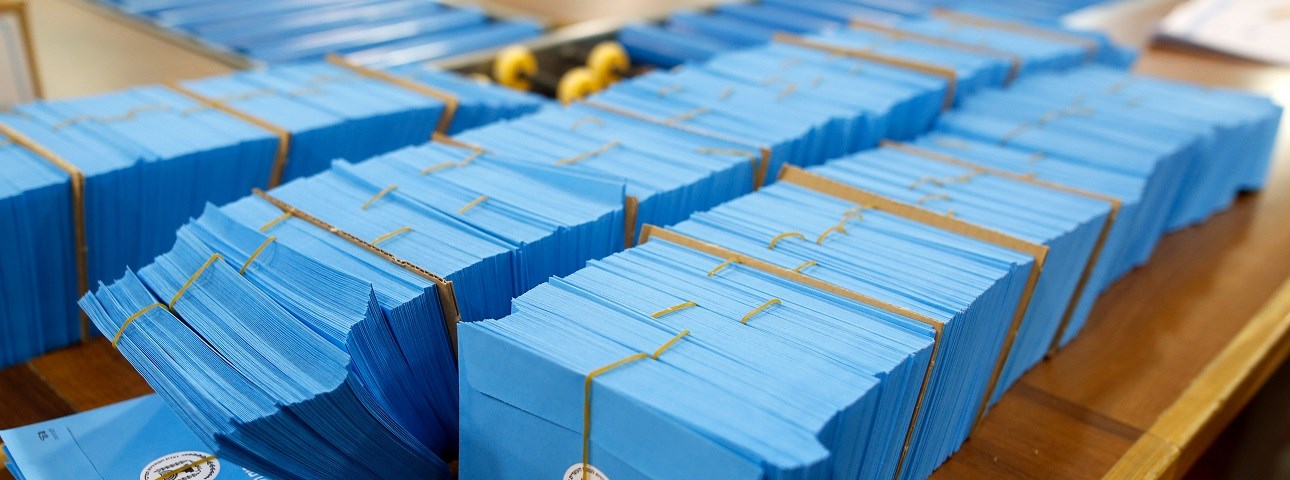
Does the past predict the future? Sometimes yes, sometimes no. What we can expect is stability in the number of double-envelope ballots, which will have a negligible impact on the distribution of Knesset seats between the blocs, unless they push some list below the threshold.

The Arab vote will be key to determining the outcome of the 2022 election. A special pre-election survey takes the pulse of Arab Israelis.

The Israeli Voice Index finds that while 56% of Israelis expressed trust in the upcoming election, 39% said they question if the results “precisely reflect how the public voted.”

Only 32% of Jewish Israelis support advancing a ‘two-state’ solution as a means for resolving the conflict with the Palestinians. When it comes to thwarting the possibility of a nuclear-armed Iran, half of the public thinks Israel can attack Iran’s nuclear facilities even without American agreement.

Half of Israelis intend to vote for the same party they voted for in the previous (2021) elections and almost one-quarter of respondents say that they have not yet decided which party to vote for in the November 1st election

New analysis by Dr. Or Anabi reveals a strong correlation between those who identify as left-wing and their votes for parties categorized on the left. The same applies to Israelis who places themselves in the ideological center. By contrast, the voting patterns of Israelis who identify on the right is more complicated with many voting for parties thought to fall outside of the traditionally-defined right-wing bloc.

A special IDI survey found that Israelis say that while there has been an 8.5% rise in their expenses over the past year, wages have remained stagnant – and even declined. The public is also split on which type of government after November’s election would deal best with the high cost of living.