

Israel Leaving the UN Climate Agreement Could Deal a Major Blow to the Economy
Withdrawing from the Paris Climate Agreement would undermine Israeli companies’ ability to meet the environmental standards of their trade partners, which could impact the entire economy.
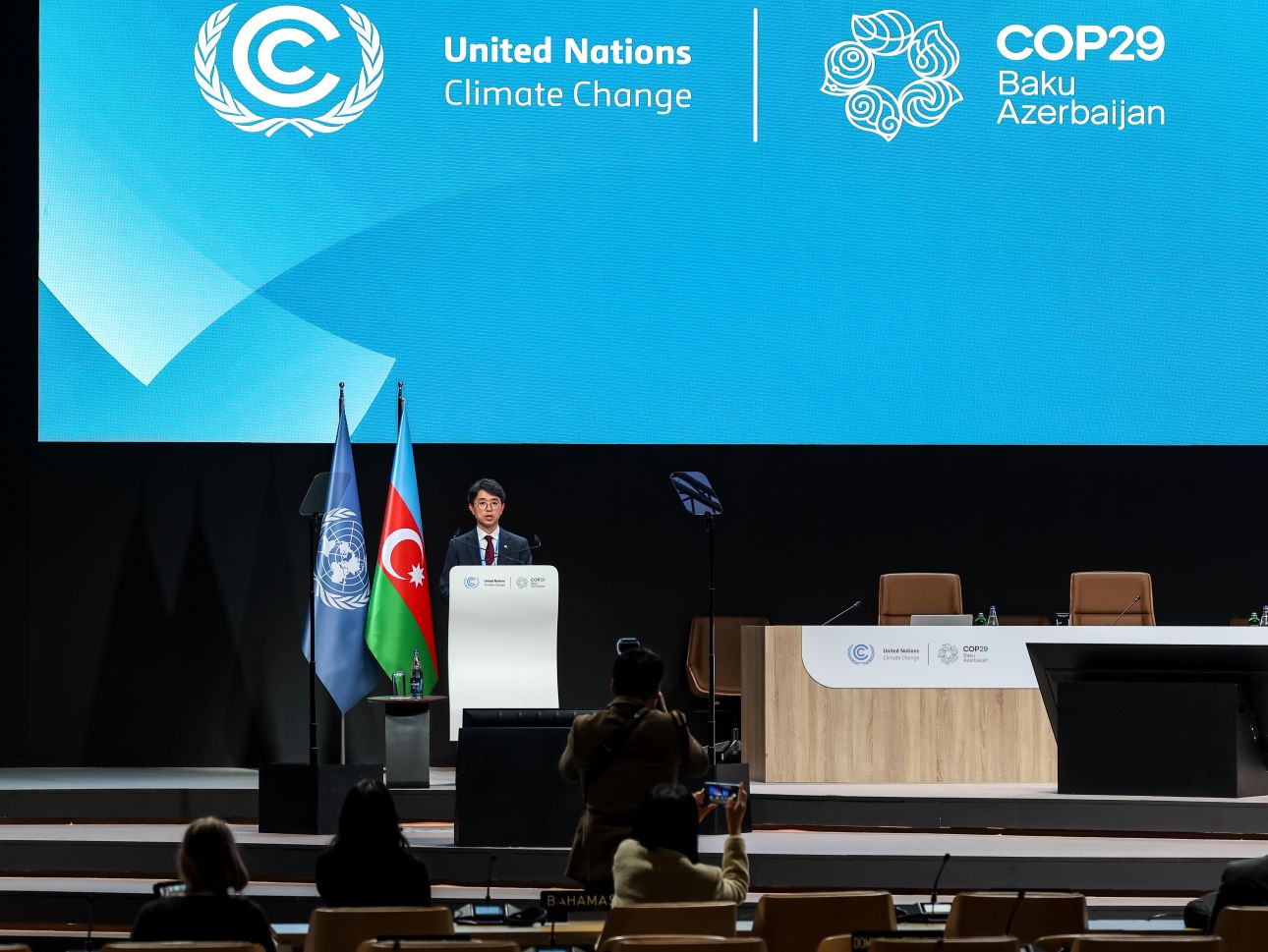
Photo by REUTERS
The Israeli economy and US economy are incredibly different, and if Israel follows suit in withdrawing from the Paris Climate Agreement, as is currently under consideration by Israeli leaders, it could cause severe economic damage. Israel is a small, open economy, and the weight of its foreign trade (exports and imports) amounts to about 54% of GDP. Without trade in goods and services with the world, the Israeli economy would not have been able to prosper and grow. According to OECD data, a majority of the public in Israel (63%) believes that the government is not doing enough to address climate change. In fact, Israel leads the list of OECD countries in which the public thinks the government is not doing enough on climate. Moreover, a survey published by the Israel Democracy Institute in November 2025 found that 68% of the public believes the Israeli government should prepare for the impacts of global warming. The survey also shows broad agreement on the issue: 67% of right-wing voters think so, as do about 87% of left-wing voters – indeed, in Israel the climate issue has remained outside political polarization.
And while Israel’s accession to the Paris Agreement in 2016 may not have saved the world from the climate crisis, it did greatly support the growth of Israeli exports, thanks to compliance with the standards required by our customers abroad. This is true, in particular, of Europe, Israel’s principal trading partner, where about one-third of Israeli goods exported go, compared with about 31% to the Americas and about 22% to Asia). Israel’s withdrawal from the agreement carries several major economic threats:
First, it would harm Israeli goods exports to Europe, meaning damage to roughly one-third of exports.
Second, it would harm investment in Israeli companies due to failure to meet ESG standards required by international institutional investors.
Third, it would harm the ability of companies and research institutions to win grants and participate in European programs such as Horizon, whose eligibility conditions include convergence toward net-zero greenhouse gas emissions targets.
Fourth, there is the threat that Europe will not recognize the carbon tax imposed in Israel and will not offset it against the border adjustment tax levied in Europe (Carbon Border Adjustment Mechanism - CBAM). As a result, export costs to Europe would rise and the competitiveness of Israeli exporters would be doubly harmed: they would both fail to meet the standard required to trade with Europe and be forced to pay a tax at the point of entry to the continent.
The explanation for this major threat lies in the Corporate Sustainability Reporting Directive (CSRD)—a European Union directive that has entered into force gradually starting with the 2024 fiscal year. This regulation requires companies to report in a structured, transparent, and audited manner on how they manage risks and impacts related to environmental, social, and corporate governance (ESG) matters. In the climate context, the emphasis is on a commitment to an emissions-reduction process. This reporting obligation applies starting this year (2026) also to mid-sized companies, and from 2028 it will apply to small publicly traded companies and to companies outside the EU with substantial business activity in Europe.
Furthermore, to enable uniform ESG reporting, the EU already launched in 2020 the European taxonomy (EU Taxonomy Regulation), which maps most economic activities according to their contribution to environmental objectives (especially with respect to greenhouse gas emissions). This allows investors to assess the extent to which the companies they invest in meet the required standards and to prevent greenwashing. In the Israeli context, this is a real threat, since already today large investment funds—such as the Norwegian fund, whose investment volume is estimated at about $2.2 trillion—have reduced their investments in Israeli companies, claiming they do not meet ESG standards. Thus, according to various reports, the Norwegian fund reduced its investments in Israel from 65 companies at the beginning of 2025 to about 44 companies today. It is important to stress that this threat of losing foreign investors is relevant to all companies in Israel, not only to exporters to Europe.
Companies that do not meet the required standards may, on the one hand, suffer divestment by European institutional investors that will no longer be able to invest in them if they do not meet the standard; and on the other hand, they may also lose deals with customers in Europe and beyond, who will hesitate to include them in their supply chains.
We must not underestimate Europe’s power to influence the Israeli economy. Without clear direction from the Israeli government, regulators, and lawmakers, Israeli companies will find themselves facing a dead end when it becomes clear they can no longer participate in tenders or international collaborations, nor win grants, close deals, or raise European capital, because they do not meet the required standard. The result would be severe harm to the competitiveness of the economy and to the Israeli economy as a whole. A slowdown and perhaps even a decline in exports and economic growth would also cause a decline in state tax revenues and an erosion in the standard of living of Israel’s citizens. As European regulation expands, companies and foreign investors will tighten their requirements, increasing the risk that the damage to Israeli exports becomes an irreversible trend. Every businessperson understands how hard it is to win back a customer who has lost trust or an investor who has left—and how much easier and cheaper it is to invest in retaining them in advance.