

Following Orban’s Defeat: A Sign of Things to Come?
For years, Orbán’s leadership model served as proof of concept for populist leaders that liberal democracy could be dismantled gradually, legally, and with public support. His defeat could have an impact far beyond the borders of Hungary.
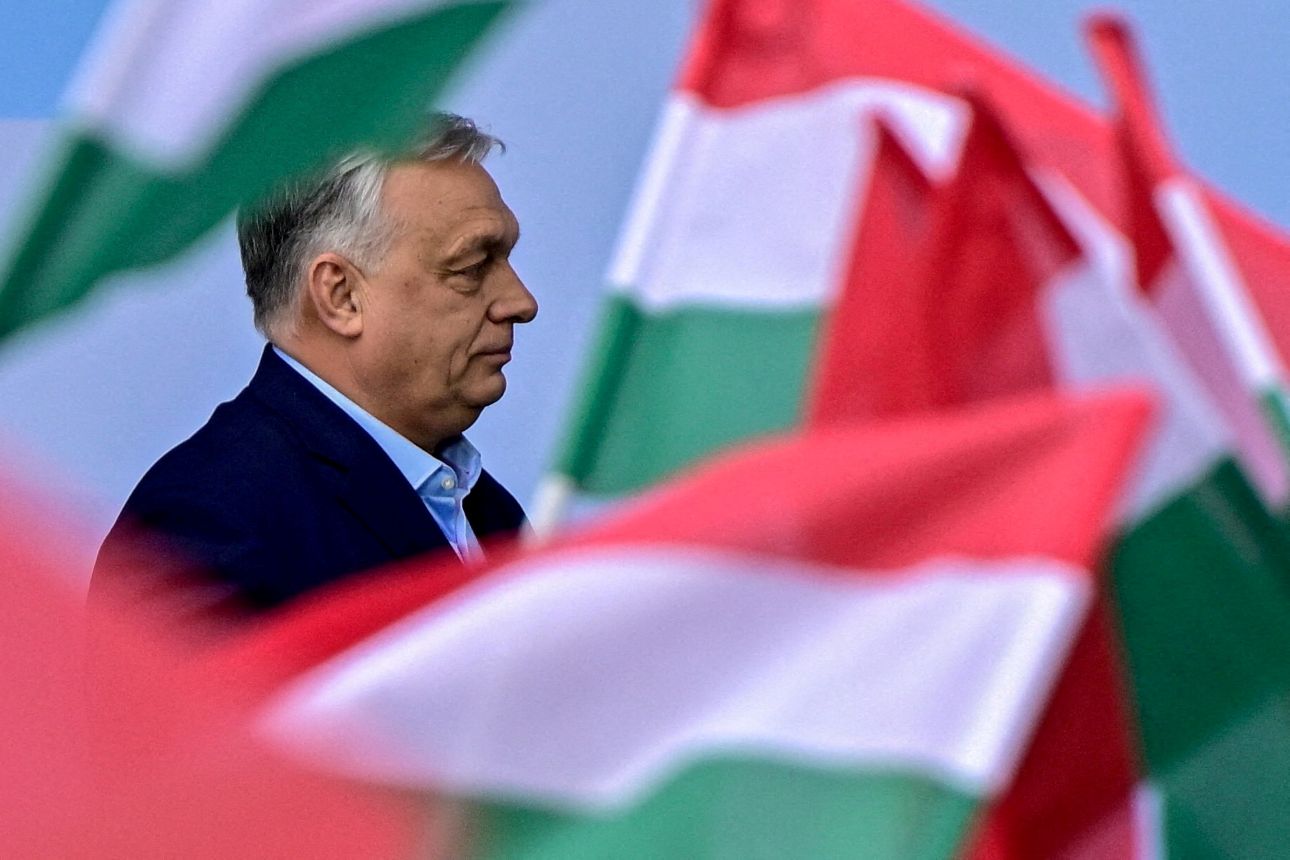
Photo by REUTERS
Viktor Orbán’s loss in the elections held on Sunday in Hungary has implications far beyond a domestic political upset. It is a dramatic rupture, representing the fall of one of the most influential architects of modern populism, and a symbolic blow to a political model that has been emulated around the world over the past decade.
Orbán has had an incredible impact throughout his leadership, far beyond the borders of Hungary. He has redefined what governance can look like in the 21st century. During his uninterrupted 16-year rule, Hungary became what many scholars call an “electoral autocracy,” that is, a system in which free elections still take place, but the playing field is systematically tilted through pressure on the free media, erosion of judicial independence, and the hollowing out of civil service and academic institutions. For years, Orbán’s model served as proof of concept, for populist leaders near and far, that liberal democracy could be dismantled gradually, legally, and with public support.
His defeat, therefore, resonates far beyond Budapest.
It also fits into a broader, though still tentative, European trend. In recent weeks, several political events have suggested that the populist tide may be encountering opposition. In Italy, Giorgia Meloni suffered a setback in a referendum widely seen as a test of her government’s strength. In France, the far right under Marine Le Pen delivered underwhelming results in local elections, despite the high expectations for decisive gains. And in Slovenia, the liberal coalition of Robert Golob narrowly edged out the populist Janez Janša.
Taken together, these developments suggest the emergence of a “mini-wave” of populist setbacks. Some analysts have even begun to describe this moment as a tentative “Trumplash”: a delayed political reaction against the style and legacy of Donald Trump, whose brand of confrontational populism inspired leaders like Orbán across Europe.
And yet, it would be a mistake to overstate what this means. Populism remains a powerful and deeply rooted force, drawing on real grievances: economic anxiety, distrust of elites, and cultural polarization. If anything, what we may be witnessing is the stalling of populist momentum, not its demise. Populism remains strong, electorally viable, and capable of regaining political power under the right conditions.
The political trajectory of Hungary itself, even after Orbán’s loss, remains uncertain. Sixteen years of his rule have reshaped the state in profound ways. Reversing those changes will be neither quick nor easy. The incoming government will face the daunting task of restoring institutional independence and rebuilding public trust, in a system that may still be structurally biased against them and stacked with loyalists of the old regime. Here, the experience of Poland is instructive. There, a liberal government that replaced a populist one in late 2023 has struggled to undo years of institutional erosion. The weakening and the politicization of courts, media regulators, and civil service structures cannot be undone overnight. The institutional legacy of populist governance lingers long after electoral defeat.
These developments feel particularly relevant in many democracies undergoing a similar process. In Israel as well, populist leaders have drawn, implicitly and sometimes explicitly, from the Orbán playbook. The patterns are familiar: sustained attacks on “elites,” efforts to delegitimize and gain control over independent media, pressure on legal and academic institutions, and attempts to reshape the civil service into a more politically compliant apparatus.
In this sense, Orbán’s defeat reverberates well beyond Europe, representing a symbolic setback for the political model adopted by populist leaders in recent years and sending a signal that the strategy of incremental democratic erosion is neither inevitable nor irreversible. It also highlights a deeper shift in the structure of political competition, one that is already visible in Israel. In countries where populism is ascendant, the main political rivalry is no longer primarily between a moderate left and a moderate right. Instead, the defining contest is increasingly between a populist right and a more institutionalist, liberal-leaning right.
In Israel, this dynamic is likely to define the coming election. On one side stands Netanyahu's current populist coalition. This coalition is being challenged in the polls not by leaders of the left, but by right-wing figures such as Naftali Bennett and Avigdor Liberman, alongside centrists such as Yair Lapid and Gadi Eisenkot, who also often espouse a form of right-wing politics that leans conservative in policy (and even hawkish and nationalist) but are more committed to institutional norms and democratic constraints.
Orbán’s defeat, of course, does not guarantee a similar outcome in Israel. Political contexts differ, and Israeli society has its own unique dynamics. Though current polls do not show a victory for the parties in Netanyahu's current government in the upcoming election, the Israeli political system could theoretically produce several very different coalition scenarios. This could include a government consisting of the current opposition parties, a broad national unity government under Netanyahu but less reliant on populist elements, or even a repeat election. But the outcome of the Hungarian election does offer a reminder in Israel and in democracies around the world facing challenges that that populism can be challenged, and even defeated, though never easily, and perhaps not definitively.
This article was published in The Jerusalem Post.