

The IDF Must Remain Above Politics
A controversy involving Israel's Defense Minister and the IDF Central Command raises concerns about the politicization of the IDF. To safeguard military cohesion, public trust, and national security, the IDF must remain a professional and non-partisan institution.
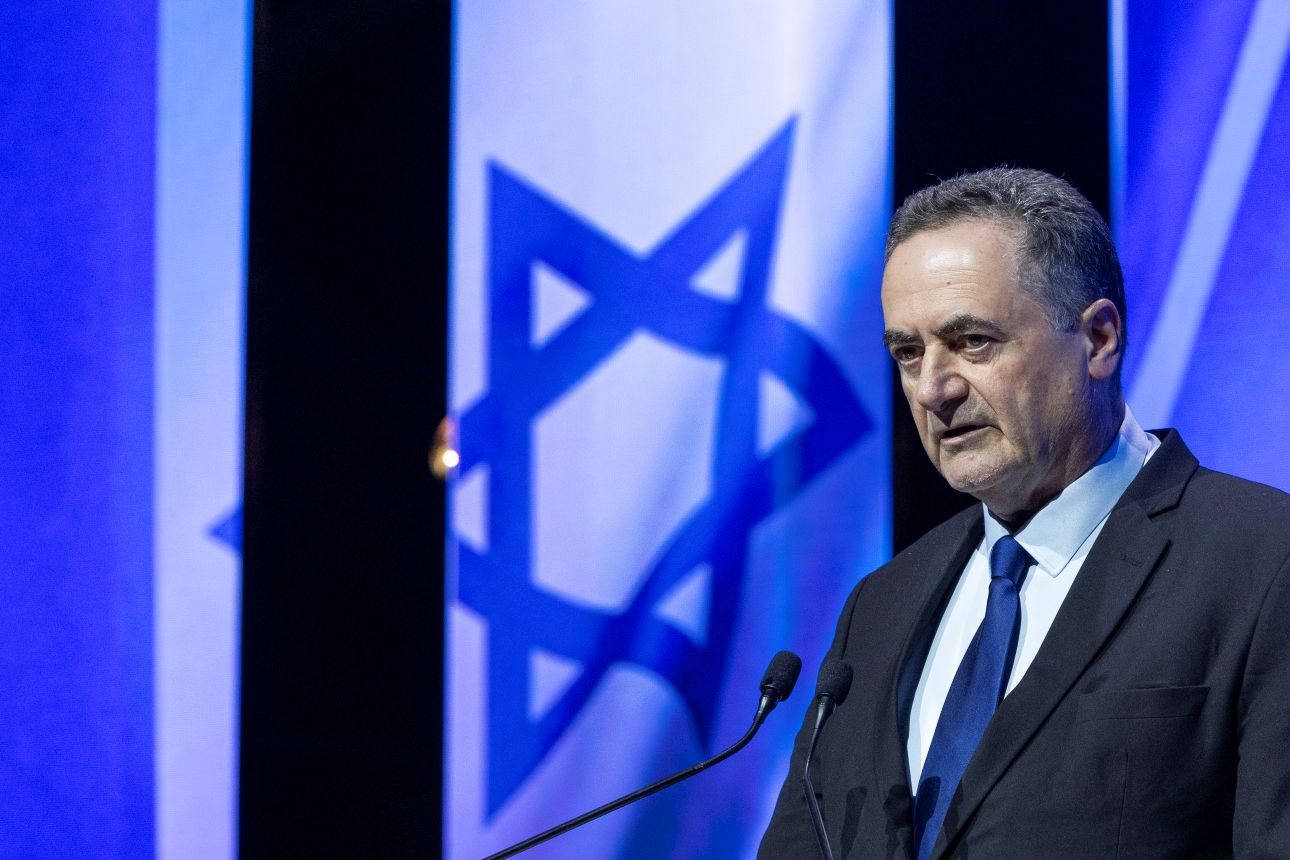
Photo by Oren Ben Hakoon/Flash90
A major controversy unfolded this week, as Israel's Defense Minister Israel Katz announced on Channel 14 news that he was replacing the IDF's Central Command Chief, Maj. Gen. Avi Bluth. The IDF Central Command is one of the IDF's four regional command centers, overseeing brigades that operate in the West Bank (Judea and Sameria), and other parts of the country's geographic center. The reason Minister Katz provided on-air for Maj. Gen. Bluth's dismissal was that Bluth was acting against Katz's orders in a matter relating to a suspected attack by a violent settler. A dispute has since erupted with senior IDF officials, including Chief of Staff Eyal Zamir, over the authority and process for such a move. The question of process, however, misses the bigger picture. What is alarming about the minister’s announcement is the effect that both his rhetoric and the platform he chose to use will have on the IDF.
At the heart of every military in a democracy, and especially one with mandatory conscription, such as the Israel Defense Forces, is the principle that it must be a national, nonpartisan institution: one that serves the state and acts in accordance with the law and professional considerations. This character underpins both public trust in the IDF and the demand that all sectors of society enlist. The IDF of course operates under the directives of the elected political leadership, but if those directives are driven by political rather than professional considerations, the political leadership itself jeopardizes the IDF’s ability to function as a professional, nonpartisan military. This would be catastrophic to the institution.
In the annual Israeli Democracy Index (conducted by IDI), the IDF is consistently the most trusted institution by Jewish Israelis. In the 2025 Index 81% of Jewish Israelis proclaimed trust in the IDF – almost double the percentage of the other institutions. If the IDF loses its nonpartisan character, it will endanger both its own standing and the security of the State of Israel. If the military acts according to the political whims of one camp alone, how can we expect those who disagree to be required to enlist? Why should the public as a whole continue to support and trust the IDF?
If the IDF acts on political considerations, soldiers who do not share certain political views may come to regard themselves as exempt from carrying out politically motivated orders.
In announcing the end of Maj. Gen. Bluth’s tenure, the Defense Minister did precisely the opposite of what is required of a political leadership that cares about preserving the military’s independent, nonpartisan character. He bypassed the IDF Chief of Staff and the procedures designed to ensure that military decisions are made on professional grounds. Moreover, Minister Katz publicly declared that the reason for dismissing the Central Command Chief was Bluth's opposition to a political directive. And he chose to make the announcement on one of the most overtly political programs in Israeli media today, on a TV news channel associated with the right in Israel.
This is not the first time that Minister Katz has clashed with the chief of staff over appointments in circumstances that raised suspicions of political motivation. Until yesterday, however, the Minister at least tried to portray his reasoning as professional, relating to the officers’ performance on October 7. In this incident, the mask came off: no more professional explanations; instead, the assertion that a defense minister can dismiss a major general for political reasons.
The Defense Minister’s conduct in this case is profoundly damaging to military cohesion. If senior officers internalize the message that decisions by the political leadership concerning their promotion or dismissal are politically driven, they may shape their own conduct accordingly. If the public in general, and those who serve in particular, become convinced that these are the considerations guiding the defense minister, the IDF’s very standing as a professional, nonpartisan military will collapse. Should that happen, the Defense Minister’s actions will pose a real and tangible risk to Israel’s security.
This article has been published in The Times of Israel.