

Renewing Israel's Social Fabric in 2026
After two years of war and several months into a ceasefire, Israel enters an election year. Now is the time to focus on accountability for the failures of October 7, an equal burden of service, and a renewed commitment to engaging in a respectful and serious dialogue on how Israel can emerge stronger from a tumultuous four years.
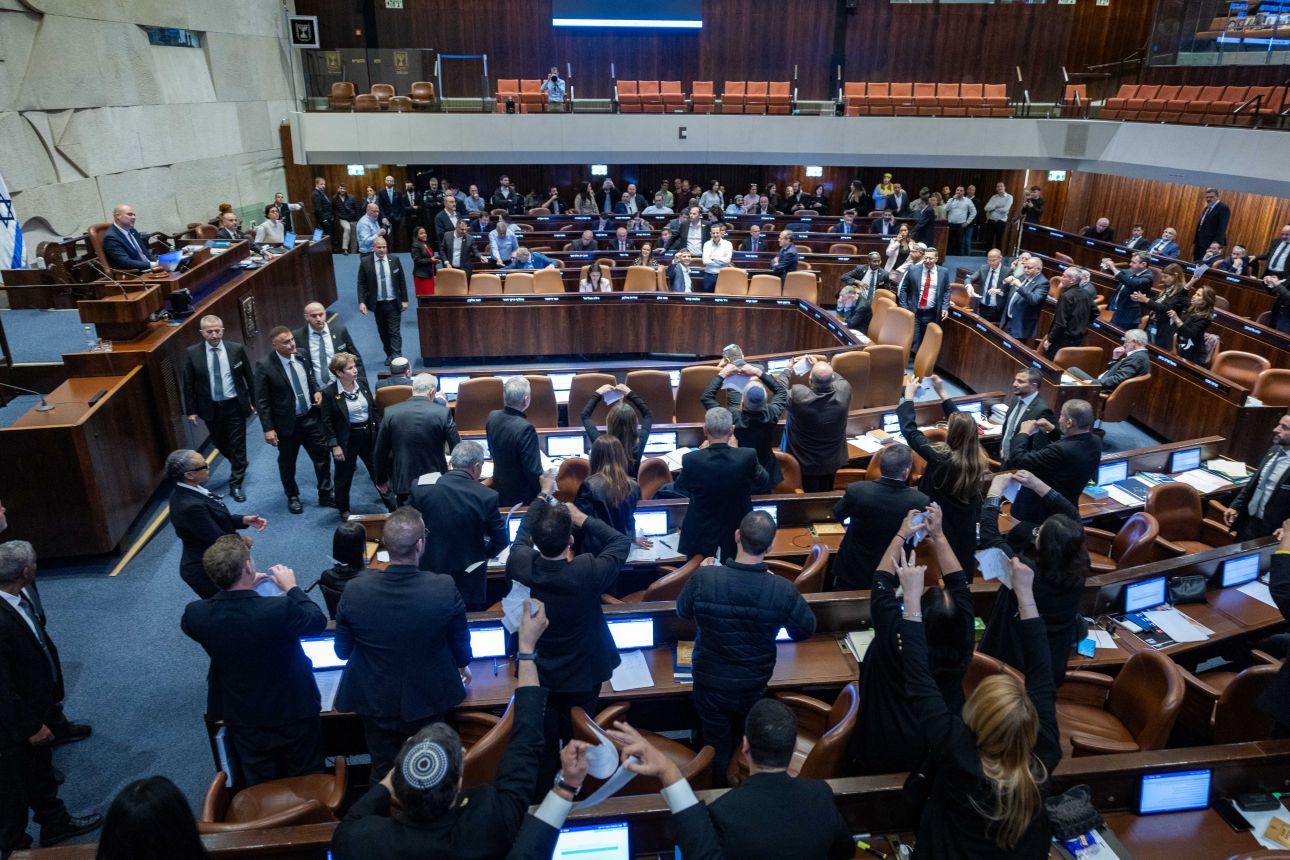
Photo by Yonatan Sindel/Flash90
As we begin the new year, much of the world appears eager to turn the page on Israel’s war. The return of hostages and the announcement of a US-brokered ceasefire last October have created the impression that the conflict is behind us. Israelis, however, see things very differently.
According to a recent IDI Israeli Voice Index survey, more than 75 percent of Israelis believe another round of fighting with Hezbollah and Iran is likely. Fifty-eight think that renewed combat in Gaza against Hamas is ahead. Sixty-seven percent anticipate a violent Palestinian uprising in the West Bank in the coming months. These figures offer a stark window into the Israeli public’s mindset. For most Israelis, the current moment is not an end to the war, but a lull in fighting.
If this assessment is correct, then Israel faces a prolonged period of insecurity. As the immediate emergency of the post–October 7 period recedes, it becomes increasingly clear that an exclusive focus on military tactics and operations are not enough. Israel must restore public trust in its governing institutions and ensure that its economy is strong enough to sustain the increased defense burdens that lie ahead. Indeed, the strengthening of the social fabric of our Jewish and democratic state is important not only for the wellbeing of Israelis, but is actually a matter of national security for our country.
The long-term security and social resilience of our nation is deeply threatened by sharp divides in Israeli society; a failure of certain sectors of society to bear the burden of its defense; and a refusal of Israeli leadership to take on the difficult but necessary task of an independent investigation of the events of October 7.
An Independent Commission of Inquiry
Indeed, the first and most urgent task in the new year is long overdue: the establishment of a State Commission of Inquiry into the surprise attack of October 7. While previous governments did so as a matter of course after major failures, the present government has not only avoided it, but is actively attempting to form a commission beholden to politicians, continuing a transparent effort to control the narrative, evade responsibility, and direct blame solely to Israel's defense and security agencies. Those agencies have conducted serious, if incomplete, internal investigations, and many of their leaders have resigned. Political accountability, however, remains conspicuously absent.
A State Commission of Inquiry is not about scapegoating or finger pointing. Beyond the moral imperative of uncovering the truth, allowing Israeli citizens to process its collective trauma, the primary purpose of a Commission is to identify root causes and systemic failures, in an independent manner, so that they are not repeated. If Israel is indeed entering a turbulent period of continued conflict, as most Israelis expect, evading a comprehensive and independent investigation into October 7 is not merely irresponsible; it is dangerous.
Equal Burden of Service
Israel must confront another reality laid bare by the war. With multiple fronts to defend and a future defined by heightened military readiness, the country can no longer rely on the relatively small cadre of men and women currently bearing the burden of serving the country. The Israel Defense Forces cannot return to being the “small and smart” army of the pre-October 7 era. The need for more soldiers, particularly in combat roles, is undeniable. According to the IDF, as many as 12,000 additional troops are required immediately.
This makes the continued policy of sweeping service exemptions for ultra-Orthodox men both amoral and unsustainable. Ending it will be politically difficult, but from a national-interest perspective the logic is inescapable. Doing so does not mean abandoning Torah study. On the contrary, it is entirely appropriate for the Jewish state to fund a select group of outstanding yeshiva scholars who devote themselves to advanced learning. Israel already supports excellence in fields like athletics and the arts. There is no reason not to apply a similar model to scholars of the Talmud, while expecting the vast majority of young men to share in the responsibilities of citizenship.
The Tumultuous Political Period Ahead?
Hovering over both the question of political accountability and Haredi conscription are the national elections that will take place in 2026. Election campaigns can deepen divisions and reward those who exploit fear and resentment. But this is not a predetermine trajectory.
Rather than a partisan shooting match, the upcoming elections can be marked by informed and substantive debate, both around issues on which an overwhelming majority of Israelis agree—such as the topics mentioned above—and around the questions that are more divisive in society.
As we enter an election year, it behooves all Israelis – and especially our leadership – to engage in serious dialogue on how Israel can emerge stronger after the upheavals of 2023 and 2024. This of course means we must stand firm and defend our borders from the evolving threats in the region. But it also means finally tackling the challenge of Haredi integration into our broader national story and promoting greater equality and economic growth while respecting their beliefs and traditions.
It also means not shying away from long-neglected issues that can no longer remain unresolved. How can we make our government leaner, more professional, more transparent, and more focused on improving the lives of citizens? How can Israel protect itself and the Jewish people from the corrosive effects of social media in the age of artificial intelligence?
These are among the questions that will shape Israel’s future, they deserve serious answers in this new year.
Disagreement is inevitable – and even healthy – in any vibrant democracy, particularly one under constant threat. But unity behind the shared vision of Israel as a thriving, secure, Jewish and democratic state is indispensable. As Israel recovers from the war that began on October 7 and resumes its historic project of renewal and restoration, it must do so with clarity, accountability, and a shared commitment to its future. Doing so is not only a matter of social resilience – it is a matter of Israel's national security.
This article was published in the Times of Israel.