

Military-Style Policing is Not the Same as Tough on Crime
While the police shooting in Tarabin is still under investigation, the events leading up to the shooting reflect a systemic failure in the police's approach to combatting crime in Arab society, and raise concerns about politicization of the police.
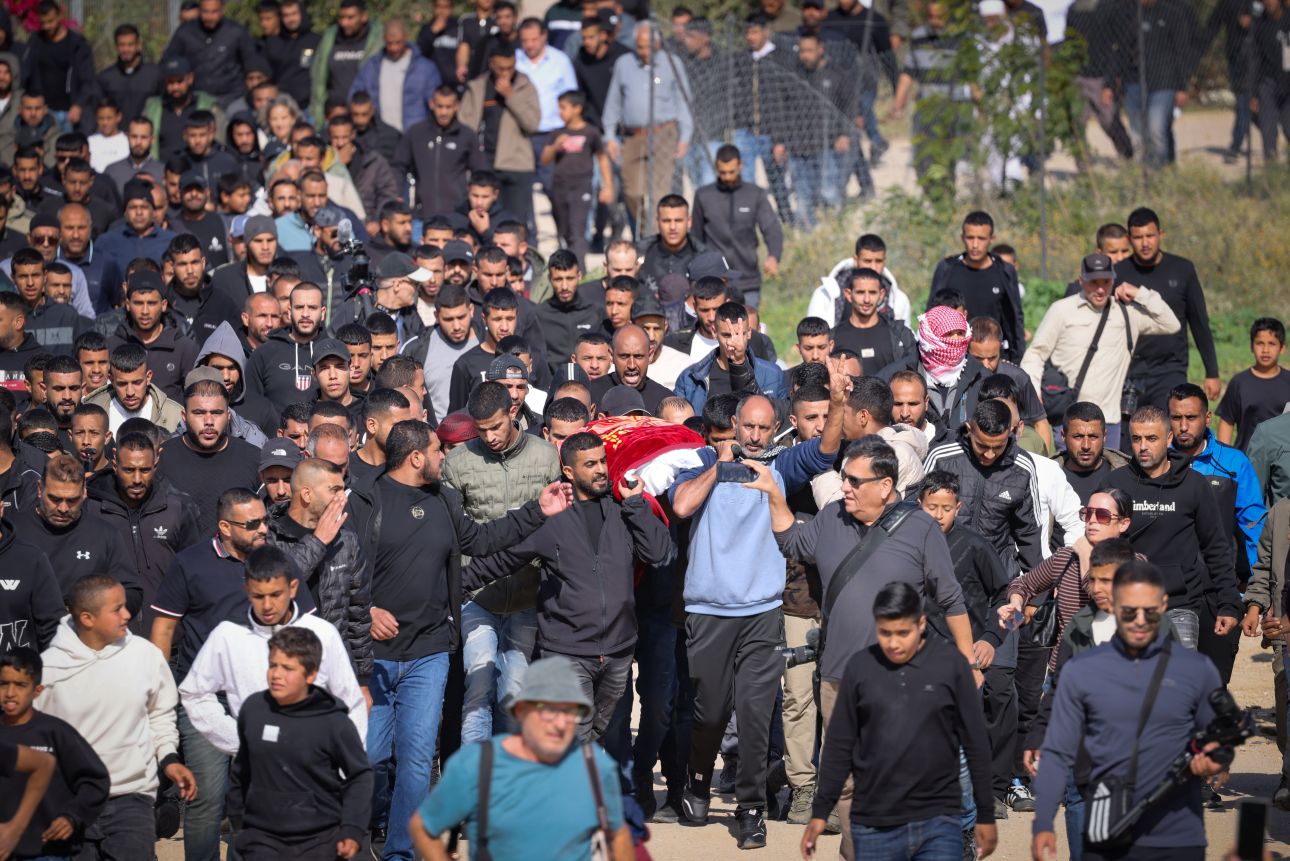
Photo by Jamal Awad/Flash90
Earlier this week police shot and killed a Bedouin Israeli man, Muhammad Hussein Tarabin al-Sanea, in the town of Tarabin in the Negev. The police have been operating in the locality for over a week, following a series of arson attacks on vehicles in the communities of Givaot Bar and Mishmar HaNegev, for which three men were arrested. Hundreds of police officers from paramilitary units were then deployed, imposing a prolonged de-facto siege on the town of over one thousand residents. This excessive use of force and collective harassment of Israeli citizens does not empower governance and lawfulness, and it is highly doubtful it will result in communities feeling or being safer.
These events once again raise the question of what sorts of policies and tactics are effective – and which are not – in fighting crime. While the details of the shooting are still under investigation, it is clear that the events leading up to the shooting mark a systemic failure of the police's approach to fighting crime in the Arab Society. A long-term paramilitary deployment, initiated at the directive of the Minister of National Security, instills increased fear in the community, fails to address the root causes of crime, and can lead to loss of life as seen in the Tarabin case. At the end of the day, Israeli citizens, even if they are suspected of criminal offenses; even if they, indeed, committed those criminal offences, should not find their deaths at the doorstep of their homes during a police operation.
The rising crime rate in Israel, and in the Negev in particular, requires action. Jewish residents live in a reality of fear of burglaries and property crimes, and reckless, aggressive driving by their Bedouin neighbors. At the same time, Bedouin residents live in fear of stray gunfire, brawls, and even murders, which have become a routine part of life with the worsening of crime in Arab society. Living in fear is an unbearable life, one that harms the individual, the community, and the entire country.
All citizens deserve to live in secure communities, and it is the responsibility of the state to ensure this. But, as stated, security and proper governance cannot be achieved through a quasi-military operation against an entire village for a number of reasons.
First, it is simply not possible to eradicate crime in the Negev using counterterrorism tools usually employed by the military. Research and experience in Israel and around the world teach that crime and delinquency are defeated together with the community, through building trust and through targeted policing strategies, and not by instilling fear and imposing security restrictions on the citizens of an entire locality.
Second, force alone will not defeat the crime crisis in the Negev. Addressing the root problems in education, welfare, and the economy allow for long term, evidence based reduction of crime. In Tarabin there is poverty and neglect, and the residents of the village themselves are desperate for state authorities to fulfill their responsibilities and support them.
In fact, the actions this week in Tarabin expose the danger of the politicization of crime policy that too often characterizes the current leadership of the Ministry of National Security. It is worth remembering that policing is a profession, and the ability of the police to act in order to effectively carry out its duties rests on its independence in decision-making. Blunt interference in the professional discretion of the police and in its operational decisions is not only contrary to the law; it also leads to ineffective handling of the problem.
Israelis are currently living in fear—fear of terror; fear of crime. But fear must not blind us from seeing that the use of excessive force against Israeli citizens is not an expression of governance. Fear must not prevent us from asking: Is collective punishment of an entire locality acceptable? Will encircling the village with concrete barriers, armed fighters in the streets pointing weapons at civilians and firing smoke grenades into a house of prayer and residential homes indeed reduce crime?
On the contrary, these military tactics in policing add fuel to the fire, giving the community yet another source of fear without addressing the root problems driving the rising crime rate.
Residents from Tarabin who were interviewed in the media in recent days said openly that the criminals who set the vehicles on fire must be brought to justice. The citizens of Tarabin want, need, and deserve a police force that works for them - a police force that sees the community as a partner in the struggle against violence, that acts professionally and within the framework of law and justice, brings criminals to justice, and protects the entire public equally and effectively.
This article was pubished in The Jerusalem Post