
The Fabricated Bennett/Lapid Image and the New Age of Election Propaganda
A fabricated AI-generated image of Naftali Bennett and Yair Lapid posted on the Likud's social media accounts is a clear demonstration of a dangerous new form of election propaganda. Urgent steps must be taken to prohibit the use of such materials against one's political opponents.
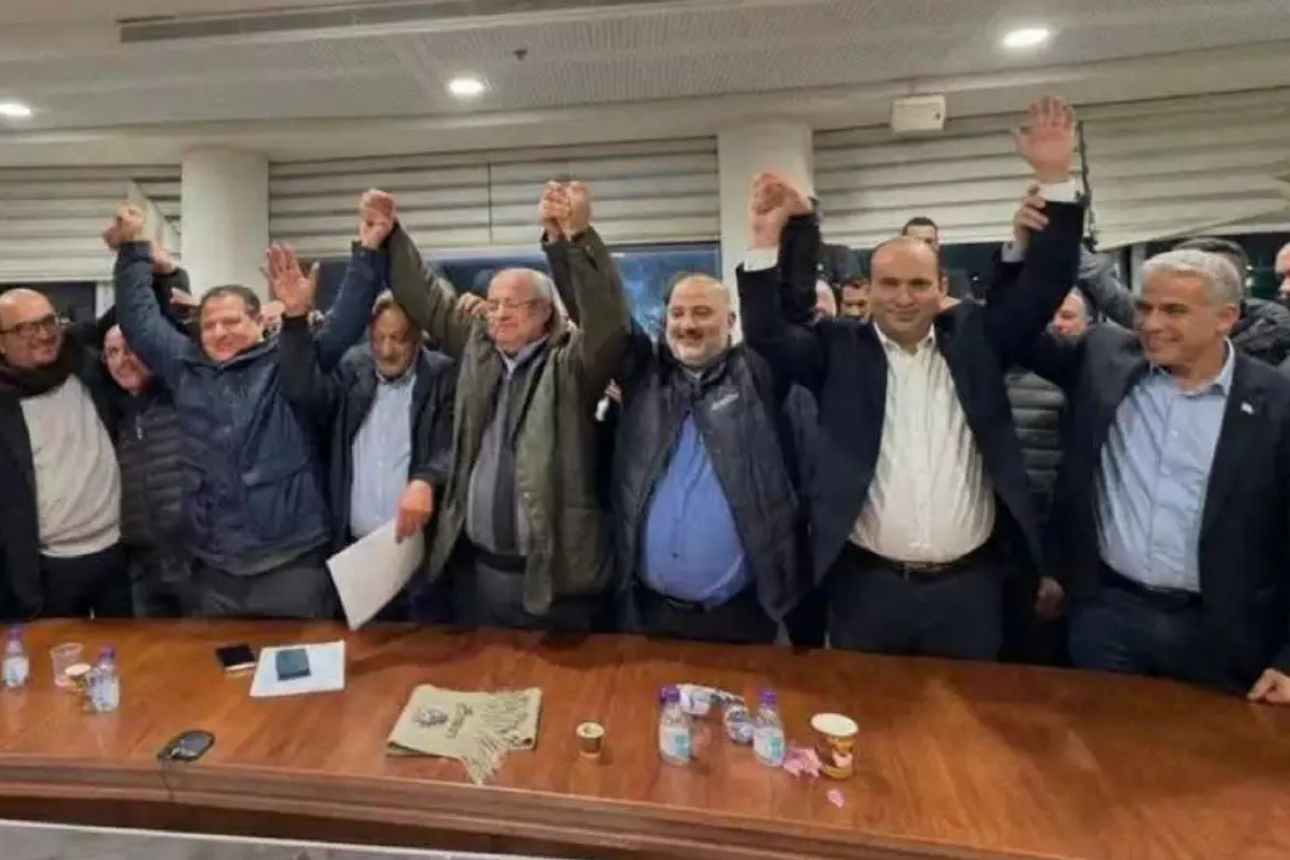
The fabricated image taken from the official Likud X account
Earlier this week, fabricated images of Naftali Bennett and Yair Lapid standing alongside a photo of the members of the Israel's Arab political party lists appeared on the Likud’s official social media accounts. Within minutes, the image migrated to WhatsApp and Telegram groups, spreading broadly throughout the Israeli public awareness before anyone knew it was fabricated. This is no joke and no accident – politicians in Israel and abroad have long been using AI to generate images of themselves to construct an alternative reality in the public eye. Is it any surprise that they'd do the same to their political rivals?
In recent months, political “deepfakes” have been turning into what is known as “slopaganda”—a portmanteau of the word “propaganda” with the word “slop.” This is highly realistic propaganda, produced at massive scale by artificial intelligence, intended to encourage polarization, smear opponents, and spread disinformation. Precisely because an image is perceived as evidence of a particular message of belief—“seeing is believing”—its use becomes a powerful tool of deception. In the flood of information around us, who has the time to check what is true and original? Such content does not inform us about what is happening in the world, but rather serves as a mirror that shows us the world politicians want us to see, or at least the version that will attract our attention and provoke our anger.
This phenomenon is not unique to Israel. In the most recent elections in the United States, artificial audio files in Joe Biden’s voice calling on voters not to go to the polls were circulated. In India, deepfake videos of Bollywood film stars urging people to vote against Prime Minister Modi went viral. In Slovakia, a fake recording on the eve of elections created a “cloud of suspicion” about election fraud even after it was debunked. We are already in an election year, so what are we waiting for? A video of a cabinet minister announcing that she is withdrawing from the race, as happened in Ireland? A recording of the prime minister announcing surrender in a war, as happened in Ukraine?
It is time to take action here in Israel – so what can we do? Bennett’s campaign headquarters filed a police complaint and Lapid’s campaign sent a letter to the chair of the Central Elections Committee, but these are largely symbolic acts. One can call on the Knesset to legislate amendments to the election propaganda laws that would require labeling content generated by artificial intelligence. The problem is that it is doubtful such legislation can now be passed. Even if there is legislation, it would have to be detailed, because a generic label stating that something was “created using artificial intelligence” would not make it possible to know whether what is fabricated is the background or the figures themselves.
The Privacy Protection Authority at the Ministry of Justice has already published guidelines stating that the use of deepfakes to “strip” real people or humiliate them constitutes an infringement of privacy, that is, a criminal and civil offense that gives rise to a right to compensation. This is a very important step, but it does not provide a solution for false election propaganda. Nor can we rely on social media platforms to label content. Various studies show that fewer than a third of AI-generated images and videos published on Instagram, LinkedIn, Pinterest, TikTok, and YouTube were properly labeled.
In Israel, those who are required to get to the heart of the matter are the Central Elections Committee and the police. Until now, the chair of the Central Elections Committee has refrained from dealing with the issue due to the absence of up-to-date election legislation in Israel. In the absence of such legislation, an urgent step should be taken establishing a rule that it is forbidden to publish any materials portraying political rivals—generated using artificial intelligence—as election propaganda. This would be considered unfair interference in elections, which is prohibited under Section 13 of the Election Propaganda Law. It is deeply problematic for politicians to generate false versions of themselves in their campaign efforts, but doing so with respect to others must be completely prohibited.
Without a clear red line, the upcoming elections will not be decided through the power of persuasion, but rather the power of deception.
This article was published in The Times of Israel