

Publications Regarding National Elections 2026
Articles
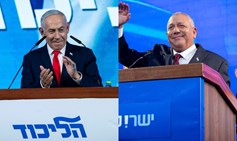
Final Results for Israel's 2026 Elections
Written By: Prof. Ofer Kenig
On October 27, Israeli citizens voted to elect the 26th Knesset. With all votes counted and the final results in, this preliminary analysis examines the distribution of seats among the parties, how many women and new members will serve in the new parliament, and how voter turnout in Israel compares internationally.

Alleged Funding of Foreign Influence in the Election: What Could This Mean for the Election Results?
Written By: Dr. Guy Lurie, Dr. Assaf Shapira
Following the directive issued by the chair of the Central Elections Committee to investigate suspicions of funding and influence by foreign actors, we explain the legal procedures that apply in such cases.

IDI’s Dr. Arik Rudnitzky on Kan English Radio: Record Arab Voter Turnout in Israel’s 2026 Election
Written By: Dr. Arik Rudnitzky
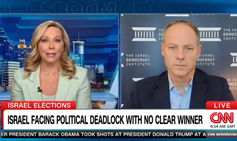
IDI President Yohanan Plesner on CNN’s Newsroom: Israel’s Preliminary Polls and Possible Scenarios
Written By: Yohanan Plesner
IDI President Yohanan Plesner joins CNN’s Newsroom to discuss the latest preliminary results from Israel’s 2026 election and the options available to both blocs for forming a government, as neither appears to have a clear path to a majority.

Special Post-Election Briefing with 92NY, IDI, and TOI: Understanding Israel’s Election Results
Written By: Yohanan Plesner , Prof. Tamar Hermann
Israelis have cast their ballots for the 26th Knesset, but the results remain inconclusive. In this special online briefing, experts discussed the scenarios on the table, possible paths to forming the next government, and whether Israel could be heading toward another election.
The briefing brought together IDI President Yohanan Plesner, Prof. Tamar Hermann, Director of IDI’s Viterbi Family Center for Public Opinion and Policy Research, and David Horovitz, Founding Editor of The Times of Israel, for an in-depth conversation presented by 92NY, IDI, and The Times of Israel.
The conversation was moderated by Amanda Borschel-Dan, Deputy Editor of The Times of Israel.
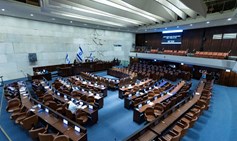
Minority Governments: A Possible Way Out of Political Deadlock?
Written By: Yohanan Plesner , Prof. Ofer Kenig, Dr. Assaf Shapira
Does political deadlock mean a new election? Not necessarily. Israeli law actually allows the formation of a minority government. Although rare in Israel, this type of government exists in parliamentary democracies and could help Israel avoid repeat elections – the question is whether it would be able to govern effectively.
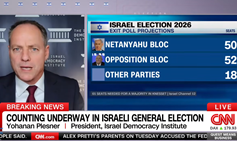
IDI President Yohanan Plesner on CNN, breaking down initial results on Israel’s 2026 election night.
Written By: Yohanan Plesner
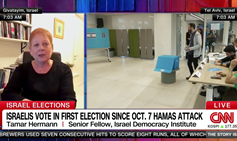
IDI’s Prof. Tamar Hermann joins CNN on the morning of Israel’s 2026 national elections.
Written By: Prof. Tamar Hermann
Today, October 27, 2026, Israelis headed to the polls to elect Israel’s 26th Knesset.
Speaking to CNN, Prof. Tamar Hermann, Academic Director of IDI’s Viterbi Family Center for Public Opinion and Policy Research, discussed the ideological differences among the parties and shifts in public opinion in the final stretch of the campaign.
IDI President Yohanan Plesner on the Bloomberg Brief to discuss Israel's 2026 National Elections
Written By: Yohanan Plesner
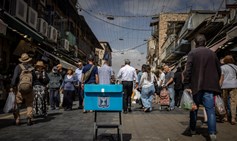
Election Day for the 26th Knesset: Everything Voters Need to Know
Written By: Dr. Assaf Shapira
When and where can Israelis vote? What do they need to bring to the polling station? Can they vote at a polling station other than the one to which they are assigned? What should they do if ballot slips are missing or they suspect a threat to election integrity? All the answers ahead of the election for the 26th Knesset.

What If WhatsApp Goes Dark on Election Day?
Written By: Dr. Tehilla Shwartz Altshuler
Much of Israel's election operations and infrastructure is carried out on WhatsApp, which is vulnerable to coordinated efforts to interfere with an opponent's get-out-the-vote efforts and erroneous blocking of accounts identified as spam. Key steps must be taken by Meta, WhatsApp's parent company, to protect electoral integrity on October 27.

Flash Survey: If No Party Can Form a Coalition, Highest Share of Israelis Prefer New Elections Over Alternatives
Written By: Prof. Tamar Hermann, Dr. Lior Yohanani, Yaron Kaplan
Among both Jewish (35%) and Arab (46%) Israelis, a plurality say that they prefer repeat elections over a unity government with a rotation (Jews: 28% / Arabs: 9%) or a minority government (Jews: 23% / Arabs: 25%).
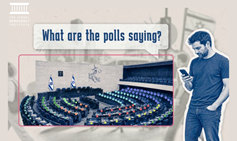
IDI Goes Behind the Scenes of Election Polling with Israel’s Top Pollsters
Written By: Prof. Tamar Hermann, Dr. Lior Yohanani
In every election race, including Israel's 2026 Election, we look to polls to understand which parties are gaining or losing support and how many seats each could win in the Knesset. Yet how can polls conducted at the same time in the same country show different results? At IDI, we convened Israel’s leading pollsters to look behind the scenes of the polls we all consume. The discussion covered how different survey methods affect results, why transparency matters, and how the electoral threshold complicates projections. The discussion also highlighted an important distinction, often overlooked by the public and media: polls do not forecast Election Day results. They measure public opinion at the time they are conducted.

The Israel Police’s Responsibility for the Proper Conduct, Fairness, and Integrity of the 26th Knesset Election
Written By: Deputy Commissioner (ret.) Moti Levi, Adv. Mirit Lavi

What Happens to Invalid Votes?
Written By: Dr. Assaf Shapira
What are invalid votes? Do they affect election results? Is there a difference between a blank ballot and other invalid votes? How many invalid votes have been recorded in each election? And how does Israel compare with other parliamentary democracies?

Jewish Israelis: Next Gov't Should Take on Haredi Conscription; State Commission of Inquiry
Written By: Prof. Tamar Hermann, Dr. Lior Yohanani, Yaron Kaplan
Passing a law requiring ultra-Orthodox men to serve in the IDF and establishing a State Commission of Inquiry into the Oct. 7 attack get highest level of support among Jews; exploring negotiations with Palestinians gets highest level of support among Arab Israelis.

The October 7 inquiry Israel still needs
Written By: Dr. Dana Blander
Israelis will vote on Election Day, more than three years after the October 7 massacre, as some of the most consequential questions about the attack remain unanswered. The establishment of a state commission of inquiry is a critical for the country.

Postponing Knesset Elections: Conditions and Restrictions
Written By: Dr. Guy Lurie, Dr. Assaf Shapira
Holding elections on schedule is one of the fundamental principles of democracy. Yet in certain emergency situations, there may be no choice but to postpone them. Under what circumstances does the law permit elections to be delayed and what safeguards are in place to ensure that such a decision is made solely on substantive grounds?

IDI’s Prof. Tamar Hermann on BBC Newshour Radio
Written By: Prof. Tamar Hermann

Polymarket and Synthetic Simulations: Election Forecasts That Are Not Polls
Written By: Dr. Tehilla Shwartz Altshuler, Dr. Guy Lurie, Dr. Rachel Aridor-Hershkovitz
Polymarket, Synthetic Simulations, and the Need to Expand Transparency Requirements Beyond Election Polls
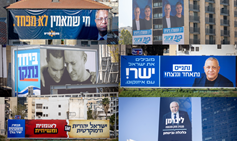
Election Campaign Financing in Israel
Written By: Dr. Assaf Shapira
In every Israeli election, parties spend tens of millions of shekels each on their campaigns. Where does the money come from, and when is it paid? How do the rules differ for large and small parties, and for established and new ones? Is there a spending ceiling? And what happens when a party runs a deficit?

Giving Israeli Voters a Stronger Voice
Written By: Dr. Assaf Shapira
Israelis vote for party lists and only in elections for Knesset and local government. Adding a candidate-based component to Knesset elections and considering reforms that expand the number of elected institutions would improve Israel's democratic system.

Yohanan Plesner: The Key Issues Facing Israeli Voters on TOI's What Matters Now
Written By: Yohanan Plesner
Yohanan Plesner: 3 Existential Issues Facing Israeli Voters on TOI's What Matters Now
Yohanan Plesner, President of the Israel Democracy Institute, joins host Amanda Borschel-Dan on the Times of Israel weekly podcast, What Matters Now. Ahead of Israel’s October 27 elections, they discuss the three key issues driving Israeli voters to the polls, the crowded field of parties and joint electoral lists, and the challenges of forming a stable governing coalition.

Play
Shana Tova from IDI - 5787
Written By: Yohanan Plesner

Candidate List Selection Ahead of Israel's 2026 Election
Written By: Prof. Ofer Kenig
The date of the election for the 26th Knesset has been officially set. One of the major milestones on the road to Election Day is September 8, the deadline for submitting candidate lists. Each party is free to determine how it compiles its list. This review examines the methods the parties use.
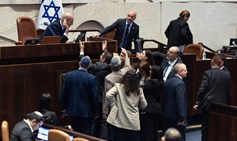
The Absence of a State Comptroller
Written By: Prof. Ofer Kenig, Dr. Assaf Shapira
The state comptroller plays a critical role in preventing misconduct in elections. Israel is now in a situation in which "the rules of the game are in place, but the referee has disappeared from the field."
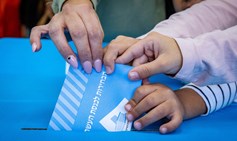
Overwhelming Majority of Israelis Think There is Danger to the Integrity of Israel's Elections
Written By: Prof. Tamar Hermann, Dr. Lior Yohanani, Yaron Kaplan
72% of Jewish Israelis and 58.5% of Arab Israelis say there is danger to the integrity of Israel's elections. Israelis are split on how best to handle Iran. Laws passed in the legislative blitz prior to Knesset dissolution were broadly unpopular.
What Motivates Haredi Voters?
Written By: Avraham Lafair, Dr. Gilad Malach
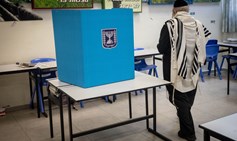
Haredi society features an unusually strong link between communal affiliation and voting patterns. Over the years, various mechanisms and motivations have been created to ensure that Haredi voters turn out to vote and to dictate which party they vote for. Will the conscription crisis and the events of recent years weaken these systems?

Shlomit Ravitsky Tur-Paz on TOI's What Matters Now: Nothing is black and white in Israel's religious societies
Written By: Adv. Shlomit Ravitsky Tur-Paz
Shlomit Ravitsky Tur-Paz, Director of IDI’s Joan and Irwin Jacobs Center for Shared Society and Head of the Religion and State Program, joins host Amanda Borschel-Dan on the Times of Israel weekly podcast, What Matters Now. Ahead of Israel’s October 27 elections, they discuss the stratification of Israeli society across different religious groups, the diversity of characteristics and values among Israel's religious populations, and how religion comes into play in Israeli politics - including at the ballot box.

Play
Prof. Amichai Cohen IDI's Vice President of Research on the 2026 Israeli Elections
Written By: Prof. Amichai Cohen
As Israel’s 2026 election campaign unfolds, IDI experts are examining the major questions shaping the campaign—and the country’s future. In the latest video in our special election series, Prof. Amichai Cohen, IDI’s newly appointed Vice President of Research, shares three key issues he’s watching.

The Knesset’s Work During the Election Recess
Written By: Gaya Stav Sigavi, Avital Friedman
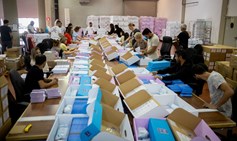
Everything you need to know about what happens to the Knesset between the end of its summer session and the 2026 elections, scheduled for October 27, 2026.


Israel Heads to Elections: Prof. Ofer Kenig Briefs the Jerusalem Press Club on How the Voting System Actually Works
Written By: Prof. Ofer Kenig
Prof. Ofer Kenig briefed the Jerusalem Press Club on Israel’s upcoming elections including on how the electoral system works, the formation of party lists, “double envelope” voting, coalition negotiations, and the process of forming a new government after election day.

Voting Patterns of Jews in the 2022 Elections by Religious Self-Definition
Written By: Dr. Ariel Finkelstein
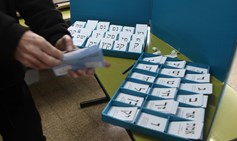
This review demonstrates a clear correlation between religious self-definition and voting in elections. The further one moves toward the secular end of the continuum between Haredim and secular Jews, the greater the likelihood of voting for a political camp currently identified with the opposition, and vice versa.
Let Voters Have a Say in Who They Vote in to Knesset
Written By: Prof. Ofer Kenig
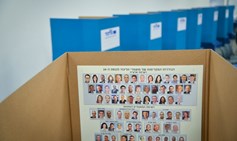
A semi-open ballot system would give voters the chance to express preference for particular candidates on election day, not just a pre-determined party list. This would improve accountability to the voters and resolve many of the shortcomings in the current methods of candidate selection.

Dr. Tammy Hoffman on Kan English Radio on Israel's First-time Voters
Written By: Dr. Tammy Hoffman
Dr. Tammy Hoffman, Head of IDI's Education Policy Program, spoke with Kan Radio about a new survey exploring the attitudes, perceptions, and political engagement of young adults who will be eligible to vote for the first time in the upcoming elections. She shared key findings on their intention and motivation to vote, whether they believe their vote can make a difference, and which issues they think the government should prioritize.

First-Time Voters Ahead of the 26th Knesset Elections
Written By: Dr. Tammy Hoffman, Meital Baron
This survey is part of a broader study. Research team: Dr. Tammy Hoffman, Daphna Cahana-Dolev, Meital Baron, and Dani Gigi.
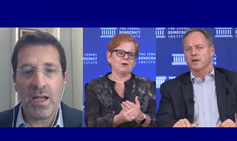
Israel Heads to Elections: Yohanan Plesner and Prof. Tamar Hermann with the Middle East Institute
Written By: Yohanan Plesner , Prof. Tamar Hermann
IDI President Yohanan Plesner and Prof. Tamar Hermann, Academic Director of IDI's Viterbi Family Center for Public Opinion and Policy Research, join Dr. Natan Sachs from the Middle East Institute to discuss Israel’s upcoming elections, why they are viewed as especially consequential, the role of Arab parties in future coalitions, and what might change under a different government.

AI and Democracy: Dr. Tehilla Shwartz Altshuler on the Times of Israel's What Matters Now Podcast
Written By: Dr. Tehilla Shwartz Altshuler
Dr. Tehilla Shwartz Altshuler, Head of IDI’s Democracy in the Digital Age Program, joins host Amanda Borschel-Dan on the Times of Israel weekly podcast, What Matters Now. They discuss how various actors can use AI to flood the public sphere with confusion and disinformation, the potential impact this can have in an election year, and key policy and regulatory steps that can be taken to ensure Israel's democracy is prepared for the AI-era.

Sharp Decline in Share of Israelis Who Think Israel's Security is a Central Consideration of President Trump
Written By: Prof. Tamar Hermann, Dr. Lior Yohanani, Yaron Kaplan
44% of Israelis think Israel's security is a central consideration for President Trump, representing a sharp decline from the last measurement. 61% of Israelis think Prime Minister Netanyahu should not run in the upcoming Knesset elections; 35% think he should.

What is on the Mind of Israeli Voters Heading to the Ballot Box
Written By: Prof. Tamar Hermann, Dr. Lior Yohanani
Four key issues are expected to take center stage in Israel's 2026 elections, representing a referendum on the future of the country's democratic character, the balance between religion and state, and the question of a liberal civic consensus in an era of unprecedented polarization.

Explainer: The Role of the Central Elections Committee and its Director General
Written By: Dr. Assaf Shapira
In the wake of the announcement by the director-general of the Central Elections Committee, Orly Adas, of her resignation: What is the role of the Committee, what is the role of the director-general, what is the significance of this resignation, and what challenges will need to be addressed?

Together (Beyachad): The Bennett-Lapid Merger and History of the Two Parties
Written By: Prof. Ofer Kenig

Knesset 101: How Parliament and National Elections Work in Israel
Written By: Dr. Assaf Shapira
Everything you need to know about the structure and responsibilities of Israel's Knesset (parliament) and how national elections work in Israel.

Explainer: Running on joint lists in elections: who does it benefit?
Written By: Dr. Assaf Shapira, Prof. Gideon Rahat
Former Prime Ministers Naftali Bennett and Yair Lapid announced a joint run of the "Bennett 2026" and Yesh Atid parties in the 2026 election. It is certainly possible that we will see additional joint runs like these ahead of the elections, for example, within the center bloc, the right-wing bloc, and among the Arab parties. The assumption is that such a run would benefit the parties and the bloc. But is this assumption correct?


How Votes Become Knesset Seats
Written By: Prof. Ofer Kenig
Learn the basics of how the votes Israelis cast on election day are counted and turned into seats in Israel's Knesset.

Can this year’s elections reverse the decline in women’s representation in Israel?
Written By: Adv. Anat Thon Ashkenazy
The regression in women’s representation in Israel is not a decree of fate but the result of political choices, and precisely in an election period, parties have a real opportunity to reverse this trend.

A Semi-Open Ballot: The Path to Fixing Israel’s Electoral System
Written By: Dr. Assaf Shapira
A reform that introduces a personalized component to Israel's elections would strengthen voter influence, enhance accountability of those voted into power, and improve Israel's democratic system.

The Fabricated Bennett/Lapid Image and the New Age of Election Propaganda
Written By: Dr. Tehilla Shwartz Altshuler
A fabricated AI-generated image of Naftali Bennett and Yair Lapid posted on the Likud's social media accounts is a clear demonstration of a dangerous new form of election propaganda. Urgent steps must be taken to prohibit the use of such materials against one's political opponents.

Play
IDI President Yohanan Plesner on the 2026 Israeli Elections
Written By: Yohanan Plesner
Israel is entering a pivotal election year—its first since the judicial overhaul and the war that began on October 7, 2023. Throughout the year, IDI is asking its experts which issues will shape the election campaign. IDI President Yohanan Plesner is watching three key areas: national security, including efforts to advance regional stability and examine the failures surrounding October 7; ultra-Orthodox conscription, given the IDF’s manpower needs and the post-war reality; and Israel’s democratic character, as questions surrounding the rule of law and checks and balances return to the center of the public agenda.

Israel’s First Elections in the Age of AI Will Test the Integrity of Democracy
Written By: Dr. Tehilla Shwartz Altshuler
With unprecedented technological tools in the hands of foreign and domestic actors, the proliferation of chatbots in the information ecosystem, and outdated regulatory frameworks, the integrity of Israel's 2026 elections will be tested like never before.

Special Review of Public Opinion Ahead of 2026 Elections (IDI's Israeli Democracy Index)
Following the release of the IDI's Israeli Democracy Index earlier this week, we're pleased to present the findings of a special chapter on Israeli public opinion ahead of 2026 national elections in Israel.

A Lower Threshold is Not the Electoral Reform Israel Needs
Written By: Asaf Heiman
Instead of debating electoral reforms that seek to preserve and protect the political interests of those in power, let us focus on electoral reform, such as a semi-open ballot system, that would improve governance, increase accountability, and strengthen democracy.


30 years ago, this week: When Mr. Netanyahu became PM Netanyahu
Written By: Prof. Ofer Kenig
Thirty years ago this week, on June 18, 1996, MK Benjamin Netanyahu was sworn in as Israeli Prime Minister for the first time. Since then, he served a cumulative total of nearly 19 years in office. This makes him one of the longest-serving leaders in the democratic nations.

Term Limits for Prime Ministers in Hungary – Coming Soon to Israel?
Written By: Dr. Dana Blander, Prof. Ofer Kenig
Hungary's incoming prime minister declared his intention to institute term limits for the prime minister – an exceptional move for a parliament. While similar ideas have been proposed in Israel, term limits are not a substitute for strong democratic institutions based on oversight and checks and balances.

Elections 101: Forming A Government After Elections
Written By: Prof. Ofer Kenig