

Knesset 101: How Parliament and National Elections Work in Israel
Everything you need to know about the structure and responsibilities of Israel's Knesset (parliament) and how national elections work in Israel.
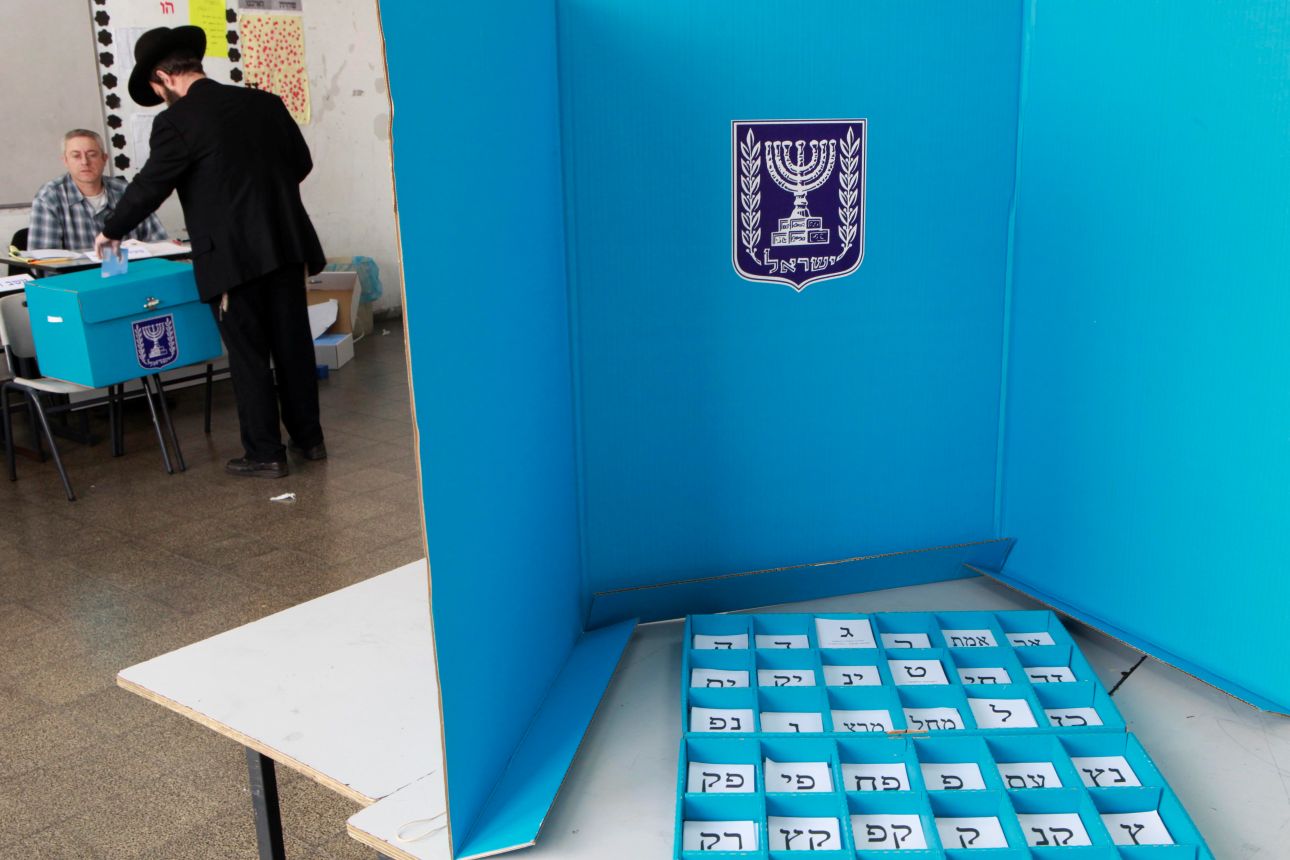
Photo by Nati Shohat/Flash90
What is the structure of the Knesset?
The Knesset is the parliament of the State of Israel, made up of 120 Members of Knesset (MKs). Unlike in some democracies, Israel has only a single legislative chamber, with no division between an upper and a lower house (that is, a unicameral rather than bicameral parliament). Israel also does not have separate regional or state-level legislatures, which exist in federal countries (such as the United States, Canada, and Australia) and even in some unitary states (for example, the Scottish Parliament in the United Kingdom).
Israel has a parliamentary system of government (as in, for example, the United Kingdom, Canada, and Germany), as opposed to a presidential system (as in the United States and most countries in Latin America; there are also hybrid models, such as the system in France, known as “semi-presidential”). This means, among other things, that Israelis cast only a single ballot in elections to the Knesset and do not separately elect the head of the executive branch; that the head of the executive branch is the prime minister rather than the president; and that the government (i.e., the prime minister and their cabinet) is “formed from” the Knesset, which can express no confidence in it and replace it. The Knesset’s principal functions include legislation (including the State Budget Law), oversight of the government, representation of the public, electing certain senior public officials (such as the President of Israel and the State Comptroller), and, as noted, the formation and dismissal of governments.
How is a government formed in Israel?
The process of forming a government proceeds as follows: after the elections, the President of the State, a largely symbolic or ceremonial figure with relatively limited substantive powers, assigns the task of forming a government to a Member of Knesset (or to others, if the first fails). That Member of Knesset may then present the government he or she has formed to the Knesset; for the government to be established and for that MK to become prime minister, it must win a plurality in a “vote of confidence” held in the Knesset. There is a limited period for forming a government, and if all attempts fail, the Knesset is dissolved and early elections are held. More details about this process can be found here.
To date, all governments formed in Israel have been coalition governments, meaning governments composed of more than one parliamentary faction. In most cases, the prime minister has been the head of the largest faction in both the coalition and the Knesset as a whole, but there have also been exceptions (e.g., Naftali Bennett served as Prime Minister in 2021–2022 despite leading a faction of at most 7 MKs). The factions that form the government sign coalition agreements, which specify, among other things, which government ministries each faction will “receive” (that is, appoint ministers to head), as well as the guiding principles and policies the government will promote. Opposite the coalition stands the opposition, which includes the parties not part of the government; it is led by the Leader of the Opposition, usually from the largest opposition faction, who enjoys special powers and status.
The government includes the prime minister, who heads the Prime Minister’s Office, and ministers responsible for various ministries. Some of these ministries are large and highly influential, such as the Ministry of Defense and the Ministry of Finance, and others smaller (for example, the Ministry of Strategic Affairs or the Ministry of Heritage). Appointing ministers generally requires the approval of the Knesset, but the prime minister has the authority to dismiss them. Some ministries also have deputy ministers. The prime minister must be a Member of Knesset (as must deputy ministers). Most ministers are also drawn from the Knesset, but this is not mandatory, and in recent Knessets it has become increasingly common for MKs appointed as ministers to resign their Knesset seats (under an arrangement known as the “Norwegian Law,” which allows them to return to the Knesset if they leave the government).
The Knesset can replace a sitting government through a vote of no confidence. A no-confidence motion is submitted by one or more factions, it includes a proposal for an alternative government (including a prime minister and ministers), and if it receives the support of at least 61 MKs, the government is replaced immediately.
How does proportional representation differ from a winner-takes-all model?
Israel uses a party-list proportional representation system. Under this system, voters cast their ballots for lists of candidates, and each list receives a number of seats in the Knesset proportional to its share of the vote. For example, if a party receives approximately 10% of the vote, it will receive roughly 10% of the seats. However, as in most other countries with similar systems, Israel has an electoral threshold: only lists that receive at least 3.25% of the valid votes participate in the allocation of Knesset seats. This is a moderate threshold, and certainly not high, in comparative terms.
By contrast, in a winner-takes-all system (such as in the United States, the United Kingdom, and Canada), which is a majoritarian system, the country is divided into electoral districts. Each district elects a single representative to parliament—the candidate who receives the most votes in the district wins it, even if the margin over the runner-up is very small.
The implication is that in Israel it is relatively easy for different parties, including relatively small ones, to gain representation in the Knesset (provided they pass the electoral threshold). As a result, the Knesset is indeed fragmented into a relatively large number of parties, even by comparative standards, representing a wide range of worldviews and constituencies. This contrasts with majoritarian systems, which typically have a smaller number of parties in parliament – usually only the larger ones (although majoritarian systems can also produce highly fragmented parliaments, as is currently the case in France, for example).
In what ways is Israel similar to other parliamentary democracies?
Israel shares many characteristics with other parliamentary democracies:
- Voters directly elect only the legislative branch (the parliament), not the executive branch.
- The government is “formed from” the parliament and requires its confidence, and the parliament can dismiss or replace it through a vote of no confidence or bring forward elections.
- The head of the executive branch is the prime minister, alongside a head of state (a president or, in some countries, a monarch) whose powers are primarily symbolic and ceremonial.
- Most ministers are drawn from the parliament (even if, as noted, some later resign their seats).
What features of Israel’s parliamentary system are unique?
Alongside these similarities, Israel has several distinctive features:
- A single nationwide electoral district: the entire country constitutes one electoral district, with no subdivision into regions. Only a few other developed democracies have a single nationwide district (such as the Netherlands and Slovakia); in the vast majority of democracies, the country is divided into electoral districts: single-member districts (one representative per district), multi-member districts (several representatives per district, as is common in many Western European democracies), or some mixed system.
- A closed party-list system: Israelis vote only for a list of candidates, with no ability to influence the order of candidates on the list (the ballot itself does not even include candidates’ names, except sometimes the list leader). The order of candidates is submitted in advance, before the election, to the Central Elections Committee. Only a few other democracies use this system (Spain, Portugal, Costa Rica, and Norway), whereas in most proportional-list systems voters can influence candidate ranking on election day.
In fact, Israel is the only developed democracy with neither a personal nor a regional component in its electoral system. - A high number of parties: the combination of proportional representation with a moderate electoral threshold, a single nationwide district, and a fragmented social structure leads to a large number of parties in the Knesset. The Knesset is among the most fragmented parliaments in the developed world—in the 2022 elections, 10 lists were elected, and as of April 2026 there are 13 factions serving in it—alongside other democracies such as the Netherlands and Belgium.
- A small parliament: compared to other parliamentary (and presidential) democracies, the Knesset is relatively small. For example, compared to developed democracies with similar population sizes, Austria’s parliament has 183 members, Belgium and the Netherlands have 150 members, Portugal has 230, and Sweden has 349. The result is a heavy workload for Members of Knesset. For example, each MK serves on average on at least three Knesset committees, which makes it difficult for them to specialize in the committees’ areas of work.
- A large number of ministers and ministries: in part due to political fragmentation and the need to form coalition governments composed of several parties (and thus the need to “secure” their support), Israel’s government is very large by comparative standards: in recent years it has included more than 30 ministers and ministries, compared to a typical range of about 15–25 or fewer in other democracies.
How often are Knesset elections held?
In principle, under Basic Law: The Knesset, elections are held every four years, in the Hebrew month of Cheshvan, which falls in October or November. In practice, however, the dissolution of the Knesset during its term and early elections are relatively common. Early elections can occur under various circumstances, including the passage of a Knesset Dissolution Law by a majority of at least 61 MKs (the most common mechanism); dissolution by order of the prime minister with the consent of the president; automatic dissolution due to failure to approve the State Budget by the statutory deadline (in a regular year, March 31); or failure to form a government after elections or following the resignation of the prime minister or the government.
The last time elections were held on schedule, not early, was in 1988 (although, as of April 2026, there is a reasonable likelihood that the 2026 elections will be held on time on October 27, 2026). From 1996 through the 2022 elections, Knesset elections were held on average every 2.4 years, making Israel the country with the most frequent elections among parliamentary democracies. If the upcoming elections are held on time, the average will rise slightly to 2.54 years (in which case only Greece will have more frequent elections).
It is also possible to postpone elections beyond the date set by law. Under Basic Law: The Knesset, this may be done only under special circumstances (the clearest example being war), by a law supported by at least 80 MKs. Elections have been postponed only once, due to the Yom Kippur War in 1973. They were delayed by two months (this was done by a temporary provision, since the relevant clause in the current Basic Law had not yet been enacted at the time).
What happens in practice on election day?
Voting takes place at polling stations, manually by secret ballot: behind a privacy partition, the voter sees the ballot slips of all the lists; they place the slip of one list into an envelope and deposit the envelope in the ballot box. The counting of votes is also conducted manually.
Voting is not compulsory in Israel. Election day is a public holiday (a day off) for most workers.
Most Israelis can vote only on election day, and polling stations are open continuously from 7:00 a.m. to 8:00 p.m. An eligible voter may vote only at a specific polling station to which they have been assigned in advance by the Central Elections Committee, based on their official place of residence as registered with the Ministry of the Interior (the Population Registry).
In other words, Israel generally does not have the various flexible voting mechanisms that exist in other countries, such as early voting, voting by mail, or (less commonly) online voting. As a result, most Israelis who are staying or living abroad cannot vote from abroad, unlike in most developed democracies, which allow this either partially or fully. An eligible Israeli voter who is abroad, for example for studies, relocation, or travel, must return to Israel in order to vote at the polling station assigned to their official place of residence on election day.
There are, however, quite a few exceptions. While “ordinary” Israelis cannot vote from abroad, state employees and employees of certain national institutions (such as the Jewish Agency) who are abroad for work (and their immediate families) can vote at Israeli diplomatic missions abroad. Soldiers can vote at special military polling stations, which may open several days (up to a week) before election day to allow early voting.
Additionally, persons with limited mobility can declare their limited mobility and vote at accessible polling stations, even if it is not the one to which they are assigned. At least one such station must exist in every locality. In practice, many voters without mobility limitations also make use of this option to vote at a polling station other than their assigned one. There are also rules enabling additional populations, such as hospital patients, residents of shelters for abused women, and prisoners, to exercise their right to vote.
Voting at a polling station other than the voter’s assigned one is carried out using a “double envelope”: the envelope containing the ballot slip is placed inside an additional outer envelope on which the voter’s details are recorded. These double envelopes are not counted at the polling stations themselves but centrally at the Knesset, with verification that the voter has not voted at their regular polling station as well.
What do people vote for on election day?
In Knesset elections, voters cast their ballot for a single list of candidates. The ballot slip displays the name of the list and the letters representing it (sometimes ballot slips also the name of the party leader). Lists may also include the name and letters in Arabic if they wish.
As noted, the ballot contains no personal component: the names of candidates (except, as mentioned, sometimes the list leader) do not appear on the ballot, and the public has no ability to influence their identity or ranking. There is also no regional component: the elections are nationwide, and the ballot slips and candidate lists are identical in all polling stations.
The entities entitled to submit a list of candidates to the Central Elections Committee are parties registered with the Registrar of Political Parties. Each list represents one or more parties. For example, in the most recent elections, the Likud and Labor lists each represented a single party: Likud and Labor, respectively. By contrast, the United Torah Judaism list, for example, represented two parties: Degel HaTorah and Agudat Israel. A list elected to the Knesset becomes a parliamentary faction, although factions in the Knesset may later split or merge.