

The Knesset is Slated to Complete a Full Term, but Israel Still Ranks Among the Countries with the Most Frequent Elections
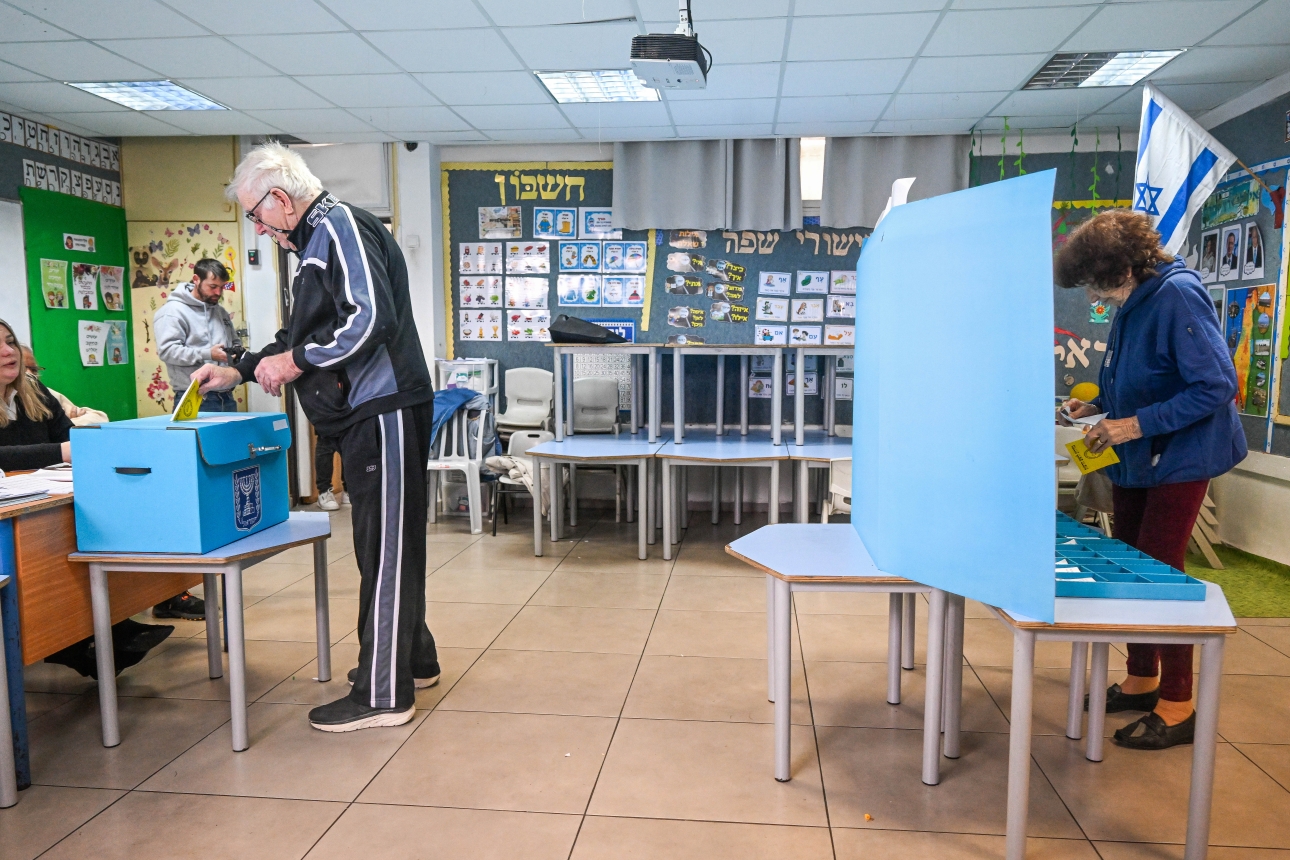
Photo by Flash 90
The decision has been made: The State of Israel is preparing for elections for the 26th Knesset, which will be held on October 27. After 13 consecutive occasions on which the Knesset was dissolved before the end of its term and elections were brought forward, for the first time since 1988 the elections will be held on schedule.
Despite the current Knesset having completed its statutory term, when measured over time Israel still has one of the highest election frequencies. The main contributor to this frequency is the period between 2019 and 2022, when Israeli citizens were called to the polls no fewer than five times. This type of political turbulence leaves its mark.
It should be noted that even before the 2019-2022 crisis, Israel was not among the countries known for political stability. On the eve of the April 2019 elections, it ranked seventh from the bottom among 25 countries, with elections held every 3.3 years on average since 1996. But following the series of five elections, Israel fell to last place among those countries, with elections every 2.4 years on average.
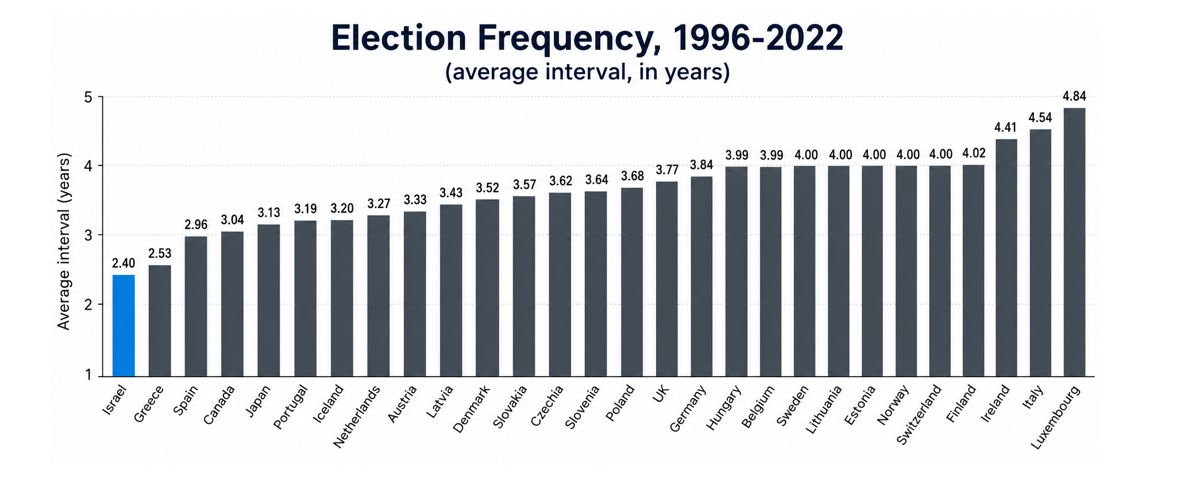
* OECD member parliamentary democracies. In New Zealand and Australia, elections are held at intervals of no more than three years, and they are therefore not included in the chart.
This time, after a full four years have elapsed between the 2022 and 2026 elections, Israel has improved its position only slightly, overtaking Greece and ranking next to last, with elections held on average every two and a half years. (This is being generous - we did not count the special election for prime minister held in 2001. Had we counted it as well, the average interval between elections in Israel since 1996 would stand at 2.3 years).
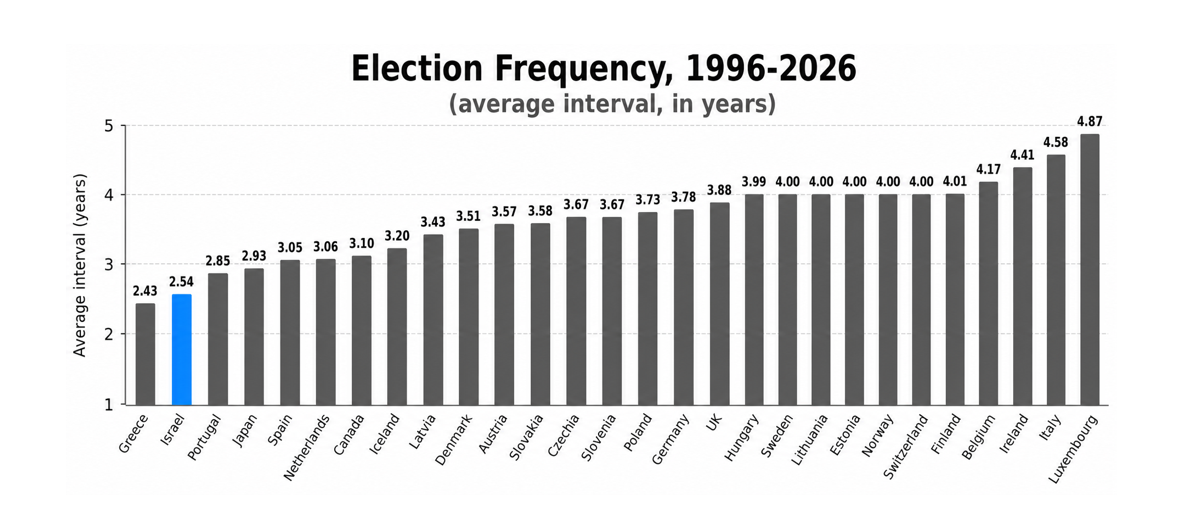
* OECD member parliamentary democracies. In New Zealand and Australia, elections are held at intervals of no more than three years, and they are therefore not included in the chart.
The possibility of shortening the term of a parliament and bringing elections forward exists in almost all parliamentary democracies. It reflects the political flexibility that characterizes this model of government, in contrast to a presidential system, in which the terms of office - of both presidents and parliaments - are fixed. Still, there are parliamentary democracies where early dissolution of parliament is rare, such as Finland, Sweden, or Estonia. By contrast, there are also countries where early dissolution of parliament and early elections are almost routine. In this respect, Israel is not an outlier. A few examples from recent years: the Netherlands held three elections between 2021 and 2025, Portugal held four elections between 2019 and 2025, and Japan held three elections between 2021 and 2026.