
Explainer: The “Western Wall Law”
All your questions answered about the "Western Wall Law" under debate this week, the religious, political, and judicial background that led to the present situation, and where we might go from here in this core question of the balance of religion and state in Israel.
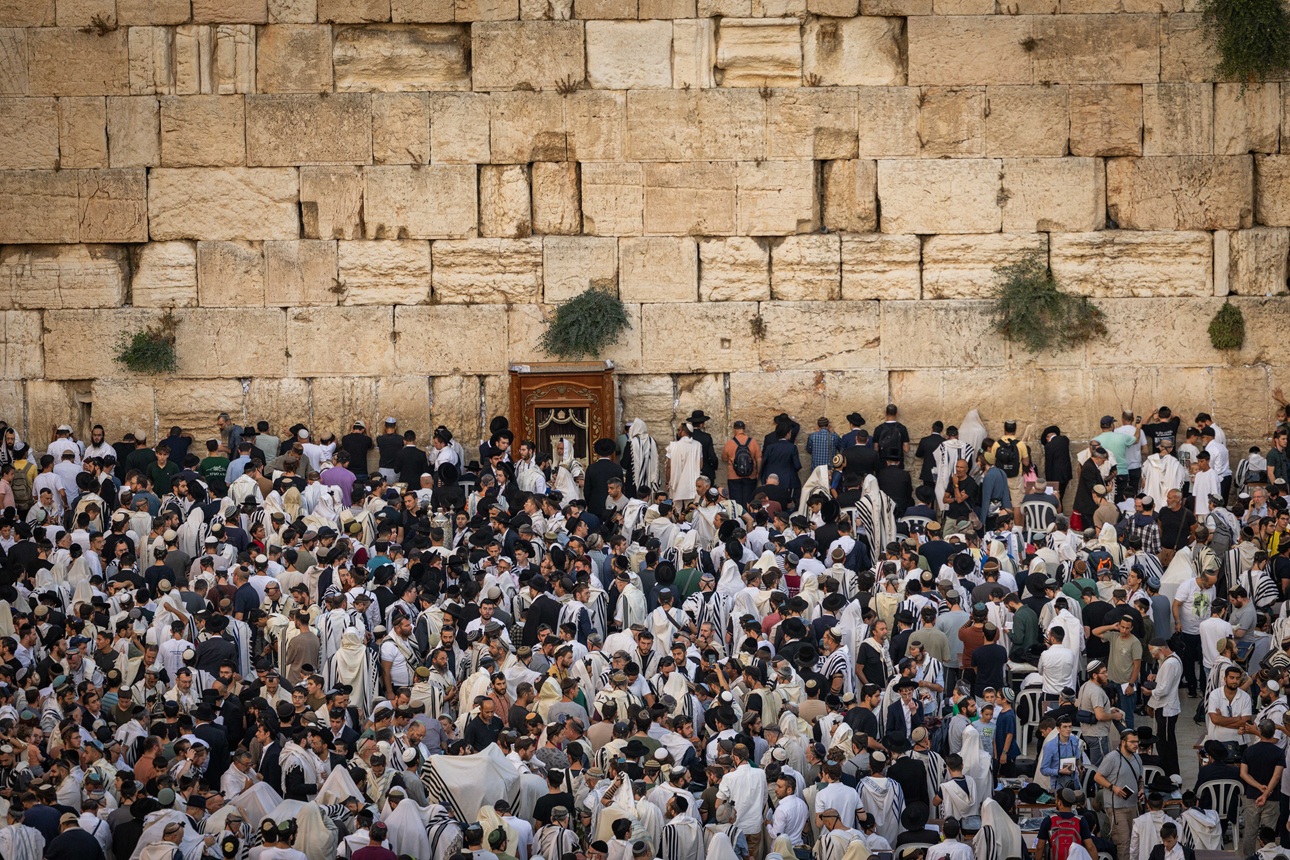
Photo by Chaim Goldberg/Flash90
What Is the “Western Wall Law” Now Being Discussed?
In February 2026, a private member’s bill sponsored by MK Avi Maoz of the Noam faction, referred to in the media as the “Western Wall Law,” passed a preliminary reading in the Knesset. The proposal is in fact an amendment to the legislation, the Protection of Holy Places Law, 5727–1967 (Amendment – Consultation with the Chief Rabbinate), which MK Maoz previously introduced in 2023 and in earlier Knessets (in one of which the bill was reintroduced under the name of MK Yossi Taieb of Shas).
The bill had been slated for consideration by the Ministerial Committee for Legislation on, in order to secure coalition support. However, Prime Minister Netanyahu withdrew it at the last moment, possibly to avoid triggering a crisis with American Jewry. As a result, it was introduced as a private member’s bill, with coalition members granted permission to free vote as they wish. The existing Protection of Holy Places Law, 5727–1967, provides that “the Holy Places shall be protected from desecration and any other violation and from anything likely to violate the freedom of access…,” and it establishes criminal penalties for such offenses. Regulations promulgated under the law with respect to Jewish holy sites focus primarily on the Western Wall and define acts deemed to constitute “desecration,” including “conducting a religious ceremony not in accordance with the custom of the place, which offends the feelings of the worshippers with respect to the site.”
The regulations also require compliance with the directives of a representative of the “Minister of Religious Affairs,” appointed in consultation with the Chief Rabbis, and grant that representative authority to issue instructions to ensure effective enforcement of the prohibitions. This authority includes the power to remove an individual from the site for a limited period.
MK Maoz’s amendment seeks to anchor the definition of “desecration” in the primary legislation itself (rather than only in regulations) and to stipulate that, with respect to Jewish holy sites, it shall mean “conduct that contravenes the directives and rulings of the Chief Rabbinate.” In addition, the bill proposes to clarify that the “religious representatives” with whom the Minister of Religious Affairs must consult before promulgating regulations under the law shall, in matters concerning Judaism, be the Chief Rabbis.
In the explanatory notes, the bill asserts that this was the legislature’s original intent and that it reflects the prevailing practice. However, in light of alternative interpretations adopted over the years by various actors, including the courts, he seeks to clarify the exclusive authority of the Chief Rabbinate in determining the rules governing conduct at the Western Wall.
In sum, the bill does not explicitly mention the Western Wall, nor does it state that prayer without a gender partition in the southern plaza of the Wall (known as “Ezrat Yisrael”) must be abolished. What it does do is entrench and reinforce the exclusive status of the Chief Rabbinate—as a decision-making authority rather than merely an advisory body—thereby effectively strengthening the subordination of Western Wall regulations to the Orthodox position.
How Does the Bill Differ from the Current Status Quo at the Western Wall?
Even today, the main Western Wall plaza is effectively administered as an Orthodox prayer site, with gender separation pursuant to the law and regulations, and under the leadership of the authorities charged with managing the site (the Rabbi of the Western Wall).
At the site, a struggle takes place almost every Hebrew month on Rosh Chodesh. The group known as the Women of the Wall insists on their right to conduct Rosh Chodesh prayers in the women’s section, including reading from a Torah scroll and, for some participants, wearing a tallit (prayer shawls) or other ritual items. Each Rosh Chodesh, there is a struggle between the Women of the Wall and the police, who prevent this in accordance with the directives of the Rabbi of the Western Wall.
In addition to the main section of the Wall, since 1999 there has also been “Ezrat Yisrael,” the southern plaza within the Kotel complex, in the Robinson’s Arch area (adjacent to the archaeological park). While it is adjacent to the Western Wall, there is no direct access from this area to the Wall itself, and visitors cannot physically touch the Wall stones, which are separated from the prayer area by archaeological remains at the site. No gender partition is installed in this section, and it is used for prayer services and bar and bat mitzvah ceremonies without defined guidelines and according to the preference of worshippers, whether gender-separated, egalitarian, or mixed.
This plaza is maintained by the Company for the Reconstruction and Development of the Jewish Quarter (a government company). However, the accessibility and development measures promised by the State regarding infrastructure, appearance, accessibility, and management have not been fully implemented. The status of this plaza, its accessibility, and the scope of its development lie at the heart of the ongoing dispute and the petitions before the Court.
What Is the Background to the Bill at This Time? What Did the Supreme Court Rule?
The bill currently under debate was first introduced in 2023 and, in fact, in two earlier Knessets. It was reintroduced in reaction to an interim decision of the Supreme Court sitting as the High Court of Justice (HCJ 145/13 and related cases), issued on February 19, 2026.
The petitions addressed by the Court were filed beginning in 2013 by a range of organizations and individuals, including the Israel Movement for Reform and Progressive Judaism, the Masorti (Conservative) Movement, Women of the Wall, Hiddush, Israel Hofsheet, the Center for Women’s Justice, and Kolech.
In all of the petitions, the Court was asked to require the State to actively advance the formal regulation and development of “Ezrat Yisrael,” and to remove the ongoing obstacles relating to planning procedures, building permits, and coordination. The petitions also addressed additional matters that have not yet been granted relief in the interim decision, such as annulment of the Rabbi of the Western Wall’s decision not to permit women to use Torah scrolls, preventing police intervention, and other related issues. The petitioners requested that binding timetables and concrete implementation commitments be established for the development and accessibility of the southern plaza of the Western Wall, as opposed to the “promises and declarations” made over the years without implementation.
Before the Court, the State likewise affirmed its longstanding commitment to continue renovating “Ezrat Yisrael,” pursuant to prior government decisions that remain in force even after the cancellation of the “Western Wall Compromise” (to be detailed below). The State did not dispute its obligation to meet the accessibility requirements raised in the petitions.
Counter-petitions were also joined to the proceedings by organizations such as Liba Yehudit, Chotam, the Guardians of the Chief Rabbinate, and others, requesting that Women of the Wall be removed from the plaza, that the frequency of their activities be limited, and that the arrangements at Robinson’s Arch not be adversely affected. The interim decision has not yet addressed these issues.
The Court heard the petitions before an expanded panel of seven justices, headed by Chief Justice Yitzhak Amit. It clarified that no additional approval under the Antiquities Law is required as a condition for progressing with the building permits, and it established binding timetables for continued action on accessibility measures, emphasizing the extraordinary length of time (over a decade) that the proceedings have been ongoing. In addition, the State was ordered to update the Court within 90 days regarding its progress.
It is important to clarify: this ruling does not determine anything regarding conduct at the main Western Wall plaza. The February 19, 2026 court decision does not address the rules governing prayer at the central plaza and does not alter the status quo there. It is a procedural “continued handling” decision focused on an implementation and planning step. Following the positions of both the petitioners and the State, the Court held that there is no dispute regarding the State’s obligation to continue advancing matters relating to the southern plaza. The Court further found no justification for the ongoing bureaucratic delays in processing the building permit applications for the development of the plaza and therefore set binding timetables for continued handling.
At the time, members of the government reacted harshly to the Court's decision, portraying the ruling as having crossed red lines with respect to the holiest site of the Jewish people. These reactions do not accord with the legal facts. In practice, under the cover of a decision addressing bureaucratic delay in renovating “Ezrat Yisrael,” the core principles of which are broadly agreed upon by both the State and the petitioners, a long-standing and wide-ranging debate has been reopened regarding what is known as the “Western Wall Compromise” and the rules governing conduct at the Western Wall.
What Is the “Western Wall Compromise”?
The prayer arrangements at the Western Wall have been the subject of a public and legal dispute for more than thirty years. At the heart of the debate lies the question of whether the binding “custom of the place” for Jewish prayers and ceremonies at the Wall is the Orthodox custom, as interpreted by the Chief Rabbinate, or whether the Wall should also accommodate a range of practices reflecting the religious outlooks of different worshippers.
For years, the dispute focused on conduct in the main Western Wall plaza: the question of separation between men and women there, and women’s right to pray aloud in the women’s section with a Torah scroll and visible ritual items (such as a tallit, kippah, and tefillin).
Over time, a solution was proposed that would distinguish between the main Western Wall compound, where traditional prayer would continue under the authority of the Rabbi of the Wall and the Chief Rabbinate, and the southern section of the Wall, the Robinson’s Arch area, which is out of view of those praying in the main plaza. This is how “Ezrat Yisrael” came to exist in that more remote area, allowing each person to pray in their own manner without an imposed partition between women and men.
In the Hoffman case (HCJ Further Hearing 4128/00) in 2003, the High Court of Justice, sitting in a further hearing before a panel of nine justices, set what it viewed as the proper balance between freedom of worship and the protection of public order and religious sensibilities. The Court recognized the petitioners’ (Women of the Wall) right to pray at the Wall in their customary manner, but held that this right could be realized even if they were limited to an alternative site—Robinson’s Arch—provided that the government prepared the site “properly and appropriately” within one year.
The Court emphasized that, in its view, the required accessibility measures included “establishing appropriate safety arrangements and preparing convenient and safe access to the prayer area and to the Wall itself.” It added that if the State failed to meet this obligation, the petitioners would be able to realize their right in the main Western Wall plaza. The State took certain steps that made prayer possible at the site, but without access to the Wall stones themselves (which requires a creative solution due to the important antiquities in the area) and without accessibility for persons with disabilities.
The public and legal struggle continued until January 2016, when the government adopted Decision No. 1075, endorsing the recommendations of the “Western Wall Compromise” formulated by a team appointed for that purpose by Prime Minister Benjamin Netanyahu. Under the compromise, Ezrat Yisrael would be expanded, formally regulated, and made accessible, including a central entrance arrangement, and would be managed by a public body that would also include representatives of the liberal streams and Women of the Wall. At the same time, the main Western Wall plaza would continue to operate as before.
That decision reflected a coalition political agreement between the government, including the ultra-Orthodox parties within it, on the one hand, and the opposition and representatives of Diaspora Jewry and the liberal movements on the other. Both sides viewed it as a painful compromise involving difficult concessions, yet one that was feasible.
A year and a half later, in June 2017, the government reversed course and adopted Decision No. 2785 freezing the Western Wall Compromise. At the same time, alongside the freeze decision, it was stated that “the Prime Minister instructs the Cabinet Secretary to act to build and prepare the southern prayer plaza (Robinson’s Arch site) as quickly as possible,” and that management of the site would continue as it had in recent years.
Following that decision, in 2018 the statutory ministerial committee established under the Antiquities Law, whose role is to approve planning and construction work at sacred archaeological sites, gave its approval for continued regulation of the southern plaza of the Wall (Ezrat Yisrael). This enabled construction work to proceed while safeguarding the archaeological sites in the area. This decision, which affirmed the need to regulate and adapt the plaza, remains valid today, as the High Court noted in its most recent decision.
Why Is the Political System in Turmoil?
Although the Supreme Court order articulated no new position regarding the Wall, the political system was nonetheless thrown into an uproar. For example, MK Aryeh Deri, chair of the Shas Party, said that “the High Court is trying to lay hands on the holiest place for the Jewish people.” Yariv Levin, the Minister of Justice who also serves as Minister for Religious Affairs, likewise commented, saying that “the extremist group sitting on the High Court crossed the last of the red lines today, in its decision to raise a hand against the Holy of Holies of the Jewish people.” They also announced their support for amending the Protection of Holy Places Law in order to “correct the distortion.”
The mismatch between these reactions and the Court’s published decision is particularly stark. The High Court’s decision does not touch the main Western Wall plaza at all. Even regarding the southern plaza, the subject of the decision, the very actors who originally accepted the Western Wall Compromise were Prime Minister Netanyahu and the ultra-Orthodox factions. At that time, it was not portrayed as an assault on sacred Jewish sites or as crossing red lines, but rather as a painful yet acceptable compromise.
It was also the Netanyahu government and the ultra-Orthodox parties that adopted the 2017 government decision stating that, despite freezing the full compromise, the southern plaza must continue to be developed and made accessible. The 2018 decision of the ministerial committee under the Antiquities Law was made under that same government as well.
All the Court did in its most recent decision was to press the government to follow through on its own decisions—an approach that the State itself supported in its position in the proceedings. The current ruling did not change the status quo at the Wall, which has been in place for more than a decade. The claim of “crossing a red line” is nothing more than tendentious political framing.
Once again, the High Court has been pulled into the eye of the public storm, against its will and not because of its decision, but for the sake of non-substantive political exploitation.
What is truly disputed is not the current High Court decision, but rather how to balance the different values at stake and the varied Jewish constituencies involved.
Who Does the Western Wall Belong To?
The proposed law, like the decades-long debate over regulation at the Western Wall plaza, ultimately must decide between two distinct cultural, halakhic, and value-based conceptions of the Wall.
One approach views it as a space akin to a traditional Orthodox synagogue—indeed, the largest synagogue of the Jewish people. According to this view, the rules governing the site should reflect a stringent Orthodox interpretation of Jewish tradition: full separation between men and women, without regard to the changes over recent decades within broad and diverse groups (liberal and Orthodox alike) concerning women’s active involvement and leadership in the prayer space. Under this view, the Chief Rabbis, who are ultra-Orthodox (Haredi), should tailor the Western Wall’s procedures to their constituencies, emphasizing the need not to offend worshippers’ religious sensibilities and not to expose them to religious practices far removed from their worldview.
By contrast, another approach sees the Wall as a site with a Jewish-national character, not only a religious-halakhic one, and seeks ways to adapt conduct there to a diverse Jewish public. In the eyes of those who support this view, it is not a synagogue, but a space with broader historical, cultural, and religious meanings; its character should be derived accordingly.
This position does not dispute that most visitors to the Wall prefer traditional modes of prayer, and that the plaza’s operation should reflect those preferences. At the same time, freedom of religion and worship, and the principle of equality, require recognition of the right of other Jews, women and men, to pray at the Wall in accordance with their outlook, even when it is more liberal than the traditional position. Under this view, space at the Wall should also be available to communities seeking to pray without a partition and without gender separation, and to women who pray as part of a public service and, for example, embrace a Torah scroll.
According to this view, avoiding harm to religious sensibilities should include the sensibilities of these Jews as well. Added to this is the position of Diaspora Jewry, most of whom, certainly in North America, are not Orthodox, who also seek to see the Western Wall as a home for their prayers. As the remnant of the Temple, which served as the destination of the prayers and tears of generations across the Diaspora, the Western Wall, under this conception, should continue to be the navel point of Jews from all communities.
How Many Visitors Come to the Western Wall?
According to data from the biennial Religion and State Index published by the Israel Democracy Institute (Finkelstein, Goldberg, Ravitsky-Tur-Paz, Padan, 2024), more than half of Israel’s Jewish public visit the Western Wall at least once a year, and another 42% visit once every few years. Only 2% of Israeli Jews over the age of 18 have never visited the Western Wall.
The purposes of the visit are most often touring (60%) or prayer (45%), and less frequently family celebrations (26%) or state and military ceremonies (12%).
The Western Wall Heritage Foundation estimates the number of annual visitors at 12 million. The Israel Police, which collects data on special holiday events held at the Wall, reports that peak events are mass gatherings drawing approximately 20,000 men and women. Such events include the Kol Nidrey annulment-of-vows ceremony on the eve of Yom Kippur and the Priestly Blessing (Birkat Kohanim) ceremonies during Sukkot.
The scale of Israeli Jewish visitation to the Western Wall points to its centrality across all sectors in Israel and underscores the importance of responding to everyone’s needs.
As for Ezrat Yisrael, there is no orderly data collection and no systematic information on worshippers and private family ceremonies. However, the Masorti Movement, which operates at the site, reports that it conducts approximately 2,000 bar and bat mitzvah ceremonies there each year—30% for Israeli residents and 70% for Diaspora Jews.
What Next?
The bill seeks to change the existing status quo by entrenching the Chief Rabbinate’s status as the exclusive authority determining the rules of conduct at the Western Wall and other holy sites. If enacted, the present situation—in which the rules derive from regulations and administrative arrangements (including the de facto existence of Ezrat Yisrael as a space for free and egalitarian prayer)—would be replaced by a primary legislative requirement to comply with the directives and rulings of the Chief Rabbinate.
The practical consequence may be a tightening of the rules and stricter enforcement in line with stringent Orthodoxy, both with respect to women’s prayer within the women’s section of the main plaza and with respect to Ezrat Yisrael, where activity could be curtailed or the site could be closed altogether.
The bill is being advanced as a private preliminary bill. It must pass the full legislative process, which includes the preliminary vote – which it already passed – and three additional readings, which is a fairly high hurdle.
If the “Western Wall Law” does not pass, the State will be required to report within three months on its progress in upgrading the existing Ezrat Yisrael. In the coming months, state authorities will need to focus on obtaining the appropriate permits and, thereafter, on renovating and upgrading the site (accessibility, infrastructure, safety, entrances/passages)—all without changing the prayer rules in the main plaza.
This is the meaning of the High Court’s ruling: less foot-dragging, less bureaucratic delay, and more implementation, so that the southern plaza becomes dignified and convenient for those who use it.
If the “Western Wall Law” does pass, decisions regarding conduct will be subject to the Chief Rabbinate’s determination. The Rabbinate could decide to accelerate renovation and accessibility improvements at Ezrat Yisrael, as reflected in government decisions and as urged by the High Court, or it could create obstacles and issue a halakhic ruling that prevents this space from continuing to operate.
As noted, the law could also affect the activities of Women of the Wall within the women’s section, by escalating police enforcement measures—some of which already occur today.
Conclusion
The High Court’s decision was merely an “interim decision,” and it did not grant relief or resolve all of the issues raised in the pending petitions.
Before us stands the pendulum of the balance of powers and authority in Israel: if the “Western Wall Law” is enacted and the Chief Rabbinate enforces a new policy, the Court will have to decide the petitions before it while taking the new legislation into account. On the other hand, if the Chief Rabbinate creates a disproportionate infringement of the principle of equality and of freedom of religion and worship, the High Court may invalidate its decisions.
If the Court invalidates such a decision, we will return to the delicate balance in which we stand today: although case law has recognized the right of Women of the Wall and of others who wish to pray in accordance with their custom and outlook, that right has been confined to the southern plaza, Ezrat Yisrael, on the condition that the plaza be accessible and fit for use. Without such accessibility, realization of the right would shift to the main Western Wall plaza.
As stated, this delicate balancing of rights has come before the Knesset not because of events that occurred at the Wall. The revival of the public dispute, and its escalation through harsh rhetoric, rests on a weak and fleeting trigger: an interim High Court decision to which the State agreed both a generation ago and today.