

Summary: Autocratization and States of Emergency in Comparative Perspective
What can we learn from South Korea, India, Hungary, Venezuela, and Turkey? Findings from a comparative study show a clear link between the use of 'states of emergency' and accelerated erosion or dismantling of democracy, and autocratic consolidation.
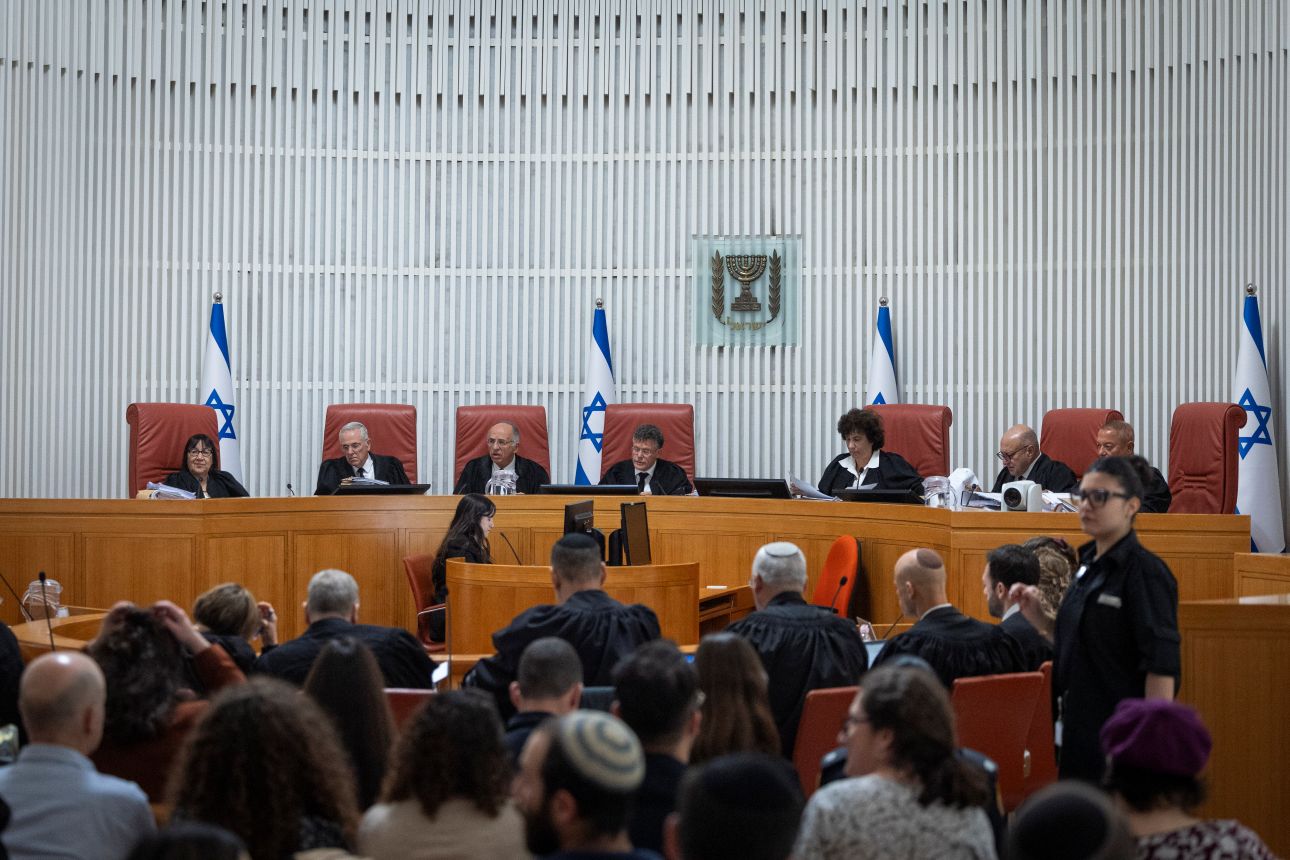
Photo by Chaim Goldberg/Flash90
Autocratization is an intentional and incremental process through which democracy is gradually dismantled from within. In recent decades, it has become the primary pathway through which regimes that begin as democracies transition to autocratic rule. States of emergency are designed to equip the state with the tools required to withstand severe crises and, in principle, to protect the democratic order during such periods. This report examines what happens when autocratization and states of emergency intersect in contemporary democracies. Although autocratization and states of emergency have each been studied extensively on their own, the relationship between them has received only limited and fragmented attention in the scholarly literature. This study seeks to address that gap by analyzing how they interact.
As part of a broader research project, this report presents findings from a comparative study of five countries – South Korea, India, Hungary, Venezuela, and Turkey. This analysis reveals that the intersection of autocratization and states of emergency undermined democracy and its chances of survival through three main channels: the use of formal emergency powers; the use of extraordinary powers functionally equivalent to emergency powers, even if not formally defined as such in law or in the constitution; and the deployment of emergency rhetoric that frames certain measures as urgent and necessary.
The five countries examined were all previously stable democracies and later experienced substantial autocratization. All countries shared a common starting point: a firmly established democratic system prior to the onset of regime change, reflected in a score of 6 or higher on the V-Dem’s Regimes of the World (RoW) index (under the "measure with categories for ambiguous cases" section) and at least 15 consecutive years of democratic rule. At the same time, these cases vary in terms of the quality and institutional design of their democracies (both parliamentary and presidential systems), as well as in broader characteristics such as geographic region, language, and culture.
The comparative analysis shows that when autocratization and states of emergency converge, the result can be an accelerated and intensified process of democratic erosion and replacement. In the countries examined, states of emergency played a meaningful role in weakening democratic institutions and, in some cases, in facilitating their collapse. This convergence is not inevitable. Regime change can occur without the invocation of emergency powers, and many democracies have navigated states of emergency without suffering democratic breakdown. Indeed, emergency frameworks are typically justified as tools meant to safeguard democracy in times of crisis. However, when autocratization and emergency rule unfold simultaneously—whether because political leaders deliberately exploit a crisis to consolidate power or because an unforeseen crisis creates the opportunity—the consequences for democracy can be severe and potentially devastating.
Across the five countries examined, states of emergency, and the powers and extraordinary measures associated with them, played a significant role in weakening democratic institutions, in some cases to the point of regime change. That said, a note of caution is warranted with respect to South Korea. It is the only country in this group that V-Dem’s RoW index still classifies as a democracy, albeit a flawed one and of lower quality than in the past. Although emergency powers were prominent there, at the time of writing it was too early to determine the full consequences of the failed attempt to impose martial law in December 2024.
In South Korea, democratic erosion unfolded gradually over several years and, unusually, spanned successive and politically diverse administrations. The process appears to have begun in 2013 under President Park Geun-hye, who was later impeached and prosecuted. From that point onward, presidents increasingly relied on executive decrees and expansive interpretations of their authority in ways that weakened the separation of powers and the rule of law. This shift was accompanied by sharp rhetoric portraying political opponents as enemies or collaborators with the enemy, against whom decisive and urgent action was allegedly required. Purges were carried out within state institutions, and the lines separating the judiciary, the executive, and the legislature became increasingly blurred. The most dramatic use of formal emergency powers came on December 3, 2024, when then-President Yoon Suk-Yeol declared martial law. The declaration was followed by an order banning political activity and instructions to the military to seize the buildings of the Central Election Commission and the National Assembly, suspend parliamentary activity, and effectively prevent any oversight of or challenge to the martial law regime except by the president himself. The move was halted after a tense and consequential night marked by swift, large-scale public mobilization, the concerted efforts of parliamentary staff, and some hesitation within the security forces. The episode shook the country, led to President Yoon’s removal from office, and intensified concerns about the resilience of South Korean democracy.
In India, once considered the world’s most populous democracy, a relatively rapid process of autocratization began after Prime Minister Narendra Modi and the Bharatiya Janata Party (BJP) came to power in 2014. Over the past decade, governing power has become increasingly centralized, particularly in the hands of the prime minister. Judicial independence and professionalism have eroded, parliament has been weakened, and the authority of the states has been undermined by the central government. Opposition activity has been restricted, civil and political rights have come under strain, minorities, especially Muslims, have faced repression, civil society organizations have been targeted, and moves to take over the media have been carried out. India has experienced states of emergency in the past, most notably during the mid-1970s under Prime Minister Indira Gandhi. During that period, core democratic principles were undermined and the constitution was amended to limit judicial review of emergency declarations, although that amendment was later reversed. Under Modi, the government has not hesitated to invoke formal emergency powers, particularly in states governed by the opposition. In 2018–2019, a combination of emergency measures and a subsequent constitutional change effectively revoked the autonomy and special constitutional status of Jammu and Kashmir. At the same time, the president, acting on the government’s initiative, issued numerous presidential orders through systematic, strategic and, quasi-emergency mechanisms that, as a whole, amounted to an undeclared rule by executive decree. The government has also made increasing use of legislation that severely restricts civil liberties under the guise of counterterrorism.
Hungary experienced rapid autocratization beginning in 2010 under Prime Minister Viktor Orbán and his Fidesz party. Within its first year in office, the Orbán-led coalition enacted sweeping constitutional changes. It soon moved to gradually subordinate the judiciary to the executive, reshape the media landscape, largely through pro-government business interests, and transform it into a vehicle for official messaging while marginalizing critical outlets. Universities and research institutions were significantly weakened and brought under tighter government control, and civil society organizations faced growing constraints. Certain groups, including women and LGBTQ individuals, were particularly affected. Autocratization in Hungary was systematically driven by intensive use of states of emergency. The government repeatedly amended the constitutional provisions governing states of emergency, expanding executive authority, limiting oversight, and enabling the suspension of laws and fundamental rights. These changes were introduced early in the autocratization process as a primary instrument for its advancement. Additional emergency regimes, such as a “state of emergency due to migration,” were established through ordinary legislation, allowing the government to exercise broad powers without specific enabling acts or parliamentary approval. Since 2015, Hungary has operated under successive, extended states of emergency, at times simultaneously. These have included emergency measures related to migration, the COVID-19 pandemic, and later the war in Ukraine, often granting the government far-reaching authority unrelated to the immediate crisis at hand.
In Venezuela, once one of Latin America’s most stable and prosperous democracies, accelerated autocratization began in 1999 following the election of Hugo Chávez as president. Shortly after taking office, Chávez called a referendum on replacing the constitution, despite the absence of constitutional authorization to do so, using a presidential decree with features resembling emergency rule. After the referendum, he structured the new constituent assembly to ensure an overwhelming majority in his favor. Once the new constitution was adopted, Chávez rapidly consolidated control over the judiciary, the prosecution, the electoral authority, the comptroller’s office, and the civil service. In the course of time, he strengthened his hold over the military, deploying it in place of, or alongside, civilian institutions, extended control over the police, and eventually asserted dominance over the national oil company and, in effect, the broader economy. In 2000, the National Assembly enacted the enabling law - a temporary law akin to emergency legislation, justified by the urgent need to address “legal and civil security.” This law effectively transferred primary legislative powers to Chávez, who used them extensively, issuing no less than 49 presidential decrees. Electoral processes became increasingly tilted, then distorted until meaningful elections effectively disappeared. Even earlier, after the opposition won parliamentary elections despite systemic bias, emergency powers were invoked to harass and sideline members of parliament. Under both Chávez and his successor Nicolás Maduro, formal emergency powers were used widely. While not every instance can be directly linked to autocratization, many – such as the measures adopted during the COVID-19 pandemic – clearly reinforced it.
In Turkey, autocratization was driven by the Justice and Development Party (AKP) and its leader, Recep Tayyip Erdoğan. During its first term (2002–2007), the AKP presented itself as a pro-democracy party committed to the democratic standards set by the European Union. Its early efforts focused on bringing the military under civilian control, placing loyalists in key positions within the police, prosecution, and civil service, and altering legal rules to enable Erdoğan to serve as prime minister despite a prior criminal conviction. Over time, this approach gave way to a more overt autocratization. The government targeted the military and retired senior officers through controversial investigations and trials, tightened control over the media and the judiciary, constrained civil society, and narrowed the political sphere. Public protests were met with force, while pro-government rallies were organized with state support. The state of emergency declared after the failed coup attempt in 2016 proved pivotal. Between 2016 and 2018, emergency rule accelerated autocratization and helped entrench a new regime. Under its cover, and by deploying the exceptional legal and administrative tools that emergency rule in Turkey made available in practice, the government deepened partisan and personal control over state institutions. It suppressed dissent, carried out mass purges in the civil service, judiciary, and academia, made widespread arrests, closed media outlets, intimidated journalists, and removed elected officials at the regional and local levels, particularly in predominantly Kurdish areas. Political opponents were systematically targeted. A far-reaching constitutional overhaul was adopted under conditions of restricted political activity and limited public debate. The system of government was transformed from parliamentary to presidential, concentrating extensive powers in the presidency. Since 2018, under the new constitution, President Erdoğan has wielded sweeping authority to govern by decree.
In sum, the study demonstrates a clear link between states of emergency and the accelerated erosion or dismantling of democracy, as well as the consolidation of autocratic rule in countries undergoing regime transformation. Whether triggered by genuine crises or engineered for political purposes, states of emergency can significantly hasten and deepen autocratization, in some cases leading to the collapse of democratic governance and the entrenchment of autocratic rule. Democracies should therefore treat the convergence of autocratization and emergency governance as a distinct, high-order risk, and institute safeguards that remain operable under all contingencies, including times of war and other national crises.
The full study will be available in Hebrew soon on IDI's website.