

Only 38% of Israelis think Israel's security situation is better than it was before the Iran war
28% of Israelis think Israel's security is a central consideration for President Trump, down from 44% last month. 72% of Israelis think Israel should maintain a permanent security zone in South Lebanon. A plurality (50.5%) of Israelis think it is inappropriate to advance legislation with a substantive impact on Israel's system so close to elections.
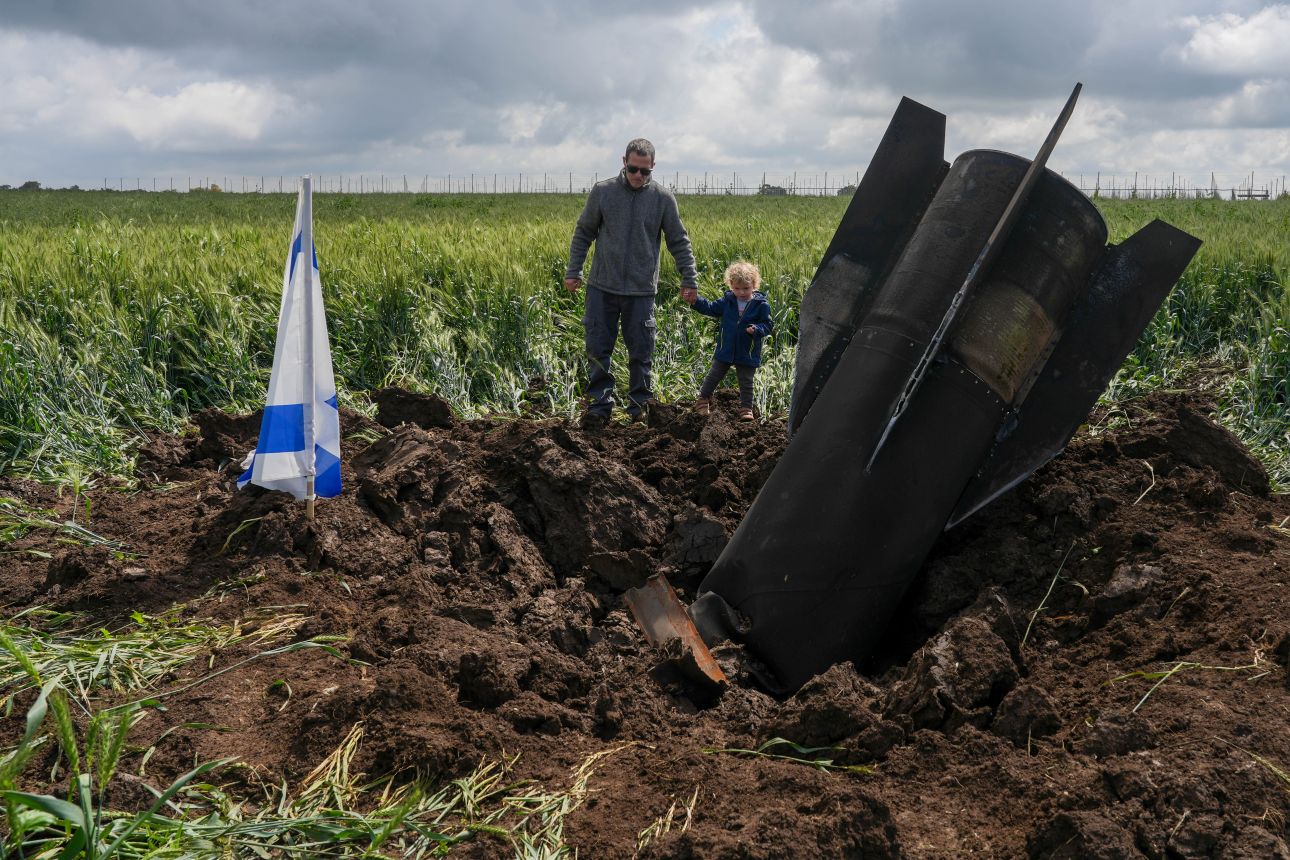
Photo by Ayal Margolin/Flash90
Methodology
The survey was conducted by the Viterbi Family Center for Public Opinion and Policy Research at the Israel Democracy Institute between June 28 and July 1, 2026. It was based on a representative sample of the population in Israel aged 18 and above, comprising 603 Jewish interviewees and 151 Arab interviewees.
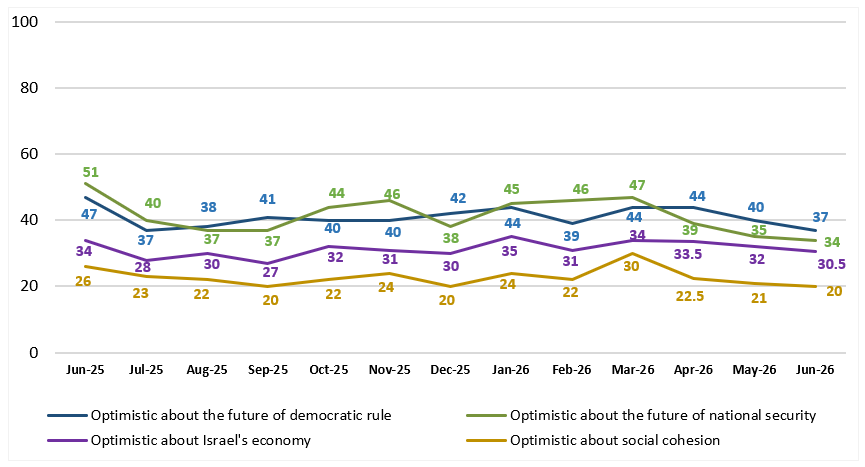
- This month saw a continued decline in levels of optimism, this time across all four topics, though the decreases are very small. Significantly, this marks the continuation of a trend that began in March 2026.
- This is the third successive month in which optimism about the future of Israel’s security is lower than optimism about the future of democratic rule in Israel.
- The largest difference between the March 2026 and June 2026 surveys is in optimism about the future of national security (a 13-percentage-point decline in the total sample). The second largest difference relates to social cohesion (10 points), third is the future of democratic rule (7 points), and the fourth largest is the future of Israel’s economy (3.5 points).
- At the same time, the relative ranking of each topic remains unchanged: The largest share of optimists (though still a majority) is found regarding the future of democratic rule, and the smallest, regarding social cohesion.
Optimistic about the future of democratic rule, national security, the economy, and social cohesion (total sample; %)
- As in previous months, the share of optimists in the Arab sample is smaller than that in the Jewish sample for all four topics.
Optimistic about the future (Jews and Arabs; %)

The collapse of the special relationship, or a temporary crisis?
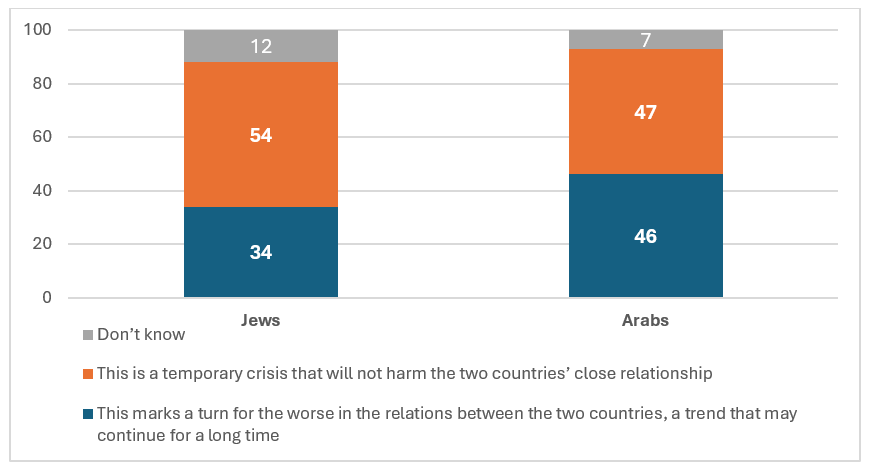
- We asked: “In light of the severe disagreements between the United States and Israel, which of the following statements do you agree with most: this marks a turn for the worse in the relations between the two countries that may continue for a long time; or, this is a temporary crisis that will not harm the two countries’ close relationship?” In the total sample, we found that the majority are optimistic that this is a temporary crisis that will not harm Israel’s close relationship with the United States (53%).
- We found a marked difference on this question between Jews and Arabs. While the majority of Jews (54%) think this is a temporary crisis, and only 34% believe it marks a turn for the worse in US-Israeli relations, Arab respondents are divided: 47% think this is a temporary crisis, while 46% believe it is a negative shift in relations that may continue for a long time.
In light of the severe disagreements between the United States and Israel, which of the following statements do you agree with most? (%)
- Breaking down the responses in the Jewish sample by political orientation reveals that on the Left, the majority (59%) think that this is a turning point for the worse in relations that will continue for a long time, and only a minority (29%) view it as a temporary crisis. The Center is divided, with 48% identifying a turn for the worse in relations and 43% considering it to be a temporary crisis. By contrast, a large majority of those on the Right (65%) think this is a temporary crisis, while less than a quarter (23%) think it marks a fundamental turning point in relations between the two countries.
Is Israel’s security a central consideration for Trump?
- This month saw a collapse in the share of respondents who think that Israel’s security is a central consideration for President Trump (in the total sample, from 44% in May to 28% in June).
- Among Arab respondents, the share who hold this view fell from 59% in May to just 36% in June. This is the lowest percentage found since we started asking this question in November 2024.
- In the Jewish sample, the share who think that Israel’s security is a central consideration for Trump fell from 41% in May to just 26% in June, also the lowest measurement since we began asking this question. In addition, it should be taken into account that in the Jewish sample, the May finding was already a sharp fall relative to March of this year, when 64% still thought that Israel’s security was very important to the US president. That is, between March and June 2026, the percentage of Jewish respondents who believe that Israel can fully rely on Trump has fallen by 38 points.
Think that Israel’s security is a central consideration for President Trump (%)
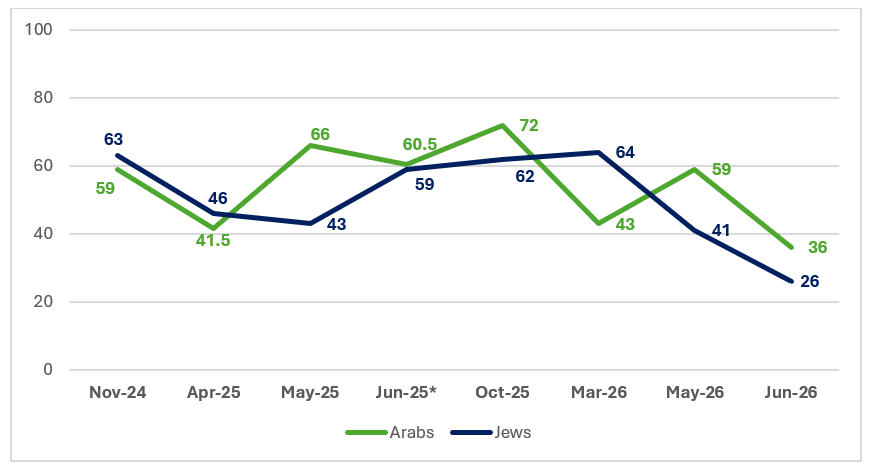
*The percentages shown are an average of two measurements taken during June 2025.
- Breaking down the responses in the Jewish sample by political orientation reveals that in all three camps, a majority do not think that Israel’s security is a central consideration for President Trump: this is the view of 81% on the Left, 73% in the Center, and 65% on the Right, a camp that in the past saw Trump as Israel’s protector.
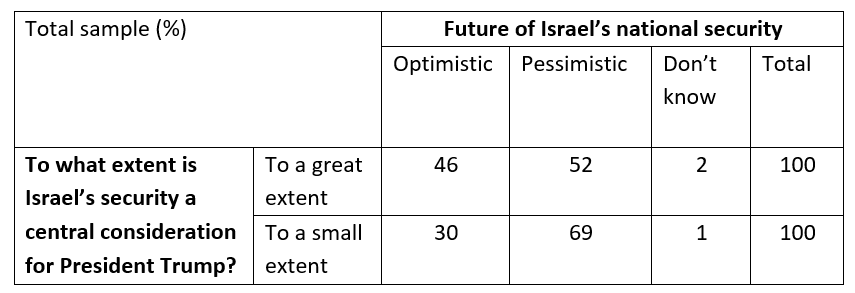
- We found that this question is clearly linked to views regarding the future of Israel’s national security: Among those who think that Israel’s security is a central consideration for Trump, the share of pessimists (52%) regarding the future of the country’s national security is much smaller than among those who think that Israel’s security is not a central consideration for Trump (69% pessimistic).
Israel’s strategic security situation as compared to before Operation Roaring Lion:
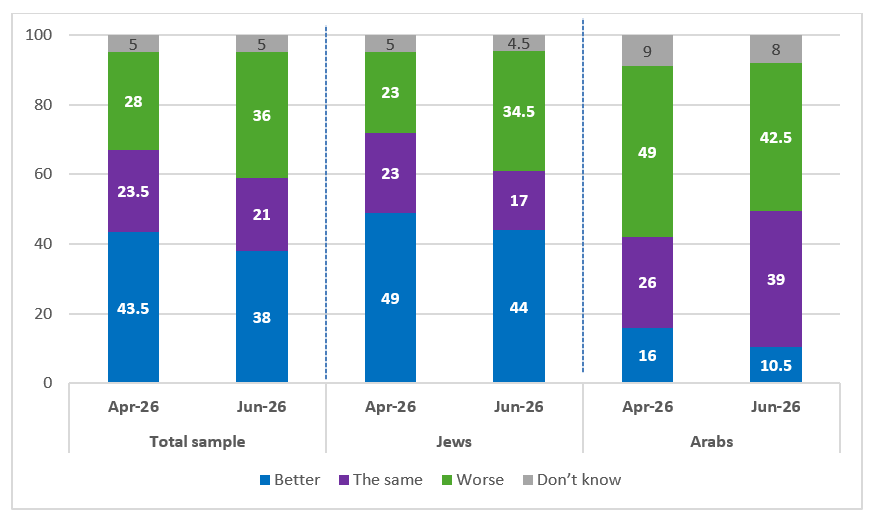
- We asked again whether Israel’s strategic security situation today is better or worse than it was before Operation Roaring Lion. Just over one-third of the total sample (38%) think that Israel’s strategic security situation is better today—a decline of 5.5 percentage points since we asked the same question in April, after the signing of the ceasefire with Iran. In parallel, the share of those who think Israel’s situation is worse has risen significantly, from 28% to 36%.
- The decline in the percentage who think the country’s situation is better than it was before Operation Roaring Lion is similar among Jews and Arabs, with a decrease of 5 percentage points in both samples.
Is Israel’s strategic security situation better or worse now than it was before Operation Roaring Lion? (%)
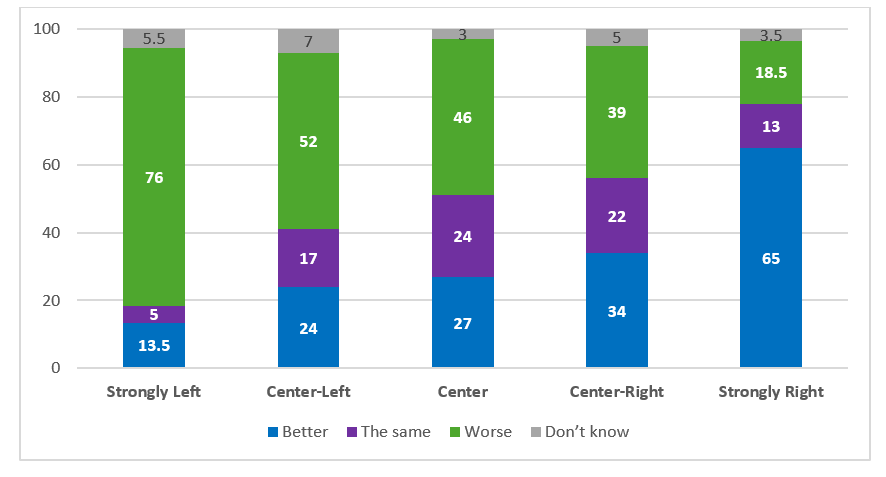
• Because we found large differences among Jews among those who position themselves on the Right, we segmented the Jewish sample into five political camps. In all five, with the exception of those who define themselves as Strongly Right, a larger share think that the situation has worsened, including among those who position themselves as Center-Right (39% say that the situation has worsened, 34% that it has improved). Only among the Strongly Right is there a majority (of about two-thirds) who think that Israel’s strategic security situation today is better than it was before Operation Roaring Lion.
Is Israel’s strategic security situation better or worse now than it was before Operation Roaring Lion? (Jews, by political orientation; %)
The security zone in South Lebanon
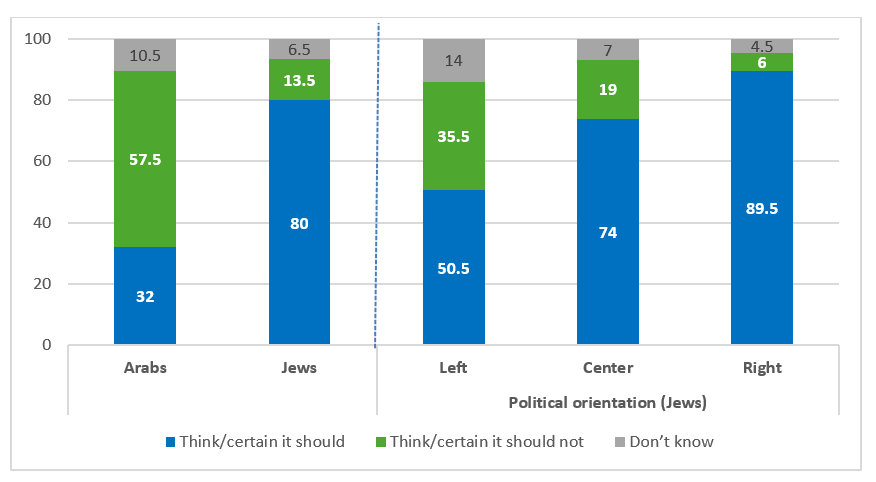
- A large majority of the total sample (72%) think that Israel should maintain a permanent security zone in South Lebanon, even if this means clashing with the United States, while around a fifth (21%) think it should not.
- Among Jews, support is particularly high: An overwhelming majority (80%) think that Israel should maintain a security zone. Among Arabs, the situation is different: a majority, albeit a smaller one, think that Israel should not maintain a security zone, compared to around one-third who think it should.
- Breaking down the responses in the Jewish sample by political orientation reveals that in all three camps, a majority support keeping the security zone, but to very different degrees: on the Right, an almost sweeping majority hold this view (89.5%), compared to a large majority in the Center (74%) and a small majority on the Left.
Should Israel maintain or not maintain a permanent security zone in South Lebanon, even if this means clashing with the United States? (%)
Haredi demonstrations against the Conscription Law and arrests of draft deserters
- Almost one-half of the total sample think that the police and law enforcement authorities are too lenient in their treatment of Haredim involved in demonstrations and disturbances protesting against the Conscription Law and arrests of draft deserters, while around a quarter think that they are acting too harshly.
How are the police and the enforcement authorities treating those Haredim involved in demonstrations and breaches of public order in protest against the Conscription Law and the arrest of draft deserters? (total sample,%)
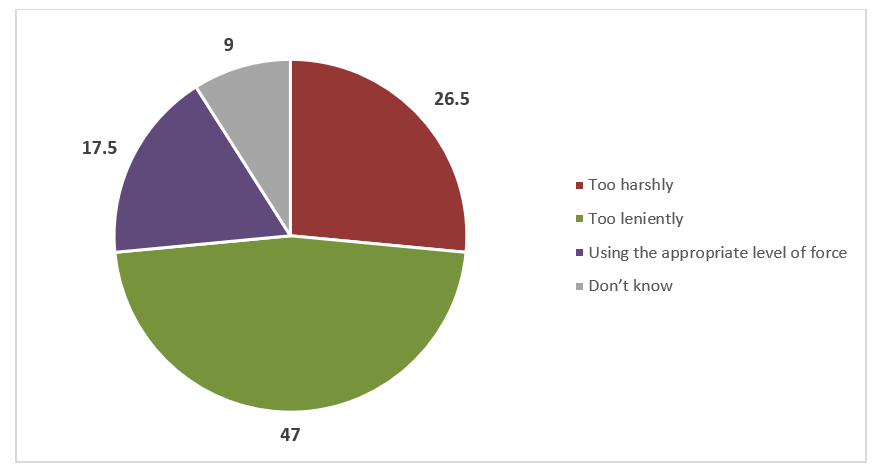
- Among Jews, 44% think that enforcement is too lenient, while 30% think it is too harsh. By comparison, a larger share of Arabs (a majority of 59%) think that the treatment of Haredim is too lenient, and only 11% that it is too harsh.
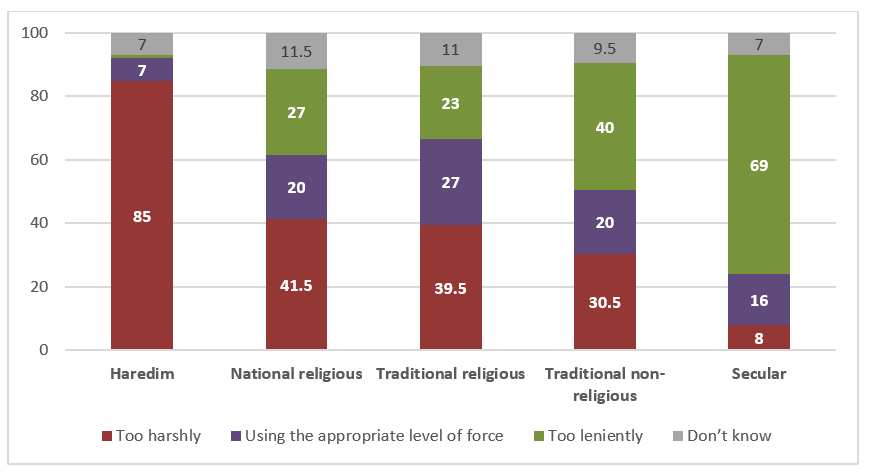
- Breaking down the responses in the Jewish sample by religiosity reveals that a large majority of Haredim think that enforcement is too harsh. Among both the religious and traditional religious, the largest share of respondents (around 40%) think that the demonstrators are being treated too harshly, while around a quarter of each group thinks that they are treated too leniently. Among traditional non-religious Jews, the largest share think that the enforcement is too lenient, as do a large majority of secular Jews.
How are the police and the enforcement authorities treating those Haredim involved in demonstrations and breaches of public order in protest against the Conscription Law and the arrest of draft deserters? (Jews; %)
Evaluation of the leadership of the Haredi public
- We asked further: “On a scale from 1 = very poor to 5 = excellent, how would you rate the success of the Haredi political leadership (ministers and Knesset members) in representing the interests of their voters?” Almost half (47%) of the total sample gave a positive evaluation of the success of the Haredi leadership in advancing the interests of their electorate, while 20% awarded a moderate score, and 28% gave a negative rating.
- Among Jewish respondents, 50% gave the Haredi leadership a rating of good or excellent, 17% a so-so rating, and 28% gave rating of poor or very poor. Among Arab respondents, assessments were slightly lower: 30% gave a good or excellent grade, 34% gave a so-so grade, and 29% gave a poor or very poor grade.
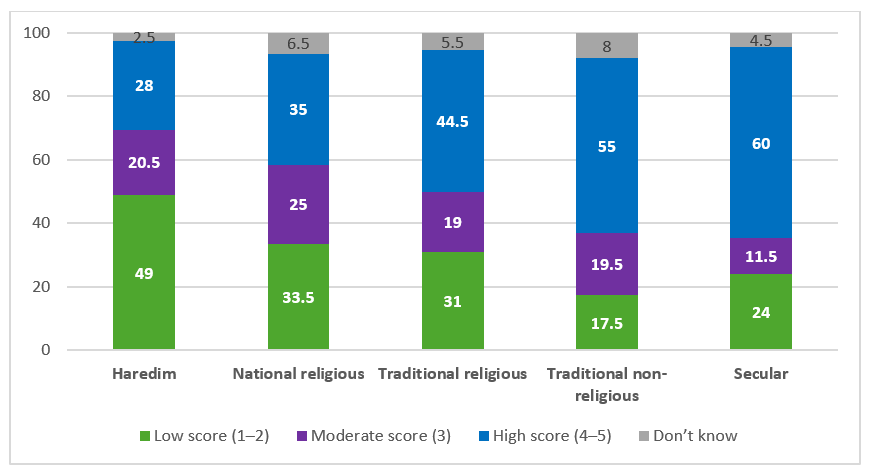
- Interestingly, the lowest assessment of the success of the Haredi leadership among all the Jewish religious groups came from the Haredim themselves. Around one-half of Haredim awarded a negative rating to their leadership, while less than a third awarded a positive rating. In the other groups, the largest share of respondents gave a high score to the Haredi leadership, with this being the view of a majority of secular and traditional non-religious Jews.
On a scale from 1 = very poor to 5 = excellent, how would you rate the success of the Haredi political leadership (ministers and Knesset members) in representing the interests of their voters? (Jews, by religiosity; %)
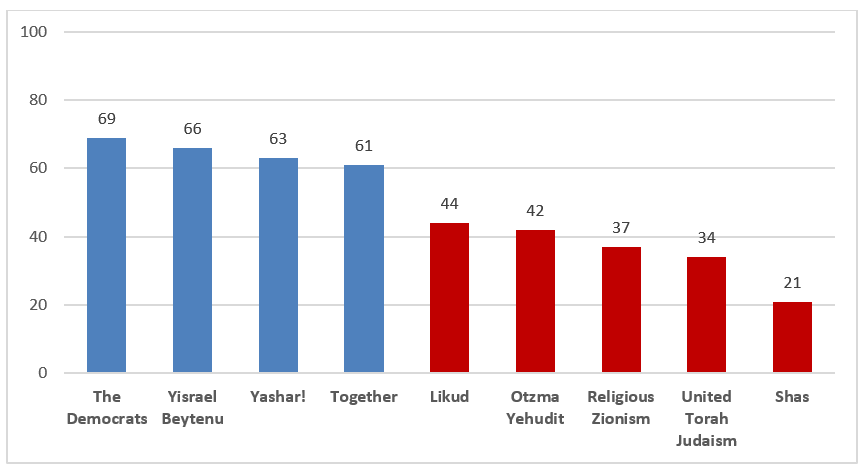
- Similarly, a breakdown of responses by voting intention for the upcoming Knesset elections reveals that the smallest share of respondents who gave a positive assessment of the success of the Haredi leadership is actually to be found among those who intend to vote for the Haredi parties—United Torah Judaism, and to an even greater extent, Shas. By contrast, more than 60% of those who intend to vote for parties in the “Change Bloc” gave the Haredi leadership a high score.
Give a high score (good or excellent) to the Haredi political leadership (ministers and Knesset members) in terms of representing the interests of their voters (total sample, by voting intention for the 2026 Knesset elections; %)*,**
* The figure shows only parties for which at least 20 respondents reported an intention to vote.
** The red columns show parties that currently belong to the coalition, and the blue columns, parties that currently belong to the opposition and/or the “Change Bloc.”
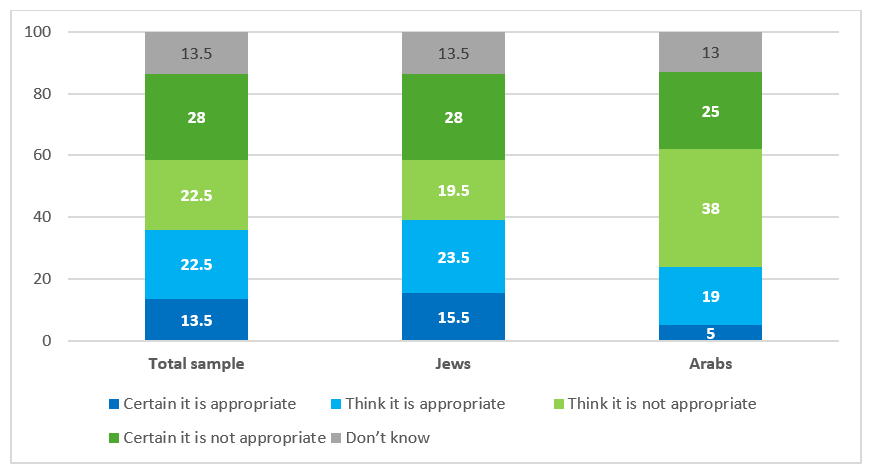
- We asked: “Given that elections will be held soon, is it appropriate or inappropriate at the moment to advance legislation with a substantial impact on Israel’s system of government?” Around one-half of the total sample think that advancing such legislation is not appropriate at the current time, compared to only around one-third who think it is appropriate.
- Among both Jews and Arabs, the largest share of respondents think that advancing such legislation is not appropriate at the moment (Jews, 47.5%; Arabs, a significant majority of 63%).
Given that elections will be held soon, is it appropriate or inappropriate at the moment to advance legislation with a substantial impact on Israel’s system of government? (%)
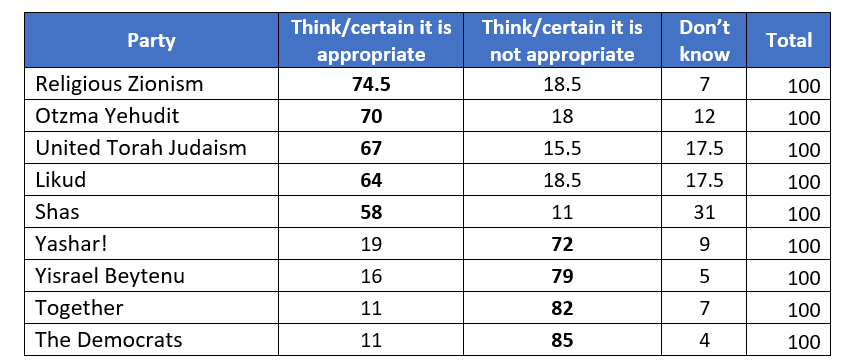
- Segmentation by voting intention for the upcoming Knesset elections reveals large differences between those who intend to vote for parties that currently belong to the coalition and those who intend to vote for the “Change Bloc” parties. Among voters for all the coalition parties, a majority think that it is appropriate to advance legislation with a substantial impact at the moment, while among voters for the “Change Bloc” parties, the picture is completely reversed, with a large majority holding that it is not appropriate to advance such legislation ahead of the elections.
Given that elections will be held soon, is it appropriate or inappropriate at the moment to advance legislation with a substantial impact on Israel’s system of government? (total sample; %) *
* The table shows only parties for which at least 20 respondents reported an intention to vote.
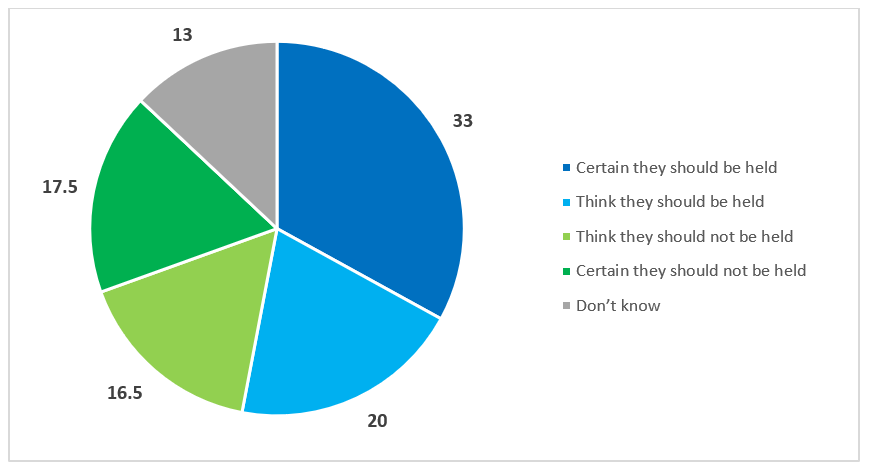
- Even before the Supreme Court’s decision instructing the Knesset to hold repeat elections, we asked whether, in light of the breach of confidentiality of the vote, new elections for the position of state comptroller should be held. In the total sample, the majority (53%) think that new elections for state comptroller should be held, while 34% take the opposite view.
Should new elections for state comptroller be held or not be held? (total sample; %)
- Among Jews, the majority (56%) support new elections, while 31% take the opposite view. Among Arabs, on the other hand, the picture is different: the largest share (48%) think there is no need to hold a repeat vote, compared to 40% who think new elections should be held.
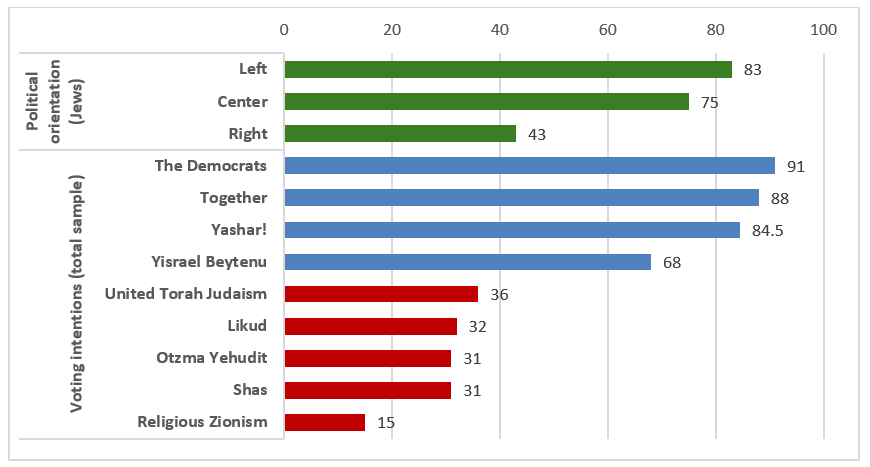
- Breaking down the responses in the Jewish sample by political orientation reveals that on the Left and in the Center, a large majority think that a repeat vote should be held, while on the Right opinions are divided, with similar shares saying that new elections should be held and should not be held. A closer examination within the Right reveals significant differences: In the Center-Right, 63% think a repeat vote should be held while 26% disagree; and among those who define themselves as Strongly Right, only 34.5% think a repeat vote should be held, while 47% think it should not.
- There is a striking gap between those who intend to vote for the coalition parties at the upcoming elections and those who intend to vote for the “Change Bloc” parties. Among the “Change Bloc” voters, a very large majority think that new elections should be held, while only a minority of those planning to vote for parties in the current coalition concur.
Think/certain that new elections for the state comptroller should be held (%) *,**
* The figure shows only parties for which at least 20 respondents reported an intention to vote.
** The red columns show parties that currently belong to the coalition, and the blue columns, parties that currently belong to the opposition and/or the “Change Bloc.”
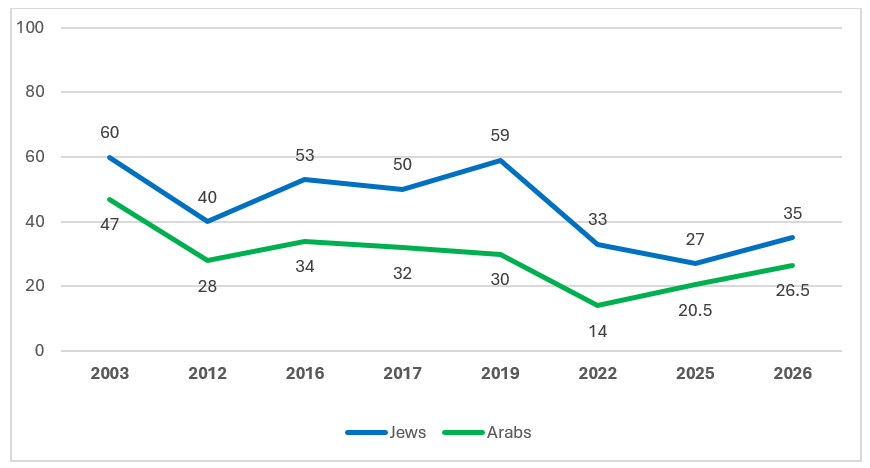
- One-third of the total sample (33%) say that there is a political party in Israel that closely represents their views. While this percentage is low, it represents a considerable increase relative to our previous measurement in 2025, when 26% responded this way. Around a third of respondents (34%) think that there is a party that partially represents their views, and around one-fifth (21%) that there is no party that represents their views.
- Among both Jews and Arabs, there has been an increase since 2025 in the share of those who report that there is a party that closely represents their views. However, from a multi-year perspective, the current percentages are not at all high. Among both Jews and Arabs, these share were considerably higher in the previous decade.
Agree that there is a political party in Israel that closely represents their views, 2003–2026 (%)
- Breaking down the responses in the Jewish sample by political orientation reveals that the strongest sense of representation is found at the political extremes: a majority of around two-thirds among those who define themselves as Strongly Left, and around 40% of those who are Strongly Right—the largest share of respondents in that group. In the central camps, the sense of being well represented decreases, perhaps due to the multitude of available options and the expectation that more parties will join the race.
- Segmentation by voting intention for the 2026 elections (total sample) reveals that the strongest sense of representation is found among voters for The Democrats and Religious Zionism, two parties with a clear ideological positioning. Among Shas and Likud voters, around one-half feel that there is a party that closely represents their views, followed by Otzma Yehudit voters. The smallest share of those who feel well represented is found among voters for Together, a merger party between Yesh Atid and Naftali Bennett; it is possible that the differences between these two component elements lead to a sense of partial representation.
Is there or is there not a political party in Israel today that closely represents your views? (%)
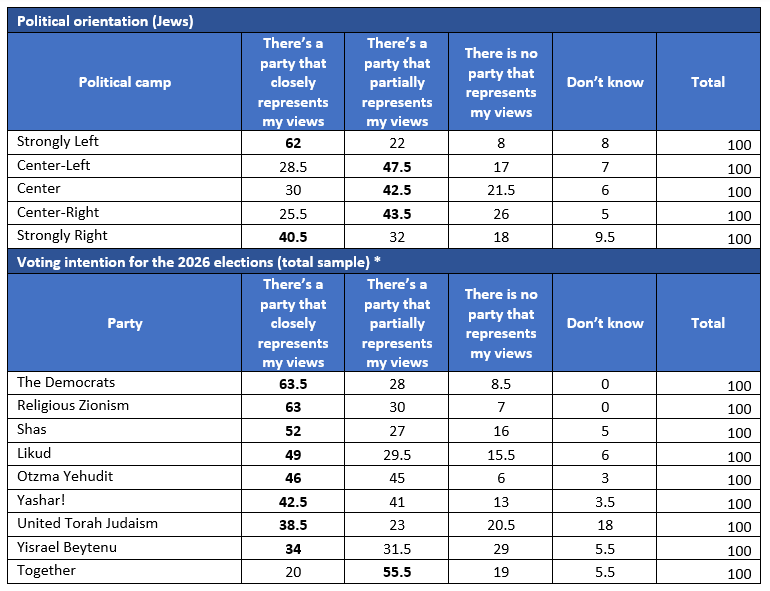
* The table shows only parties for which at least 20 respondents reported an intention to vote.
Antisemitism, Anti-Israelism, and Traveling Abroad
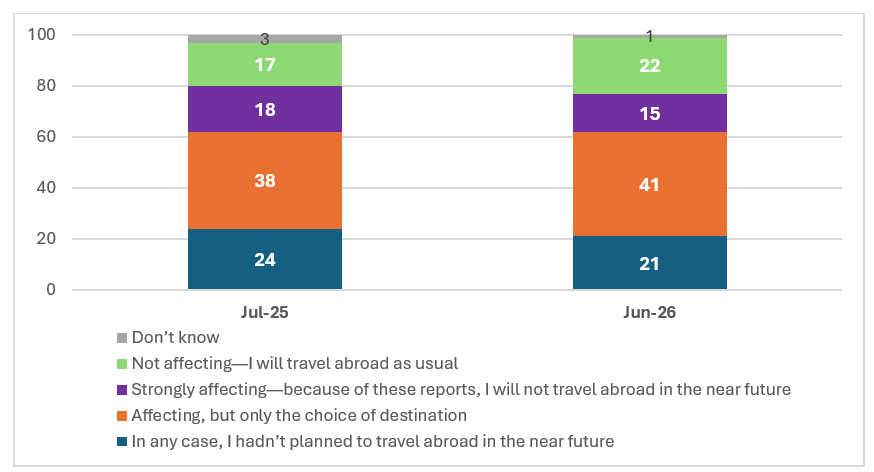
- At the beginning of this summer, we also asked our respondents whether the reports of rising antisemitism and attacks on Israelis are affecting their decisions about travel abroad. In the total sample, we once again found (as in July 2025) that the largest share of respondents say that these incidents are affecting their decisions, but only as regards their destination, not the choice to travel abroad per se.
- There was also an increase in the percentage of those who responded that these reports are not affecting them and that they will travel abroad as usual (up from 17% last year to 22% this year). Correspondingly, there were declines in the shares of those who say that they will not travel abroad this year because of such incidents (down from 18% last year to 15% this year) and of those who had not planned to travel abroad in any case (down from 24% to 21%).
Are the reports of rising antisemitism and attacks on Israelis abroad affecting your decisions about traveling abroad? 2025 and 2026 (total sample; %)
- The effect of age on responses to this question is more evident among those reporting that antisemitic and anti-Israeli incidents will mainly affect their choice of travel destination. Though this is the most common response in all age groups, younger respondents selected it less than did older respondents (18–34, 33%; 35–54, 47%; 55 and above, 42%).
Concerns About Climate Change
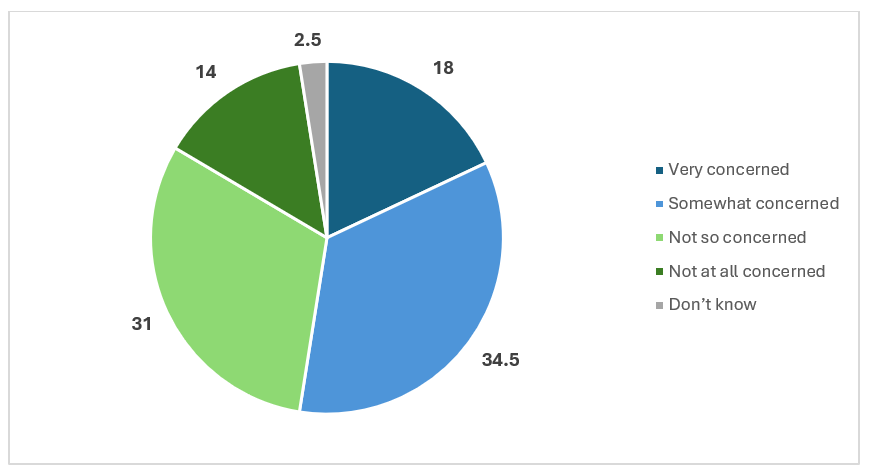
- Multiple studies in the past have shown that for one reason or another, most Israelis are largely unconcerned about climate change. This time, we found that a majority of respondents in the total sample (52.5%) are concerned about the issue, against the backdrop of the recent heatwaves in Europe.
Following the extreme heatwaves in Europe and the forecasts for an especially hot summer throughout the world, to what extent are you concerned or not concerned about the issue of climate change? (total sample; %)
- Surprisingly, given the high level of climate awareness among young people worldwide, in Israel (total sample) the older generations are slightly more concerned about climate change than their younger counterparts (18–34, 48%; 35–54, 52%; 55 and above, 56%).
- A particularly interesting finding is that concern about climate change is linked to religiosity: levels of concern are much higher among the non-religious groups than among the more religious groups.
Very or somewhat concerned about climate change (Jews, by religiosity; %)

The June 2026 Israeli Voice Index was prepared by the Viterbi Family Center for Public Opinion and Policy Research at the Israel Democracy Institute. The survey was conducted via the internet and by telephone (to include groups that are under-represented on the internet) between June 28 and July 1, 2026, with 603 men and women interviewed in Hebrew and 151 in Arabic, constituting a nationally representative sample of the adult population in Israel aged 18 and over. The maximum sampling error was ±3.57 % at a confidence level of 95%. Field work was carried out by Shiluv I2R. The full data file can be found at: https://dataisrael.idi.org.il.