






















Military and Society Program

  • Default Image

    Prof. Amichai Cohen

    Vice President, Research

    Read More

    [email protected]

    Professor Amichai Cohen is a member of the Faculty of Law at Ono Academic College. He earned his LL.B. from the Hebrew University of Jerusalem and his LL.M. and LL.D. from Yale Law School at Yale University.

  • Default Image

    Prof. Elisheva Rosman-Stollman

    Guest Researcher

    Read More

    Prof. Elisheva Rosman-Stollman is a member of the Political Studies Department at Bar Ilan University, and until recently served as the head of the Argov Center for the Study of Israel and the Jewish People, and deputy Chair of the Department. Prof. Rosman-Stollman also serves as a senior researcher at the Begin-Sadat Center for Strategic Studies (BESA). In addition to being a founding member of the Civil-Military Researchers Association in Israel, she is the editor-in-chief of the Association of Military Researcher's journal 'The Israeli Journal of Society Military and National Security' (IJMNS). She serves as a member of various working groups advising bodies within the military system.

    Prof. Rosman-Stollman's research deals with a variety of issues including civil-military relations, the military as a social tool, women, religion and the state, religious feminism, relations between the Gulf States and Israel, issues of religion and the military, as well as the military and security. Her research projects include the image of the combat soldier in the Israeli media, religious soldiers in the IDF, soldiers in the civilian health system, religious feminism, and marriage outside the rabbinate.

  • Default Image

    Dr. Eran Shamir-Borer

    Director, Center for Security and Democracy

    Read More

    Dr. Eran Shamir-Borer serves as the Director of the Center for National Security and Democracy since September 2022.

    Prior, Eran served for over 20 years in various positions in the International Law Department of the Military Advocate General's Corps in the Israel Defense Forces (IDF), including as the head of the department, and retired at the rank of Colonel.

  • Default Image

    Adv. Mirit Lavi

    Researcher

    Read More

    [email protected]

    Adv. Mirit Sharabi-Lavi holds a bachelor's degree in law from the Hebrew University in Jerusalem, and a master's degree (cum laude) in international dispute settlement and arbitration from Leiden University. Before she started working at the IDI, Mirit worked at the Israeli Embassy to the Netherlands, focusing on international law and the various international courts and organizations in The Hague. She also worked at the Office of the Deputy Attorney General (International Law) in the Israeli Ministry of Justice, in the fields of international economic law and international technology law. She previously conducted research in the fields of space law, cyber law and privacy law.

  • Default Image

    Adv. Ruth Ashur

    Research Assistant

    Read More

    Holds a BA and MA in Law from the Hebrew University of Jerusalem. Previously worked in the Advisory and Legislative Department and the State Attorney's Office at the Ministry of Justice.

    [email protected]

  • Default Image

    Alon Blass

    Research Assistant

    Read More

    [email protected]

    Graduated with a BA in Political Science and Communications from the Hebrew University of Jerusalem.

    Currently a Master's student in Political Science, majoring in Law, Government and Society, in the research track at the Hebrew University.

  • Default Image

    Haim Hagai Gunder

    Research Assistant

    Read More


The government has decided to divert approximately NIS 500 million from the budget of a program to reduce disparities in Arab society and transfer the funds to the Shin Bet and the Israel Police to address crime and violence in Arab society. Is the Shin Bet – an agency whose mandate is to protect the security of the state and its institutions –suited for this task, and what might the consequences of its involvement be?

The Prime Minister’s decision to retain the power to determine the parameters and scope of the hostage deal as a “policy issue” disregards the implications such a deal has on security issues. Israeli history underscores the importance of convening the security cabinet and upholding the appropriate democratic channels in times of war.

From damage to scientific collaboration to cancellation of arms deals, arrest warrants for senior Israeli officials from the International Criminal Court in the Hague would pose a serious challenge to Israel

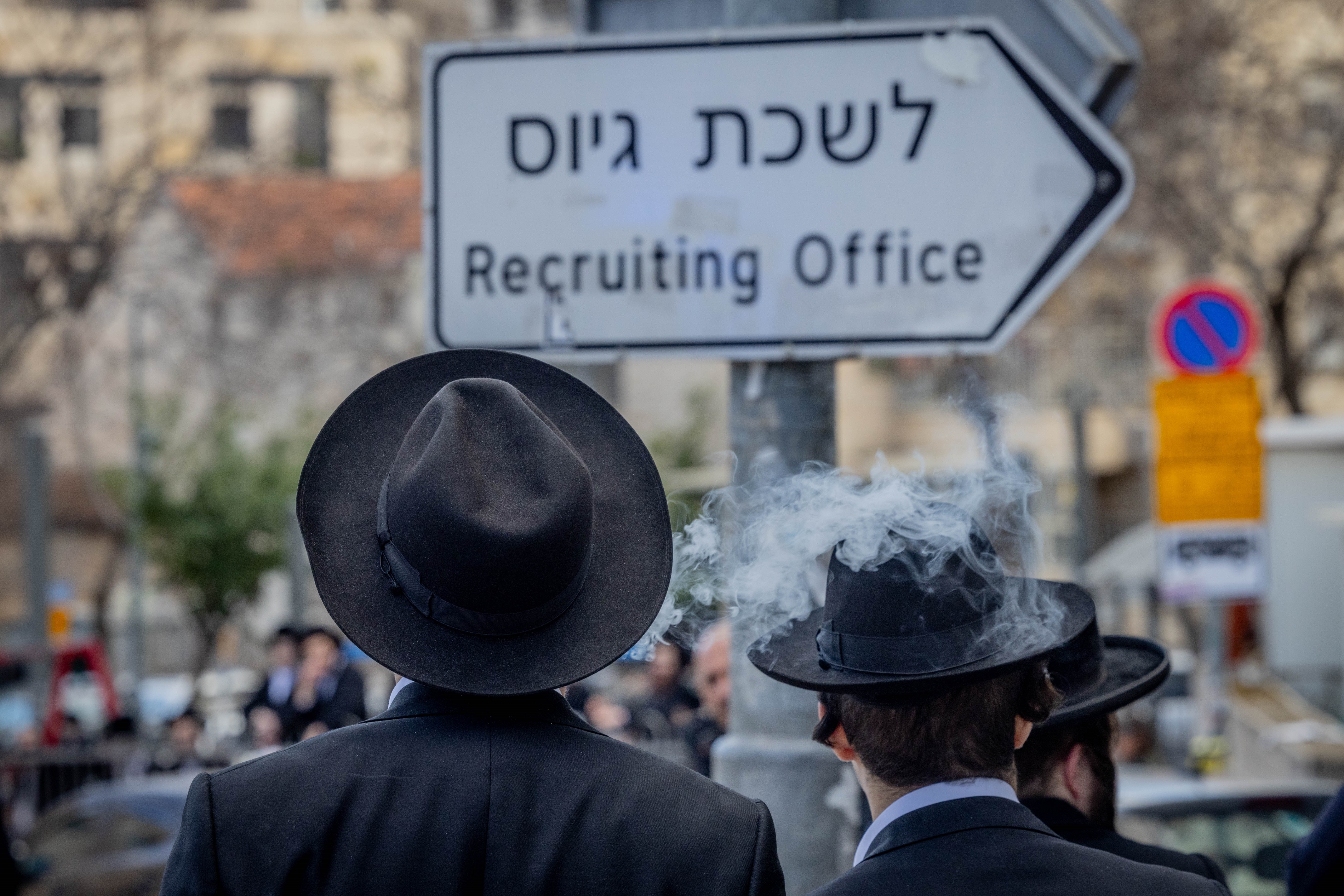
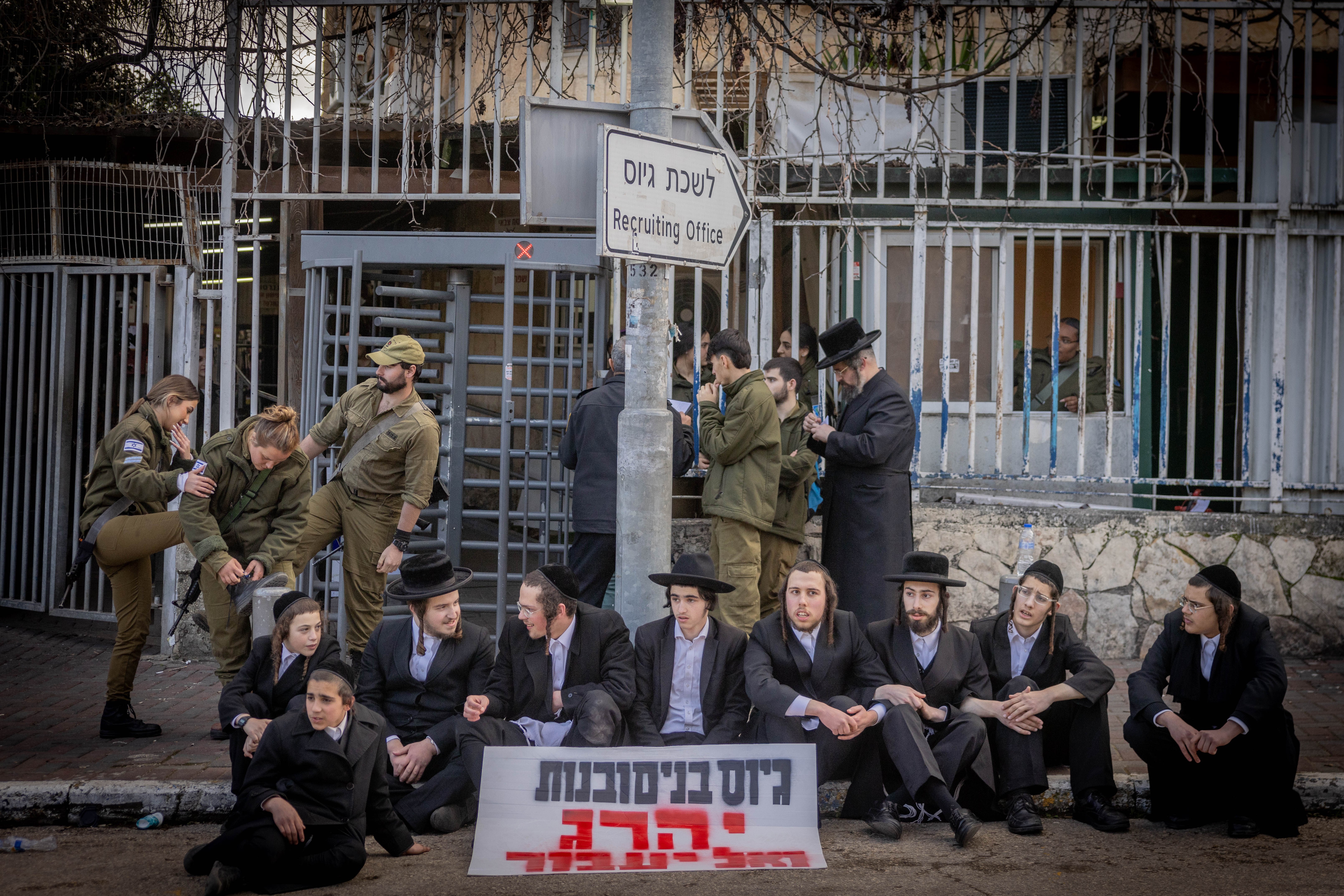
Response to the Government's Proposal for Haredi (non-) Conscription by Yohanan Plesner, President of the Israel Democracy Institute, and Dr. Gilad Malach, Head of IDI's Ultra-Orthodox in Israel Program

The government wishes to amend the Military Service Law and Reserve Service Law due to the new security circumstances arising from the outbreak of the war in Gaza. While recognizing the immediate imperative to respond to IDF's personnel needs, we oppose these legislative proposals. 

What is the connection between the expiration of the conscription law and the budgets for yeshivas? What exactly was discussed in the Supreme Court and is the state in violation of the law? Bottom line, will the ultra-Orthodox be recruited, or not?

The history of the ultra-Orthodox exemption from service in the Israeli Defense Force (IDF), from the 1948 until today. 

In a few days, Israel's Muslim citizens will begin celebrating the month of Ramadan. While safeguarding this ritual and protecting freedom of worship, security forces will face challenges in defending public security, as this is considered a sensitive time. With the influx Israeli citizens taking part in the civilian defense squads and licensing themselves, the police must make serious efforts to ensure all Israeli citizens feel safe. 

With US arsenals stretched to the limit and other allies lining up for their share, it's time to forge a new defense supply channel.

IDI's Prof. Amichai Cohen answers a series of questions on international law and its dealings with the laws of war.

Jack Omer-Jackman, Research Associate at BICOM speaks to Professor Amichai Cohen on the proposed reforms, how Israel’s system compares internationally and what to expect next. Cohen also comments on the distinction between populist and conservative potential reforms, and on the relationship between the judiciary and security policy.

Ahead of the annual 2022 National Security and Democracy IDI published a special survey to examine the views of Jewish Israeli on a series of issues relating to their relationship with the IDF and the country’s security challenges. The survey found that while there is wide support for opening the ranks to women in combat units and a large plurality would prefer that their children serve in the IDF’s technological units.

Operation Breaking Dawn was brief and successful, nevertheless the decision-making process for matters of national security must be reformed to deal also with worst-case scenarios

The bill to extend the regulations that apply Israeli law to Israelis living in Judea and Samaria failed to pass the preliminary Knesset plenum vote on Monday. Dr. Libman explains the law's history as well as the consequences of failing to pass it by the end of June 2022.

The expiration of the Judea and Samaria Law will have dramatic consequences for both Israelis and Palestinians. Is there a way to bypass this expiration? Will Israelis residing in the territories be able to vote in the elections? What else is at risk?

A broader public debate over the principle of equality is current in Israel and is one of the fundamental rights in a democracy - it should then be clear that the IDF must ensure gender equality - it is possible and must be done. 

Harsh measures often have unintended consequences – and, when it comes to collective punishment, they also have troubling moral implications

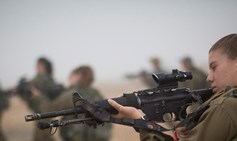
The IDF, like every other state institution in Israel, is obligated to the principle of equality – meaning that any woman who is capable of doing so must be permitted to serve in elite combat units


Despite the significant changes resulting from the expansion of women’s service in IDF units, gender still remains a criterion for screening the assignments of military personnel in 2021

After three contentious election campaigns Israel's new government has been sworn in. IDI's experts weigh-in with their recommendations on the most important issues on the agenda. Prof. Amichai Cohen writes about the matters that should be at the top of the agenda to improve Israel's security and resilience.