
What If WhatsApp Goes Dark on Election Day?
Much of Israel's election operations and infrastructure is carried out on WhatsApp, which is vulnerable to coordinated efforts to interfere with an opponent's get-out-the-vote efforts and erroneous blocking of accounts identified as spam. Key steps must be taken by Meta, WhatsApp's parent company, to protect electoral integrity on October 27.
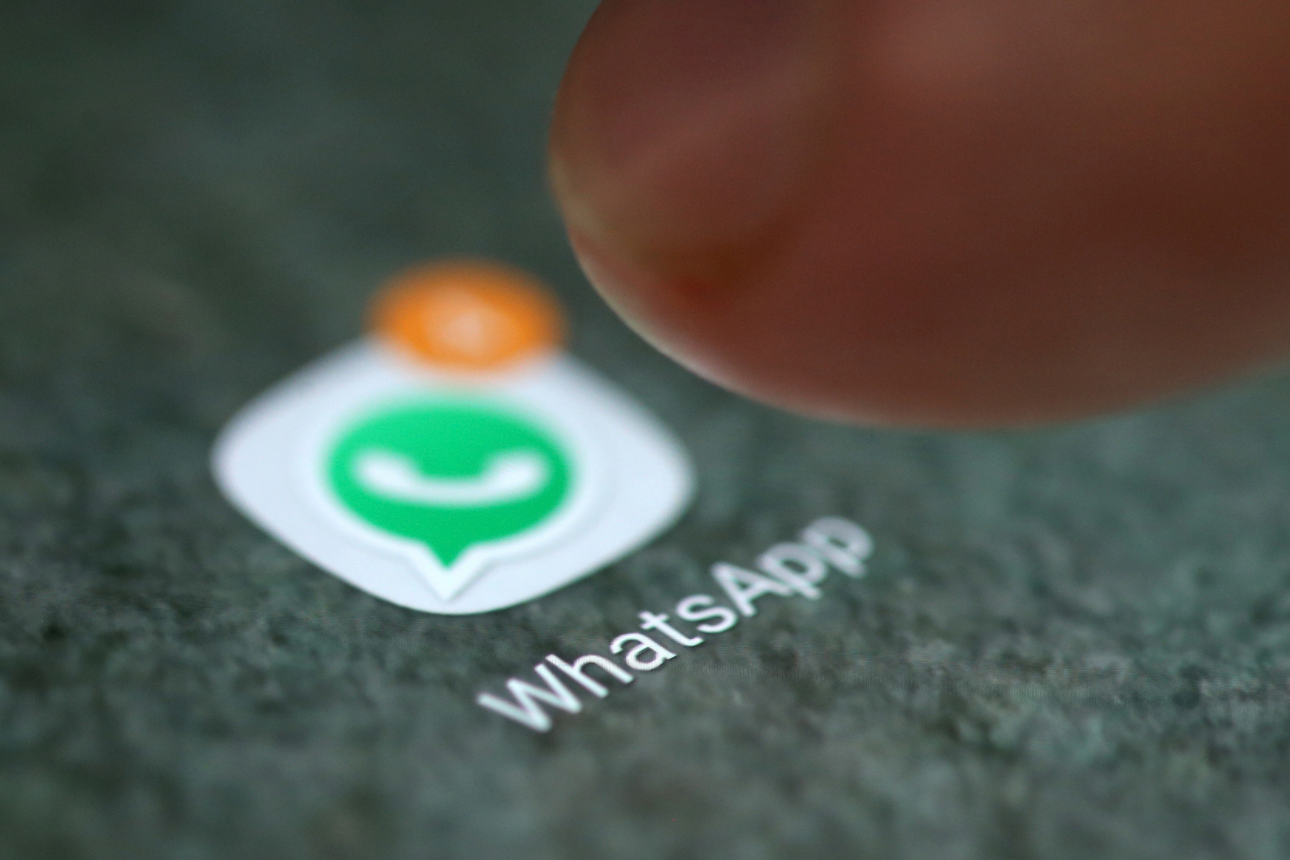
Photo by REUTERS
Let's say on the morning of October 27, a WhatsApp group connecting the Central Elections Committee to hundreds of polling station secretaries is suddenly suspended. Elsewhere, a campaign manager discovers that her account has been banned, cutting her off from the activists she is supposed to coordinate. A political party loses access to groups it has spent months building, just as its get-out-the-vote operation is reaching its most critical hours. Hundreds of activists are waiting for instructions, transportation arrangements need to be adjusted, and polling station observers need information. By the time the accounts are restored, the election may be over.
None of this requires a cyberattack or a sophisticated foreign influence operation. WhatsApp, owned by Meta, relies on automated enforcement systems to identify spam, fraud and other violations of its rules. These systems examine patterns of activity, including the frequency of messages, the creation of groups and the addition of new participants. On Election Day, accounts that have been relatively quiet may suddenly become extremely active, as campaign workers send hundreds of messages, create groups and contact people who have not saved their numbers. To a campaign manager, this is simply Election Day, but to an automated enforcement system, it may look like suspicious activity.
There is another possibility. Because WhatsApp messages are end-to-end encrypted, the company does not ordinarily have access to the content of private conversations, relying, among other things, on user reports to identify prohibited activity. When a user reports a message or group, certain information and reported messages may become available for review. This necessary safety mechanism can also be exploited – false reports can be coordinated alleging serious violations, such as incitement to terrorism or child abuse material, in an effort to trigger enforcement against political opponents.
This leads us to an uncomfortable question: Who would anyone call?
Over the years, Israel has quietly and organically moved much of its organizational infrastructure onto WhatsApp. Not just family conversations and neighborhood groups, but the daily coordination of public institutions, political organizations, emergency services, businesses and civil society. According to the Israel Internet Association, approximately 99 percent of Israeli adults use WhatsApp. During elections, political parties use it to coordinate campaign headquarters, local branches, activists, observers and transportation. Civil society organizations rely on it to organize volunteers, and even the Central Elections Committee uses WhatsApp to communicate with polling station secretaries.
In other words, WhatsApp has become part of the infrastructure through which elections are organized and conducted. Yet this infrastructure belongs to a private company, whose enforcement decisions are made through systems and procedures largely outside Israel, with no clearly established local address for resolving urgent account suspensions. Blocking a single central account or suspending a large group can disrupt the work of hundreds or thousands of people. A handful of such failures at critical points in the network could paralyze operations involving many more.
There is good reason to take this possibility seriously. In 2023, there were reports in Israel of organized attempts to target protest activists through malicious reporting. Later that year, the WhatsApp accounts of approximately ten members of Knesset from Yesh Atid were blocked simultaneously. Authorities examined suspicions of coordinated malicious activity, although the cause of those particular bans was never conclusively established.
During the summer of 2026, Israeli users reported waves of unexplained WhatsApp account suspensions. Some were blocked after attempting to connect through their computers; others found themselves blocked again shortly after their accounts had been restored. A request to certify a class action was subsequently filed against WhatsApp, alleging inadequate explanations and ineffective appeal mechanisms. Similar incidents were reported in India and Indonesia, where a WhatsApp representative acknowledged that an error in the company's enforcement system had caused mistaken suspensions as part of a global problem.
We do not know how many accounts might be mistakenly blocked during Israel's elections. Much of the information needed to assess that risk is not publicly available, but the combination of documented enforcement errors, opportunities for malicious reporting and the extraordinary intensity of Election Day activity should be enough to prompt serious preparation.
Under WhatsApp's existing procedures, users whose accounts are blocked may, when the option is available, request a review. According to the company, such reviews are generally conducted within 24 hours. Twenty-four hours may sound like a reasonable customer-service standard, but on election day, 24 hours is too late. A voter who was supposed to receive transportation to a polling station cannot be driven there the next day. An observer who missed a critical shift cannot return to it after the polls close.
The real problem is the absence of a clearly defined emergency procedure for a failure that could disrupt essential electoral activity. Does a campaign manager contact WhatsApp customer support? Does a polling station secretary turn to the Central Elections Committee? Is there someone at Meta who can distinguish an ordinary enforcement decision from a coordinated attempt to disrupt an election? Who can request an immediate human review, and how quickly can it take place?
Israel's Central Elections Committee says it has a direct communication channel with Meta. Meta, for its part, regularly describes the elaborate preparations it makes to protect elections around the world. Yet a statement issued just this week by Meta's own independent Oversight Board offers a sobering reminder of how far these assurances can be from reality. The Board warned of recurring enforcement failures, citing the mistaken removal of political activist accounts in the United States and restrictions affecting the advertising accounts of Brazil's President Luiz Inácio Lula da Silva. It questioned why Meta's mechanisms for preventing mistakes and escalating politically sensitive cases to human reviewers had failed to work as intended. The Board also criticized the company's continued failure to publish meaningful measures of the effectiveness of its election-protection efforts. These incidents did not concern WhatsApp specifically, but they demonstrate why the existence of dedicated teams and communication channels is not, by itself, a guarantee that serious enforcement errors will be prevented or corrected in time.
For years, election protection efforts have concentrated on disinformation, deepfakes, foreign interference and the amplification of harmful content. These are genuine threats. But the risk of mistaken enforcement deserves attention as well, particularly when a messaging service has become an essential tool for organizing democratic participation.
With the elections approaching, Meta must conduct a dedicated risk assessment and stress tests simulating the sharp increases in legitimate WhatsApp activity expected in Israel on Election Day. It should monitor unusual spikes in account and group suspensions, identify systemic errors in real time and ensure that sufficient human reviewers are available to handle urgent cases. It should also be prepared to explain, after the elections, how many accounts were blocked, how many decisions were reversed and how long reviews actually took.
The Central Elections Committee and Meta must also ensure that their existing communication channel covers WhatsApp account and group suspensions, not merely harmful content on Facebook and Instagram. They need an agreed emergency procedure with designated contacts, clear criteria for identifying cases involving significant electoral activity and a timeframe for expedited human review. "We have forwarded the matter to our team in Ireland" cannot be an adequate response when polling stations are open and the damage is unfolding in real time.
This does not mean giving the Central Elections Committee authority to order Meta to reinstate accounts or exempt political parties from the platform's rules. It means recognizing that the consequences of an erroneous enforcement decision may extend far beyond the account holder, and creating a procedure capable of addressing that reality. Israeli election authorities, for their part, must also consider contingency arrangements for essential communications that should not depend entirely on a single commercial service.
A democracy should not depend on whether an automated system at a technology company gets it right on Election Day. And certainly not on whether someone at that company answers an appeal before the polls close.
This article was published in The Times of Israel.
