

Israel's government-appointed October 7 probe is no substitute for independent inquiry - opinion
The Israeli government’s decision to establish its own committee to investigate the failures on October 7 is not enough.
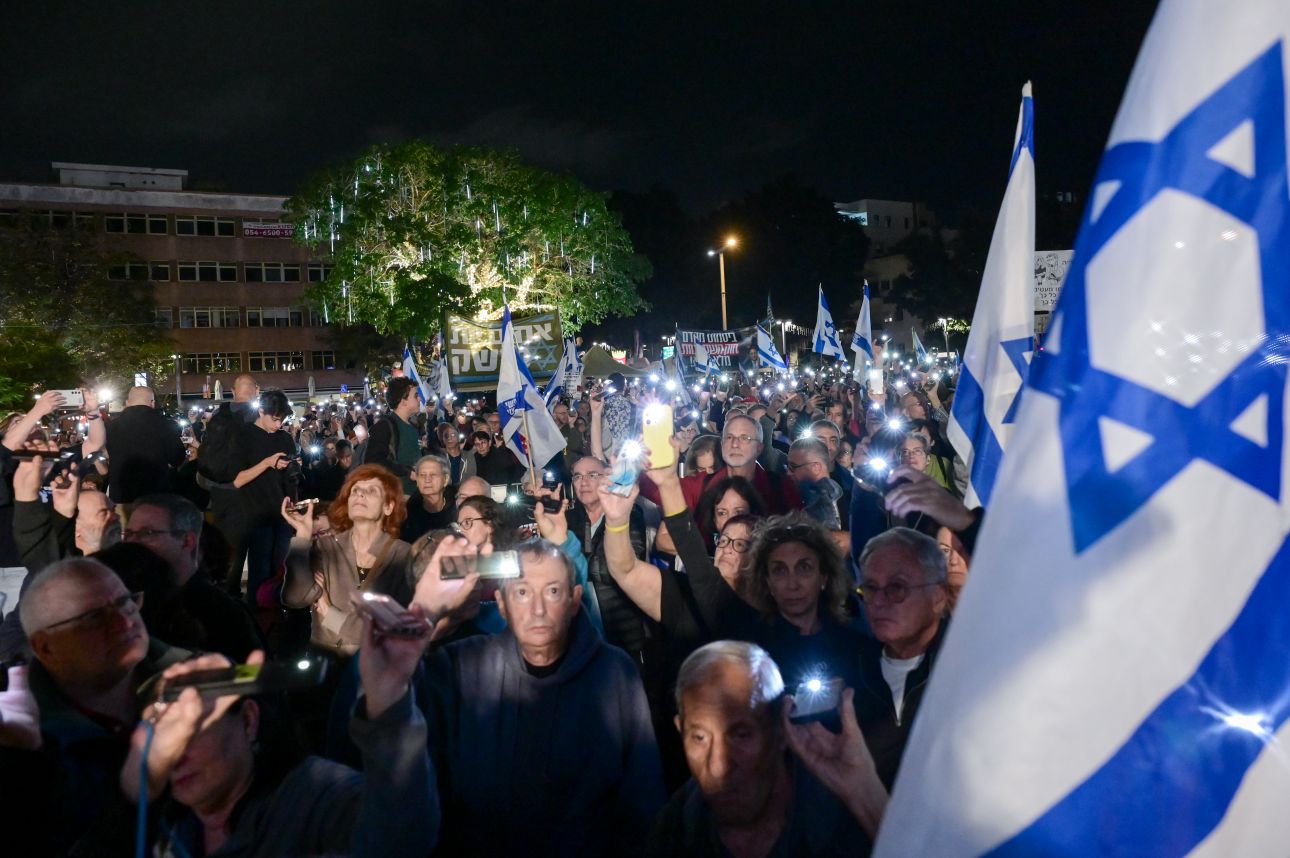
Photo by Avshalom Sassoni/Flash90
The Israeli government recently decided to establish its own committee to investigate the failures surrounding Hamas’s October 7, 2023, invasion and massacre in southern Israel, declaring that it will be “independent, endowed with full investigatory powers, and have the broadest possible public consensus.”
That may sound promising, but in reality this is the decision of a government that has been bending over backwards to avoid the establishment of a state commission of inquiry under the 1968 Commissions of Inquiry Law.
Though the law does not obligate the government to establish such a commission, in the case of October 7 the reasonable and appropriate path is to form one, designed precisely for tragedies of this magnitude.
Independent commission
A state commission of inquiry, unlike other forms of investigative bodies, including what the government has proposed, is an independent commission whose members are appointed by the president of the Supreme Court, endowed with full investigatory powers under the Commissions of Inquiry Law, and which has public trust and legitimacy.
Since it is independent from the political or military establishments, it is the only mechanism capable not only of uncovering the truth and drawing systemic lessons but also of restoring public trust in state institutions. No other framework – neither a government-appointed review committee nor a public committee composed of coalition and opposition representatives, and certainly not a parliamentary or ministerial committee – possesses the same independence, authority, and public legitimacy as a state commission of inquiry.
Such commissions have historically allowed the Israeli public to hold leaders accountable and to begin the process of healing a national trauma.
A key example of this was the Agranat Commission following the failures leading to the 1973 surprise attack that began the Yom Kippur War – 50 years and two days prior to the October 7 massacre.
A real investigation
A truly independent commission would need to investigate, at a minimum, the following in regard to October 7:
Initial readiness: Intelligence warnings, decision-making processes within the security establishment and political leadership in response to alerts; and the readiness of the IDF, security forces, and civilian systems for infiltration and assault scenarios.
The events on the day of October 7: Deployment of security forces, command and control structures, operational responses, coordination between field and political actors, and the actions carried out by emergency services, police, Home Front Command, and local authorities during the terror attacks and invasion.
Management of the Gaza war: Decision-making processes behind the initiation and objectives of the war; the relationship between military and political leaderships; oversight and balance mechanisms; and the management of multiple fronts.
Additional topics to consider include Israel’s compliance with international law during the war; the issue of the hostages and the negotiations for their release; and whether these topics will be within the commission’s mandate or under a separate investigative body.
There are also procedural considerations, such as the commission’s composition and working methods. While the law outlines a three-member panel for a state commission of inquiry, the government may expand the number to a larger odd figure (for instance, the Agranat Commission had five members)
Given the scale of the events on October 7, it may be appropriate for this commission to have as many as nine members, possibly operating through subcommittees to handle the scope of inquiry.
Another important issue concerns testimonies before the commission. Beyond witnesses summoned by the commission itself, any citizen has the right to request to testify, and it is likely that thousands would do so.
This could significantly extend the commission’s work, making it necessary to establish a mechanism balancing the factual contribution of testimonies with their symbolic, historical, and emotional importance.
Evasion of accountability
The government’s announcement of establishing its own commission is a mechanism to avoid accountability. Prime Minister Benjamin Netanyahu himself said, “What matters is who investigates, and more importantly, who appoints the investigators.”
In other words, the idea is to turn an independent committee into one that avoids having the president of the Supreme Court appoint the members, and the government appears to be attempting to invent a new formula for an “independent” commission.
While we do not yet have details on the government’s planned commission, this politicized body will be insufficient for a public that deserves to uncover the truth, to hold its leaders to account, and to begin the process of repair.
The State of Israel must have the courage to look at itself and reveal its errors, seeking to understand in order to change.
A state commission of inquiry is not a court of law. Its purpose is not to convict or acquit but to clarify and gain insights. Here, it should be able to provide Israeli society with a framework to process the national trauma, build a shared historical narrative that offers repair and reconciliation, and restore a sense of control and order after chaos and loss.
There is broad public support for establishing a state commission of inquiry (74% according to a recent Israel Democracy Institute survey), and the High Court has already asked the government to explain why it has not done so.
If the current government does not deem it appropriate or necessary to appoint a truly independent state commission of inquiry, it may ultimately be compelled to do so by public pressure or by the court. If not, it will likely be done by a future government.
This article was published in the Jerusalem Report.