

Why Israelis Support This War
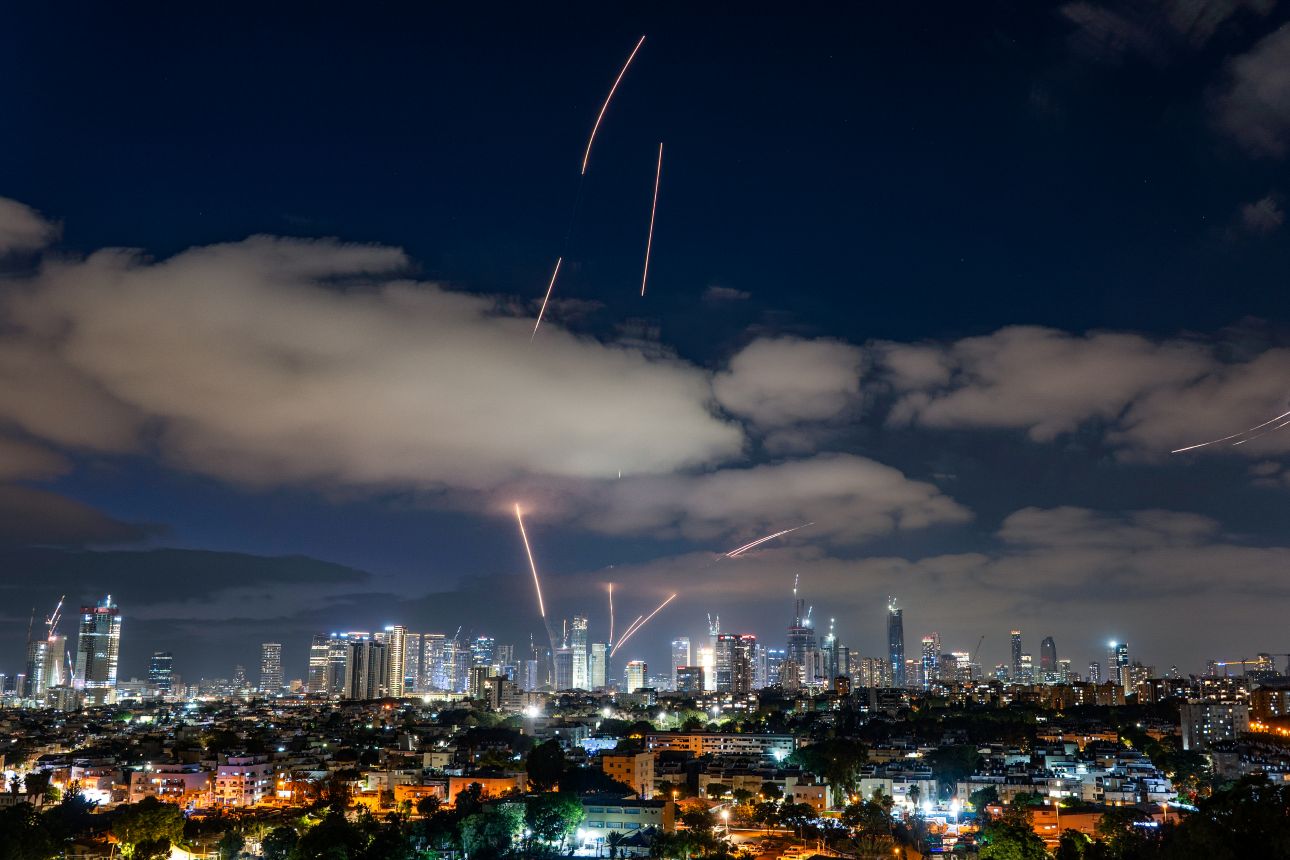
Photo by Matanya Tausig/Flash90
Dear Friends,
Once again, Israel is at war.
While in reality we have been at war continuously since October 7, 2023, the present conflict with Iran is merely what we hope will be the final act of the multi-front war that began on that dark day two and a half years ago.
Since early Saturday morning the Israeli Air Force has been bombarding the Islamic Republic of Iran – decapitating the regime’s leadership and methodically dismantling its capacity to wage war and internal repression. Meanwhile, our homefront is under attack. The Iranians have launched hundreds of missiles and drones at civilian population centers, forcing millions of Israelis into bomb shelters and shuttering schools and businesses.
What makes this round different from the 12-Day War last June is that this is no longer a war just between Israel and Iran. For the first time in history, Israel and the United States have gone to war together, with American pilots flying shoulder to shoulder with their Israeli counterparts over the skies of Iran. Nor is Israel the only target of Iranian attacks this time around. Hundreds of missiles and drones have been launched at the Gulf states, at Jordan, and even at Turkey and Cyprus, turning the conflict into a regional war.
As I noted back in June, every prime minister since Yitzhak Rabin has viewed the regime of the ayatollahs in Teheran as an existential threat to the State of Israel. But it was only the vicious attack of Iranian proxies Hamas and Hezbollah in October 2023 that convinced Israel's political and military leadership that this threat could no longer be contained.
This is why this war is extremely popular. Opposition leaders from Yair Golan, leader of the leftwing Democrats party (representing a union of Labor and Meretz), to former prime ministers Naftali Bennett and Yair Lapid have all voiced their support for the operation, and the latter two have been actively making the case on social media and in numerous interviews on national and international outlets. Their stance reflects public sentiment here in Israel. A special flash poll conducted this week by Prof. Tamar Hermann, Dr. Lior Yohanani, and Yaron Kaplan from IDI’s Viterbi Family Center for Public Opinion and Policy Research found that 93% of Jewish Israelis support the strikes on Iran and 74% support Prime Minister Netanyahu's management of the war – even as many, presumably, remain distrustful of his leadership in other regards. Though it is important to note that here again we see a major difference of opinion between Jewish and Arab Israelis. According to our survey, only 26% of Israel’s Arab citizens support the war.
It is still unclear at this point how this war will end. Both Prime Minister Netanyahu and US President Trump have stated multiple goals – from elimination of the Iranian nuclear and missile programs to complete regime change. Our survey indicates that 57% of Jewish Israelis support prosecuting the war until regime change is achieved, even after the regime’s nuclear and missile programs have been demolished.
At the same time, it is worth noting that the American public is far less supportive of this military operation, and they are alarmed by the seemingly widespread notion that Israel dragged the US Administration into an unnecessary war. According to one poll, only 27% of Americans support the war (Reuters) and another found that a majority of Americans fear the war is making the US less safe (Fox). This may be one reason why Israeli decision-makers seem intent on pressing forward with a maximalist agenda against the regime in Tehran – out of concern that the unprecedented military cooperation with the US will not be repeated in the future.
However it ends, the spectacular military achievements of the first few days of this war have shown yet again what Israelis can achieve when we are united. When the war is over, our leaders would do well to harness the extraordinary bravery, ingenuity and determination displayed by our men and women in arms to address the massive challenges that still threaten Israel’s security, prosperity and social cohesion. The war has revealed close coordination not only between the US and Israel, but also between our security forces and the Gulf states. With deft diplomatic maneuvering, and a willingness to seriously address the still unresolved situation in Gaza and the conflict with the Palestinians, it is easier than ever to imagine the expansion of the Abraham Accords when the dust of war settles.
We are approaching the first national election since October 7th. If we can reach that moment of choice with the external threat that has hung over our politics for so long much diminished, we may finally have the opportunity to turn the tragedy of that day into a historic opportunity for renewal and reform.
Though Israelis may at times seem hopelessly divided, there is broad consensus on many of the core issues that need to be addressed – from ultra-Orthodox integration to constitutional and electoral reform. While there is a real danger that once the wartime unity diminishes partisan forces will once again seek to focus on identity politics that polarize us, it is high time that our leaders put aside petty divisions and get to work on strengthening solidarity, shoring up beleaguered democratic institutions and laying the foundations for decades of security and prosperity in a transformed Middle East.
I pray for the safety of the men and women of the IDF and our security services, and look forward to the day when Israel and Iran will once again be partners in peace.
Yohanan Plesner

President
The Israel Democracy Institute