

What Is the Significance of the Government’s Decision on the Second Authority Council?
In light of the government's announcement that an interim order issued by the Supreme Court does not have binding force, the question arising in this case goes beyond the matter of the Second Authority and touches on the foundations of Israel’s democratic system of government.
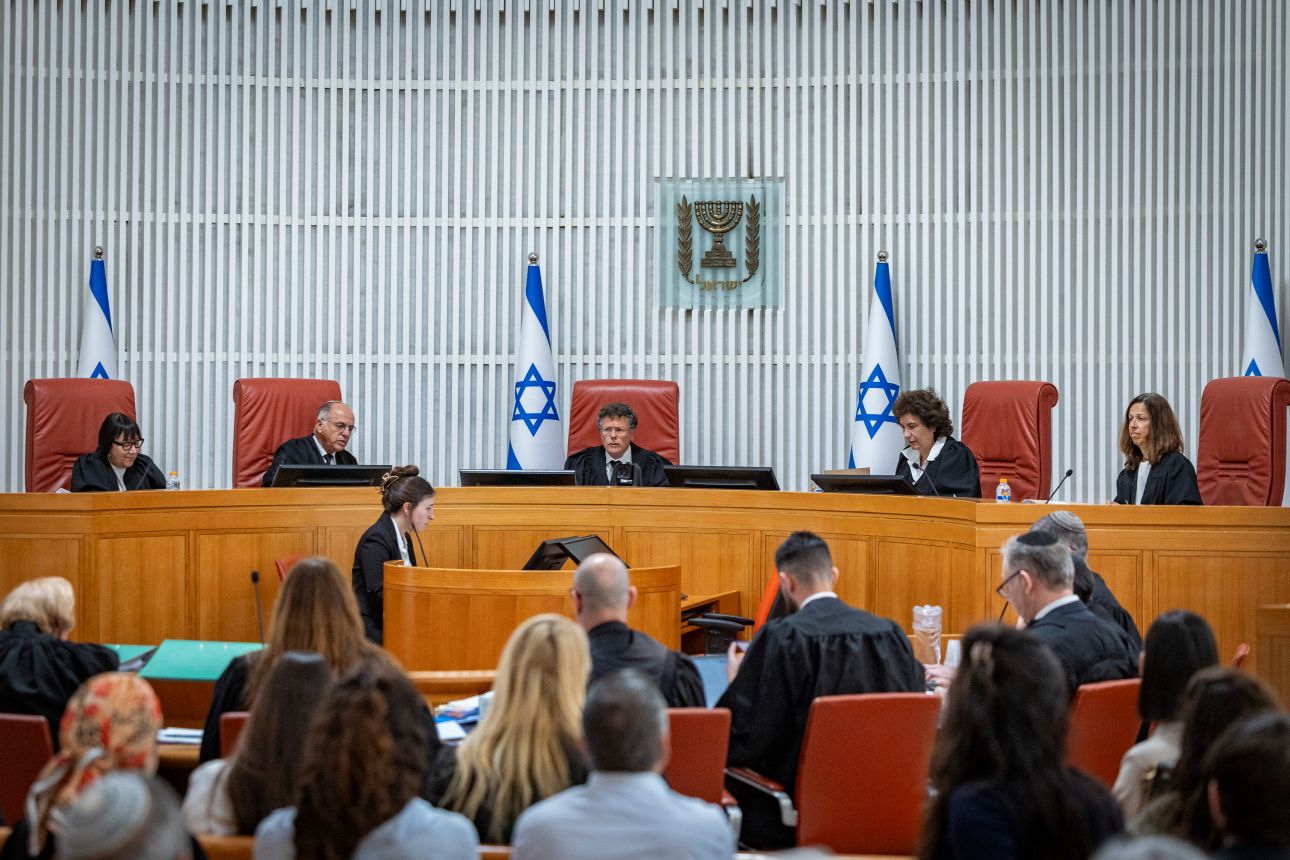
Photo by Chaim Goldberg/Flash90
The High Court of Justice issued an interim order instructing that the Second Authority Council continue to operate in its existing composition until a decision is reached on the petition. The government decided that, as far as it is concerned, neither the order nor the decisions made by the Council pursuant to it have binding force. Although the order was not directed at the government, and the government’s decision has no legal force, its implications could be serious. Beyond the problematic declaration itself—that the government is not bound by a judicial order—the decision could place every public servant in a dilemma of loyalty: whose instructions are they to follow when the government and the Court issue conflicting directions, and whose interpretation of the laws of the State of Israel are they to follow?
What is the Council of the Second Authority?
The Council of the Second Authority for Television and Radio is Israel’s commercial broadcast media regulator: television channels 12, 13, and 14, as well as regional radio stations. The Council is composed of public representatives who are meant to reflect both professional expertise and the different segments of Israeli society. The Second Authority is a body outside the government, in order to safeguard its independence. At the same time, appointments to the Council are made by the Minister of Communications with the approval of the government.
Two important decisions are currently before the Second Authority. The first is whether to approve the sale of Channel 13, which is in significant financial difficulty, to an investor group led by high-tech entrepreneur Assaf Rappaport. The second is whether Channel 14 should still be regarded as a “small channel,” exempt from almost all investment obligations (in news and original productions) or whether, given the increase in its viewership, it should now be regarded as a regular channel.
What case was recently before the High Court of Justice and what did it decide?
The Second Authority Council is selected for a five-year term, and from time to time individual members must be appointed in the event of resignations. The existing Council was appointed mostly by the previous Minister of Communications, though additional members were added during the years in which the current government has been in office. At the end of 2025, the term of the current Council expired, and in March 2026 the government approved a new Council. Some of its members have been criticized as problematic appointments, whether because of sharp past statements against certain market actors or because of conflicts of interest requiring a cooling-off period. A petition was filed with the High Court of Justice against some of the appointments, and in March 2026 the Court ordered that, until it rules on these appointments, the previous Council would continue to serve.
In June 2026, a follow-up petition was filed with the High Court of Justice after it emerged that a large number of Council members had resigned, allegedly under pressure from the Minister of Communications or someone acting on his behalf. In an interim order, the Court instructed that, until it issues a judgment in the matter, the previous Second Authority Council would continue to serve, even after some of its members had resigned, until a decision is reached on the petition.
The order was intended to preserve the status quo and prevent an irreversible change during the interim period. The Court expressed, in its words, a “grave concern” that pressure had been exerted by the Minister of Communications, or someone acting on his behalf, on Council members to resign in order to obstruct the implementation of the Court’s decisions. The Court also held that some members of the previous Council who had resigned were joining the new Council, and that this could constitute a breach of the duty of loyalty imposed on them by law.
What does the government decision state?
Although the interim order does not require the government to take any operative action, but is rather directed at the Second Authority Council, the government decided that it does not recognize the order.
According to the government, the Court acted contrary to the law. The government therefore states that it will not recognize the actions and decisions of the Second Authority Council taken pursuant to the order, and it goes even further, claiming that no other party may rely on those decisions.
In other words, the government declares in an official decision that, as far as it is concerned, the Court’s interim order has no binding force.
What are the implications of the government decision?
The government decision has two main implications.
On a practical level, it may deter the Second Authority Council from exercising its powers in accordance with the High Court of Justice’s order, and therefore affect the entities regarding which the Council is expected to make decisions in the near future—for example, the television channels, their employees, and the viewers. Even though the government has no authority to declare the order invalid, the very announcement that it will not recognize the Council’s decisions is intended to exert pressure on Council members, make it more difficult for the Council to function, and undermine its decisions.
On the level of principle, if the government continues in the future to maintain that it is entitled to ignore judicial decisions that it asserts were issued without authority, this could lead to a constitutional crisis. In such a situation, public servants and professional officeholders could find themselves caught between conflicting instructions from the Court and from the government, without knowing whom they are required to obey.
For example, in a hypothetical case in which the High Court of Justice were to order the police to cease a particular policy, and the government were to announce that it does not recognize the judgment, police officers would be required to choose between following the government’s instructions and complying with a judicial order. Similarly, if a judicial decision were issued by the Chair of the Central Elections Committee and the government announced that it does not recognize it, the Committee’s professional staff would also face an impossible conflict between their duty to implement a judicial decision and the government’s instructions.
This is precisely the meaning of a constitutional crisis: a situation in which the branches of government no longer recognize a single authorized body that decides legal disputes in a binding manner, and the professional echelon is left without a clear answer to the question of whom it must obey.
What was the Court response to the government decision?
As noted, the government decision concerns an interim order in a case that is still pending before the High Court of Justice. After the government's decision was announced, the Attorney General’s Office submitted a notice to the Court, updating it on the full text of the government decision.
The panel of justices issued a brief decision on July 7, 2026, emphasizing the importance of respecting judicial orders, with reference to previous case law. Among other things, the decision stated:
"A state in which a governmental authority takes the law into its own hands—complying with a judicial order issued against it when it wishes, and ignoring it when it wishes—is a state in which the seeds of calamity and anarchy are sown, and in which a dangerous culture of rule by force and arbitrariness develops."
The Court also noted in its decision that action by a public servant in violation of a judicial order could, in some cases, result in the personal immunity that protects that public servant from tort claims not applying. In such a situation, a public servant who acted contrary to the order could be sued personally by a person or entity harmed by his or her actions. If the public servant is found liable for the damage, he or she may be required to pay compensation out of their own pocket. This differs from the ordinary situation, in which a public servant acting within the scope of his or her duties is protected from personal liability, and responsibility for the damage rests with the state or the public authority.
Is the government permitted not to recognize a court decision?
The government is entitled to disagree with court decisions and even to criticize them. But just as a private individual may not decide that a judgment issued against him is not binding because, in his view, it is mistaken, the government may not do so either.
As long as a court decision remains in force, the government is obligated to comply with it, because the Court is the authorized interpreter of the law in the State of Israel. If the government believes that the decision is mistaken, it has at its disposal the accepted legal tools, such as an application for reconsideration. In any event, the government does not have the authority to decide for itself that a court decision is not binding.
Why is the final decision on legal questions entrusted to the Court?
One of the fundamental principles of a state governed by the rule of law is that there is one body authorized to decide, in a binding manner, disputes over the interpretation of the law and the scope of the powers of the branches of government: the Court.
By contrast, the government is a political body that stands at the head of the executive branch. It has at its disposal the full range of state resources and the monopoly on the use of force, and its role is to formulate policy and implement it within the framework of the law. In cases of doubt regarding the implementation of the law, the government is not authorized to decide the matter itself, and certainly is not authorized to determine which judicial decisions bind it and which do not.
This is all the more true when the dispute concerns a regulatory body in the communications sector, where the government and its head have a direct interest in the outcome of the proceedings.
What does this mean for democracy?
It is important to emphasize that this issue is not only about the composition of the Second Authority Council. The question of principle is whether the government may decide for itself that a judgment of the Supreme Court is not binding on it.
If the government may determine which judgments it will comply with and which it will not, this undermines the principle of the rule of law, the principle of the separation of powers, and the status of the Court as the body that resolves legal disputes. The question arising in this case therefore goes far beyond the matter of the Second Authority and touches on the foundations of Israel’s democratic system of government.