

Meta Agreed to Protect America's Children. Who Will Protect Israel’s?
A settlement with Meta in the US, though imperfect, marks a significant recognition that the design of social media platforms must be regulated to protect children. In Israel, where children have been carrying three years of war on small screens, such protections are critical.
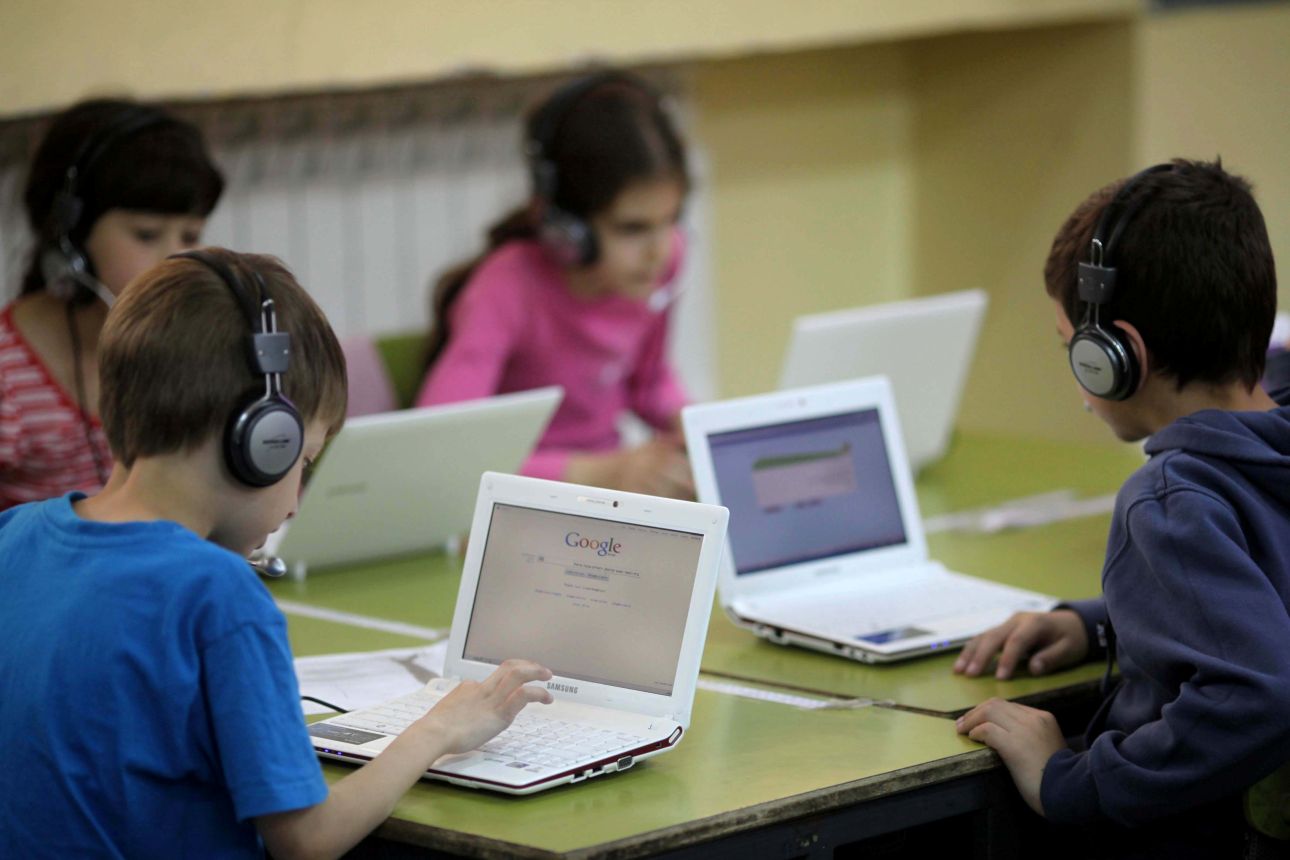
Photo by Kobi Gideon / Flash90.
After a missile siren, an Israeli child may reach for Instagram for the same reason an adult does: to find out what happened. But as anyone who has found themselves in a post-October 7 doom scroll will know, within a few seconds, their experience may transition from an official update to a loop of increasingly graphic clips, from which they cannot look away, hours into the night. The phone is how a kid may learn what is happening and check on their friends and family. It is also how the war comes into their bedrooms and keeps them awake at night. Yes, the content is harmful and ubiquitous – according to a 2024 report by Israel's Ministry of Justice, 63% of Israeli teenagers ages 12-17 reported encountering difficult or harmful online content connected to the war.
But this is about more than content – it's about the machinery behind the content. And against this backdrop, Meta’s settlement in the United States should be getting far more attention in Israel. Meta will pay up to $18 billion in a settlement with nearly every US state and change how Facebook and Instagram operate for American users under 18. The changes include a default two-hour daily limit, restrictions on nighttime access and notifications during school hours, stronger age checks, hidden like-counts, and the option of a feed that is not algorithmically personalized. While the money is impressive, the far deeper significance lies in the decision to regulate the design of the product.
The settlement is, nonetheless, far from perfect. Because this is a negotiated settlement rather than a court ruling, there is no judicial determination that designing an addictive digital product constitutes a violation of the law. It does not address all the risks to children on the platform, and various aspects of the settlement were managed in a manner that prioritizes their business – roughly $5 billion of the settlement is conditioned upon Meta's competitors implementing similar changes. Nonetheless, it marks an important shift. For years, online-safety debates have revolved around content which, in Israel, are charged because they touch on terrorism, incitement, disinformation, national security, and political speech. Meanwhile, the machinery surrounding the content has received much less scrutiny. Endless scrolling, constant alerts, public popularity scores, and recommendation systems all influence what children see, how long they remain online, and how difficult it is to leave.
Israeli law is more or less silent on the matter. Israel has yet to enact a comprehensive framework requiring platforms to assess the risks their products pose to children, make safer settings the default, or demonstrate that their protections work properly in Hebrew and Arabic.
This regulatory gap carries particular weight in a small market living through a prolonged emergency. Israeli children should not have to rely on a global company deciding, voluntarily, to devote the same attention and resources to them as it does to users in the United States or Europe.
Litigation is a possibility in Israel, but it is limited. For example, in recent weeks, Bank Leumi sued Meta over fraudulent Facebook ads impersonating the bank, seeking not only financial compensation but also to compel the company to change mechanisms and features within its systems. When a powerful, well-resourced institution sees its interests being harmed, there is someone to pay the lawyers, gather the evidence, and demand change. But our children have no legal department and no litigation budget.
With or without policymakers, Meta has the option of extending its safeguards to Israel and beyond; to examine how its systems operate during war and other emergencies; and to publish meaningful information about the performance of its child-safety measures in Hebrew and Arabic.
An important window of opportunity is now opening in Israel. Europe has already made risk management by digital platforms a regulatory obligation backed by enormous fines. In the United States, the courts, state attorneys general, and consumer protection law are pushing in precisely the same direction. And in Israel, a new Knesset will soon take office. One of its tasks should be to begin taking seriously the phenomenon we too casually call “social media”: powerful digital products, some of which are designed to keep us using them as much as possible, and which can be addictive and dangerous for children.
No law will make social media harmless, and Israeli children will continue to use it to maintain friendships, find communities, learn, and understand events that adults themselves struggle to process. These platforms are too deeply embedded in their lives to pretend otherwise. But the environment surrounding children online is not a force of nature. It was designed, and it can be designed differently – as we are seeing in the US.
Children in Israel have already spent nearly three years carrying a war waged by adults on small screens. A new Knesset will soon be elected – the time has come to take action to protect Israeli children.
And what about adults? That, kids, is a story for another day.
This article was published in The Times of Israel.