

Electing the State Comptroller in the New Knesset
The office of State Comptroller has been vacant since July 2026. What harm has this caused? What are the Comptroller’s responsibilities? And how will the election process be conducted?
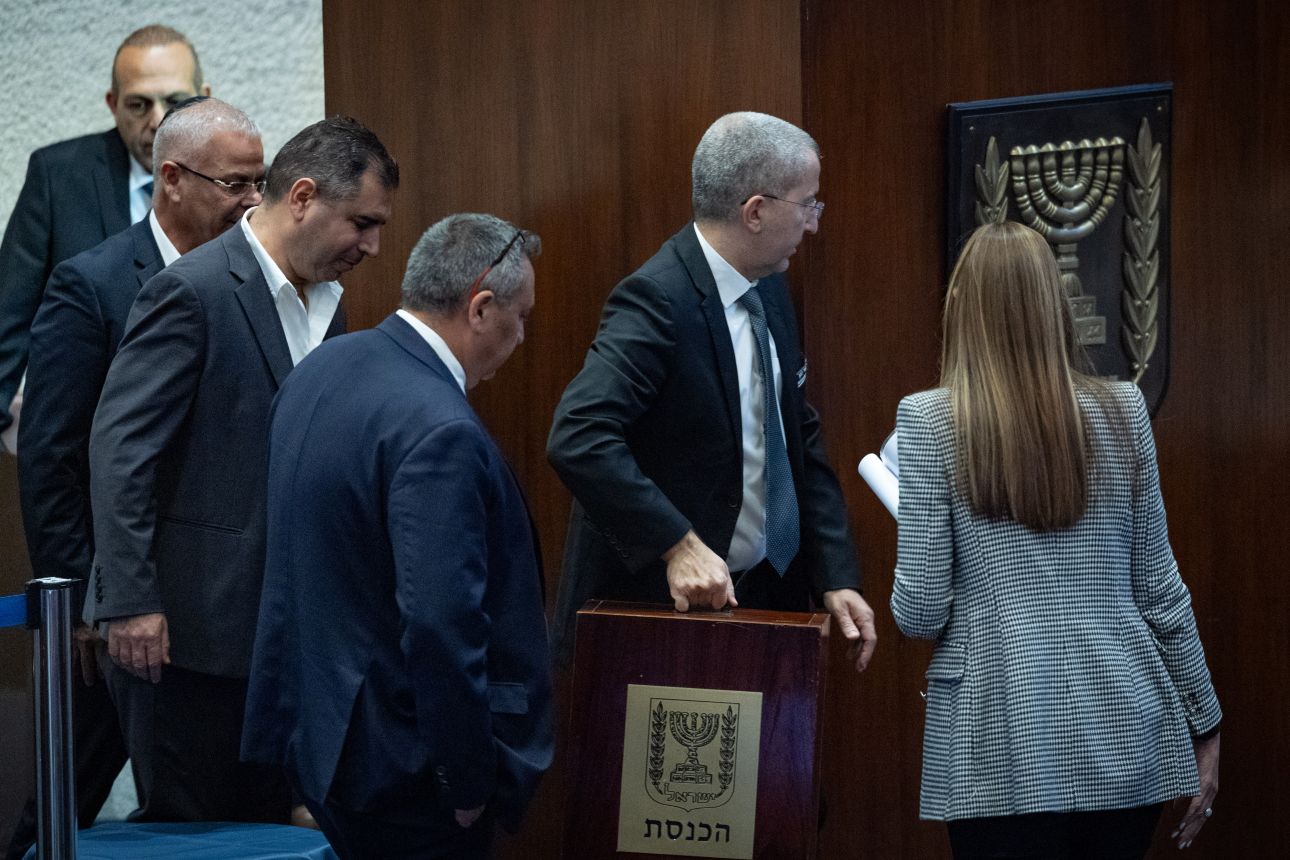
Photo by Yonatan Sindel/Flash90
- On June 3, 2026, the 25th Knesset held a vote to elect a new State Comptroller. In the first round, retired Supreme Court Justice Yosef Elron received 60 votes and attorney Michael Rabello received 57, leaving both short of the required 61 votes. In the second round, Rabello was elected by a vote of 61 to 57.
- The High Court of Justice unanimously ruled that the secrecy of the second-round vote had been substantially compromised after Members of Knesset documented how they had voted. The Court therefore annulled the second round and ordered that it be repeated as soon as possible.
- Knesset Speaker Amir Ohana did not set a date for the repeat vote. The High Court rejected a petition seeking to compel him to hold the vote before the swearing-in of the 26th Knesset, but ruled that the failure to implement its judgment amounted to a violation of it.
- Attorney Rabello has since withdrawn his candidacy.
- On November 24, the parliamentary factions of the 26th Knesset decided not to nominate any new candidates for the position of State Comptroller, leaving retired Supreme Court Justice Yosef Elron as the sole candidate.
The institution of the State Comptroller is one of Israel’s principal mechanisms for overseeing the government. The Comptroller examines the legality of public bodies’ actions, standards of integrity and proper administration, and the efficient and economical use of public funds. The Comptroller enjoys independent constitutional status, virtually unrestricted access to documents and information, and the authority to publish reports that can have significant public and political impact. The Comptroller is accountable solely to the Knesset and is independent of the government.
The Comptroller’s audits cover, among other bodies, government ministries, local authorities, government-owned companies, and other public institutions. The State Comptroller also serves as Ombudsman and oversees the financing of political parties, as well as campaign financing in internal party elections (such as primaries) and local elections. Unlike the courts, the police, or the State Attorney’s Office, however, the Comptroller is not an enforcement body. The ability to bring about change in practice therefore depends largely on the willingness of the Knesset and the government to adopt the Comptroller’s findings, and on pressure from the media and the public to ensure that those findings are implemented.
For more on the role of the State Comptroller and the election process, see this explainer.
The office of State Comptroller has been vacant since July 4, 2026, following the conclusion of Matanyahu Englman’s term. Although staff at the State Comptroller’s Office continue their work, there is no substitute for a serving Comptroller. Under the law, the State Comptroller’s powers are vested in the individual holding the office, rather than in the Office itself.
For example, in the absence of a State Comptroller, it is not possible to publish new audit reports, even if they have already been completed; initiate audits on new issues that were not planned in advance; or issue protection orders for whistleblowers. According to media reports, more than 30 applications for such protection orders have been dismissed outright because the position remains vacant. The ability to exercise oversight powers concerning the financing of political parties and primary elections is also impaired, including, for example, the authority to determine that a particular donation to a political party is prohibited.
The State Comptroller is elected by the Knesset through a secret ballot for a single seven-year term. The election is held between 30 and 90 days before the outgoing Comptroller’s term expires. The Knesset Speaker sets the election date in consultation with the Deputy Speakers and must notify Members of Knesset at least three weeks in advance. A candidate must provide written consent to stand for election and secure the support of at least 10 MKs. Nominations must be submitted 14 days before the election date, or seven days in the case of a new election process following the rejection of a sole candidate by the Knesset.
When there are two or more candidates and none secures the support of at least 61 MKs in the first round, a second round is held between the two candidates who received the most votes. The candidate who receives more votes than the other is elected.
If there is only one candidate, a secret ballot is held in which MKs vote for or against that candidate. If more votes are cast against the candidate than in favor, the entire election process must begin again. In the event of a tie, the vote is repeated.
To be eligible for the position of State Comptroller, a candidate must be an Israeli citizen and resident. Anyone who has previously held the position is ineligible to serve again. Beyond these conditions, however, the law imposes no additional eligibility requirements relating to professional experience, education, a cooling-off period, the absence of a criminal record, or conflicts of interest.
On June 3, 2026, attorney Michael Rabello and retired Supreme Court Justice Yosef Elron competed for the position. In the first round, Elron received 60 votes and Rabello received 57. Because neither secured the required 61 votes, a second round was held, in which Rabello received 61 votes and Elron received 57. Rabello was subsequently declared the winner.
However, after a disclosure of how MKs had voted, in violation of the requirement for a secret ballot, petitions were filed seeking to invalidate the election (HCJ 12634-06-26).
On July 2, 2026, a five-justice panel of the High Court of Justice unanimously ruled that the secrecy of the second-round vote had been materially compromised and that there was a real possibility that the irregularity had affected the outcome. Among the Court’s considerations was the fact that ballot secrecy is not merely an individual right that an MK may choose to waive. Disclosing how one has voted can place pressure on other MKs to demonstrate that they, too, voted in accordance with their parliamentary faction’s position, thereby undermining the freedom to vote independently.
The High Court annulled the second round and ordered that it be repeated as soon as possible, in accordance with the law. The Court specifically instructed that only the second round be repeated, without reopening the nomination process or conducting another first round.
It is important to emphasize that there was no legal impediment to electing a State Comptroller during the Knesset’s election recess. In fact, the previous Comptroller, Englman, was elected during such a recess, ahead of the September 2019 elections.
Why was the repeat vote never held?
Knesset Speaker Amir Ohana, who is responsible for setting the agenda of the Knesset plenum, did not schedule a repeat vote. In September, a petition was filed with the High Court of Justice seeking to compel him to do so (HCJ 14152-09-26).
The Speaker argued, among other things, that the timing of the vote was a matter within his discretion and that it would be preferable for the incoming Knesset to elect the State Comptroller.
The Knesset’s legal adviser, who submitted a separate position, emphasized the obligation to implement the Court’s judgment promptly, preferably while the 25th Knesset was still in office. However, she also acknowledged the practical difficulties involved in convening the vote during the election period.
On November 3, 2026, the High Court dismissed the petition seeking to compel the Knesset Speaker to hold the repeat vote during the few remaining days before the 26th Knesset convened.
However, the dismissal did not amount to an endorsement of the Speaker’s conduct. Quite the opposite: the Court held that the Speaker’s authority to set the election date carried with it an obligation to exercise that authority with appropriate urgency, and that his prolonged failure to implement the earlier judgment was tantamount to violating it.
The justices used strong language, emphasizing "the grave harm caused by this conduct to the public interest in upholding the rule of law ... [and] to the standing of the Knesset and the Court," as well as "the harm to the structures of governance and the constitutional order, which are essential to the regular functioning of the state."
At the same time, the judgment was delivered after the elections to the 26th Knesset, and the Court identified both practical and substantive difficulties in compelling the outgoing Knesset to hold the vote. Only a short time remained before the new Knesset would convene, and a new group of elected representatives had already been chosen. The Court therefore ruled that the election of the State Comptroller should be left to the incoming Knesset.
The election of the State Comptroller falls within the authority of the Knesset and is not contingent on the formation of a government. Following his election as Speaker of the 26th Knesset on November 19, 2026, Matan Kahana announced that he would move promptly to complete the process of electing a State Comptroller.
In principle, the question of whether the Knesset must restart the process or hold only the second round remains unresolved. The High Court’s latest ruling did not settle the issue either. In practice, however, significant developments have taken place since that ruling. One of the candidates, Michael Rabello, announced that he was withdrawing his candidacy. Following his withdrawal, at the Arrangements Committee meeting on November 24, the Knesset’s parliamentary factions agreed, with the consent of the Knesset’s legal adviser, not to nominate new candidates to stand against Justice Elron. Instead, they agreed to resume the election process from the second round, with Elron as the sole candidate.
A vote will still be held, however, and if more MKs vote against his candidacy than in favor, the election process will begin again.