

What Are the Powers of the Speaker of the Knesset?
Responsible for the day-to-day management of the Knesset, setting the plenary agenda, heading the Knesset Presidium—which has the authority to disqualify private members' bills—and attending official state ceremonies: A comprehensive guide to the powers and responsibilities of the Speaker of the Knesset.
Photos by Flash90
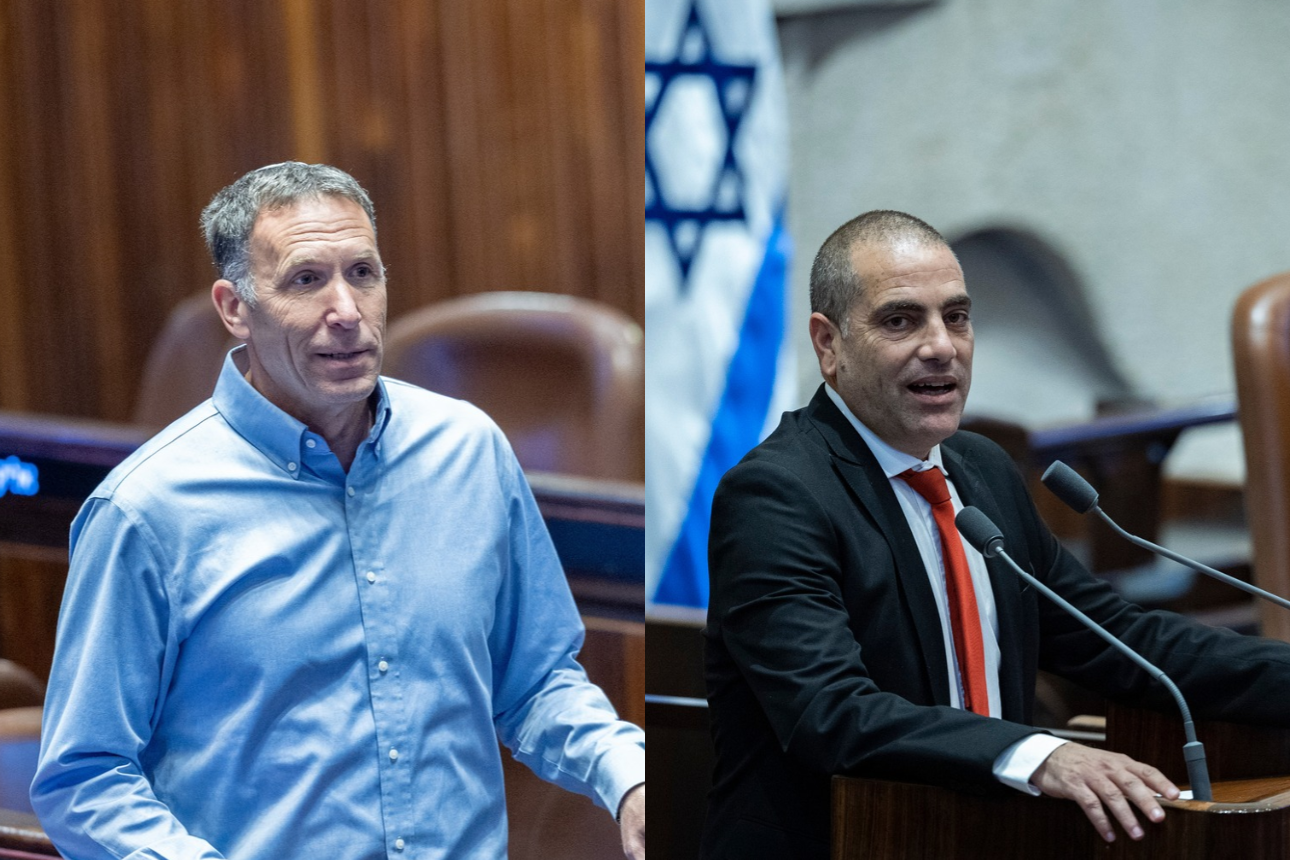
Following the 2026 elections, the outgoing Speaker, Likud MK Amir Ohana, continued to serve in the position. Although a new government has yet to be sworn in, 67 MKs have submitted a request to hold a vote to elect a new Speaker. In accordance with the High Court of Justice's 2020 ruling in the Edelstein case and the guidance issued by the Knesset's legal adviser, a vote will be held at which Yashar MK Matan Kahana is expected to be elected permanent Speaker of the Knesset. He would, of course, be entitled to resign from the position at a later date.
The Speaker of the Knesset is elected by the members of the Knesset during the period between the swearing-in of a new Knesset and the vote of confidence in the government (Rule 1 of the Knesset Rules of Procedure). The election is conducted by open vote, and a simple majority is required. If there are several candidates, the candidate who receives the most votes is elected.
Between the swearing-in of the Knesset and the election of a permanent Speaker, a temporary Speaker presides over the Knesset. Until the 15th Knesset, this position was held by the longest-serving MK. From the 16th through the 20th Knesset, it was held by the longest-serving MK who did not hold a government position. Since the 21st Knesset, the outgoing Speaker has continued in the position, provided that they were reelected to the Knesset. If the outgoing Speaker was not reelected, the position is filled by the longest-serving MK who is not a member of the government.
The Speaker is elected for the entire term of the Knesset and may be replaced during that term only under three circumstances: (1) the Speaker resigns or dies; (2) the Knesset votes by a simple majority to suspend or terminate the Speaker's tenure following the filing of an indictment or the initiation of criminal proceedings against them, subject to the approval of the House Committee; or (3) a complaint and a demand for the Speaker's removal are submitted to the House Committee by at least 61 MKs or by the Ethics Committee, and the proposal is approved by three-quarters of the House Committee's members and at least 90 MKs in the plenum.
To date, no sitting Speaker of the Knesset has ever been removed from office, and all but four permanent Speakers have completed their terms. Two died in office: Yosef Sprinzak during the Second Knesset and Reuven Barkat during the Seventh Knesset. Two others resigned: Benny Gantz during the term of the 23rd Knesset, and Yariv Levin, who served as Speaker for approximately two weeks at the beginning of the previous Knesset's term before resigning and being succeeded by Amir Ohana.
The Speaker holds an office of state that requires impartiality. Although the Speaker belongs to a political faction—usually one of the governing factions—upon assuming office, they are required to represent all MKs equally, regardless of their political affiliation.
The Speaker's powers are established in Basic Law: The Knesset, the Knesset Law, and the Knesset Rules of Procedure.
Managing Parliamentary Business
The Speaker heads both the Knesset and the Knesset Presidium, which consists of the Speaker and the Deputy Speakers (who are elected by the House Committee). Once a week, the Speaker sets the agenda for the Knesset plenum and presents it to the other members of the Presidium. The Presidium is responsible for approving parliamentary questions, motions for the agenda, and private members' bills, and determining the order in which they will be brought before the plenum for debate according to the relevant quotas.
In particular, the Presidium has exclusive authority to approve urgent motions for the agenda and urgent parliamentary questions submitted by MKs, deciding which will be brought before the plenum within the quotas allocated to it. The decision-making process is not transparent, and the Presidium is not required to explain why submissions are rejected.
The Speaker or one of the Deputy Speakers also presides over plenary sittings. In addition, the Speaker appoints the four members of the Ethics Committee, including its chair.
One particularly significant power granted to the Knesset Presidium in 1984 is the authority to disqualify a private member's bill if it considers the proposal racist or believes that it negates Israel's existence as a Jewish state (Rule 134 of the Knesset Rules of Procedure).
Administrative and Operational Responsibilities
The Speaker is responsible for the day-to-day administration of the Knesset. This includes overseeing administrative bodies such as the Knesset Administration, the Knesset Secretariat, and the Knesset Guard; appointing senior officials, including the Knesset Sergeant-at-Arms, the Knesset Secretary General, and the Knesset's legal adviser (through appointment processes involving additional bodies); and managing the Knesset's budget and the transfer of public party-financing funds to parliamentary factions.
Symbolic and Ceremonial Duties
The Speaker of the Knesset is one of Israel's highest-ranking state officials. In this capacity, the Speaker is invited to all official state ceremonies and is entitled to deliver speeches at them. The Speaker plays a central role in the annual torch-lighting ceremony at Mount Herzl, which marks the beginning of Israel's Independence Day celebrations. The Speaker also plays a prominent role in representing the Israeli parliament in its relations with foreign officials, including by hosting delegations and heads of state visiting the Knesset. The Speaker is entitled to burial in the Great Leaders of the Nation section of Mount Herzl.
The Speaker also serves as acting president of the State of Israel when the president is unable to perform their duties (for example, for health reasons) or is outside the country. In 2007, for instance, while Dalia Itzik was serving as Speaker of the Knesset, then-president Moshe Katsav temporarily stepped aside following the filing of an indictment against him. Itzik assumed the role of acting president and performed several presidential duties, including granting pardons to prisoners and swearing in ambassadors. Following Katsav's resignation as president, she served as interim president for two weeks, until Shimon Peres took office.
As noted, the Speaker of the Knesset is required to carry out the duties of the office impartially and represent all parliamentary factions without discrimination. Accordingly, while the Speaker is entitled to vote in the plenum, they may not serve on Knesset committees, with the exception of the Interpretations Committee.
The Speaker's decisions are subject to judicial review by the High Court of Justice, although the Court generally refrains from intervening in decisions concerning the internal management of parliament. One example is a case concerning a 1981 no-confidence vote, in which the High Court rejected a petition filed by MK Yossi Sarid against then-Speaker Menachem Savidor over his decision to delay debate on a motion of no confidence submitted by the Alignment faction (HCJ 652/81, Sarid v. Speaker of the Knesset).
However, the High Court has intervened in the Speaker's conduct when it determined that the fundamental principles of Israel's constitutional system were being seriously undermined. The most prominent example occurred in 2020. Following the elections to the 23rd Knesset, temporary Speaker Yuli Edelstein refused to hold a vote to elect a new Speaker, despite a demand from 61 MKs to do so. Several petitions were subsequently filed with the High Court of Justice. The Court ordered Edelstein to hold the vote within two days of its ruling.
When the deadline arrived, Edelstein announced his resignation without holding the vote. The Knesset's Arrangements Committee authorized Amir Peretz, the longest-serving MK, to replace Edelstein in the role. Although Edelstein's resignation was not due to take effect for approximately another 48 hours, the High Court approved an expedited procedure, allowing Peretz to preside over the vote the day after Edelstein announced his resignation.
MK Benny Gantz was elected the new Speaker of the Knesset. Following the formation of the government, Gantz resigned from the position, and Yariv Levin was elected Speaker.
