

Hard Lessons, Tough Choices: Israel’s Path Forward in a New Year
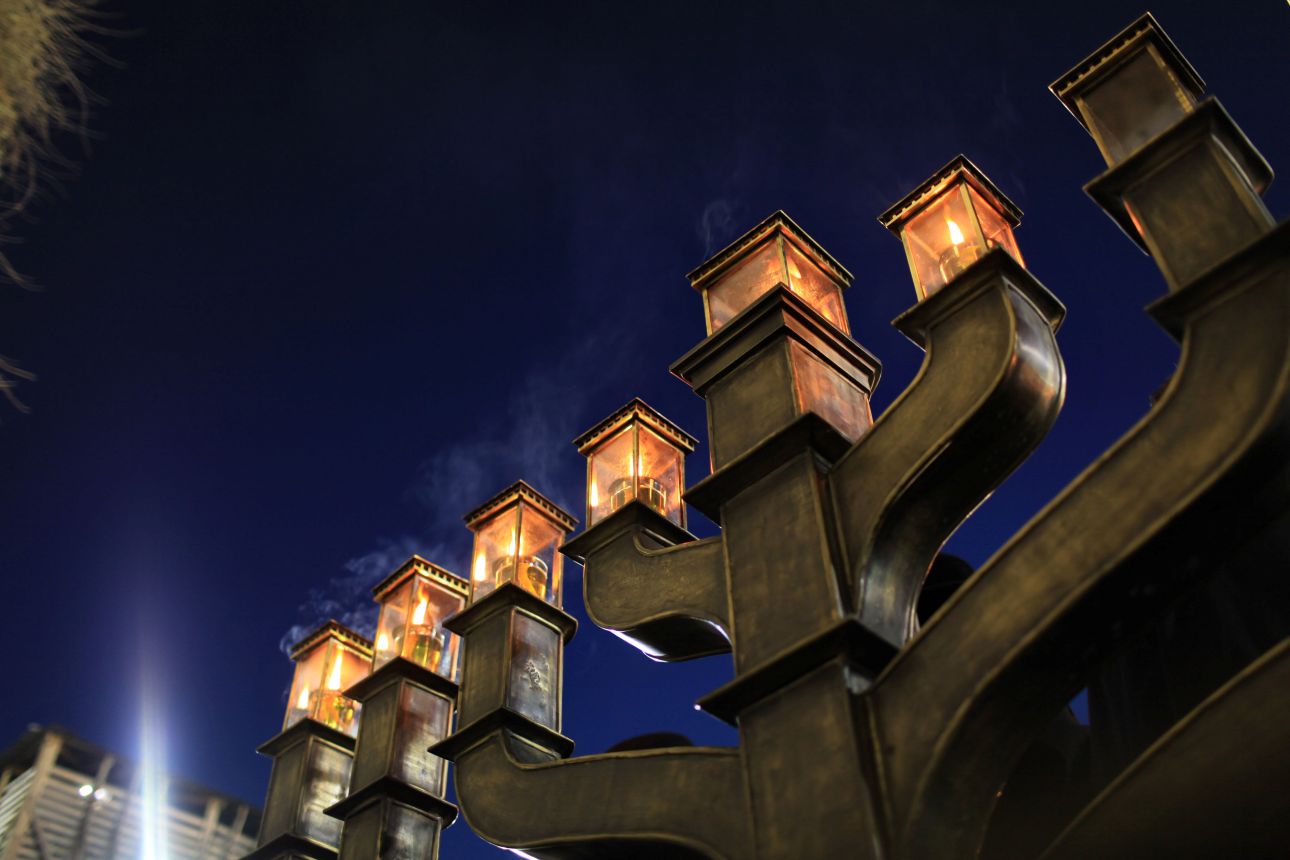
Photo by Kobi Gideon / FLASH90
Dear Friends,
Our latest Israeli Voice Index had a piece of data that provided a window into the mindset of many Israelis today. While much of the world considers the war to be over since the return of the hostages and the announcement of a US-brokered cease fire this past October, Israelis actually think the current situation is more of a lull in fighting. In fact, over 75% of Israelis assume there will be another round of fighting with Hezbollah and Iran, and 58% are convinced that we are heading towards renewed combat in Gaza against Hamas. 67% think that there will be another violent Palestinian uprising in the West Bank in the months ahead.
If Israelis are correct in these gloomy estimations, then the war is far from over. Further protraction of the war will require a difficult balancing act between the country’s domestic and national security priorities. As the emergency of the immediate post-October 7th recedes into the rear-view mirror, it has become increasingly important to balance the obvious focus on military issues with a concerted effort to restore public trust in Israel’s governing institutions and ensure the economy is positioned to support increased outlays on defense.
In my view, the first and long overdue step that must be taken in this regard is the establishment of a State Commission of Inquiry into the surprise attack of October 7th. It is unfathomable that more than two years after the greatest national security failure in our history, Israel's political leadership has not only avoided establishing such a commission, as was routinely done by previous governments since the establishment of the state, but is engaged in a transparent effort to shift all the blame onto the security agencies—all of whom have carried out rigorous, if incomplete, internal investigations, and all of whose heads have since resigned.
The reason Israel established the mechanism of a State Commission of Inquiry is not to search for scapegoats. Rather, it is to identify the root causes of a significant failure in order to ensure that a similar failure does not happen again. Especially if we are headed into a turbulent period of continued military conflict, it is malpractice to postpone a genuine investigation into the October 7th attacks.
Additionally, with Israel destined to remain in a state of heightened military readiness for the foreseeable future, we can no longer rely on the small cadre of men and women currently defending our country. With multiple fronts to defend, the IDF cannot go back to being a "small and smart" pre-October 7th army. Although the Israeli armed forces must remain “smart,” and it would be foolhardy to spend on a huge standing army, there is little question that Israel needs more soldiers—as many as 12,000 immediately, according to the IDF.
In this context, it is high time to end the amoral and unsustainable policy of sweeping service exemptions for ultra-Orthodox men. This may be a difficult political decision, but for anyone who holds the national interest at heart, it is a no-brainer. Nor should this mean the end of Torah studies in Israel. On the contrary: it is wholly fitting that the Jewish State should fund a cohort of outstanding Yeshiva students who will keep pushing the boundaries of Torah learning. We do it for outstanding athletes and musicians and there is no reason not to adopt a similar model for scholars of the Talmud.
Forming a commission of inquiry and beginning to resolve the Haredi conscription conundrum are immediate challenges that must be met. But if we care for Israel's future, we cannot stop there. 2026 will be an election year in Israel. Elections can bring out the worst in societies as candidates seek to deepen division for political gain, but they can also offer an opportunity for growth and renewal.
In the campaign ahead we will do our best to provide the candidates across the political spectrum with the rigorously researched policy ideas that can serve as the basis for what we hope will be a vigorous and substantive debate about ways to make Israel stronger. How can we put our differences aside and guarantee the civil liberties of every Israeli after the upheavals of 2023? What is the best way to bring our Haredi brothers and sisters into the Israeli story in a way that will lead to more equality, and provide a boon for our economic future while also allowing them to preserve their beliefs and traditions? How can we ensure that our government is lean, professional, transparent, and focused on bettering the lives of our citizens? How can we protect Israel and the Jewish people from the pernicious effects of social media in the age of artificial intelligence? These and similar questions will be at the top of our agenda in the coming year.
This week we are celebrating the holiday of Hanukkah. 2,200 years ago, the Maccabees defeated the armies of Antiochus, liberated Jerusalem, and rekindled the flame of the Menorah in the Temple. They then set about reestablishing Jewish sovereignty—building a state. For a time they succeeded. But over the next century infighting and corrupt leadership led to the Roman invasion, the destruction of Jerusalem and two millennia of exile for our people, which ended only with the establishment of the State of Israel.
There can and will be differences among us, but unity in purpose is of paramount importance for a nation under attack. That is a lesson worth bearing in mind as we recover from the war that began on October 7th and resume our own historic attempt renewal and restoration twenty-two centuries after the Maccabees.
Hannukah Sameach and Happy New Year,

Yohanan Plesner
President
The Israel Democracy Institute