

The Dramatic High Court Ruling on Economic Sanctions Against Haredi Draft Evaders
On April 26, 2026, the High Court of Justice ordered the government to take measures to enforce the draft of ultra-Orthodox men into the IDF. This includes both the withholding of certain state benefits and the imposition of criminal proceedings for draft evaders.
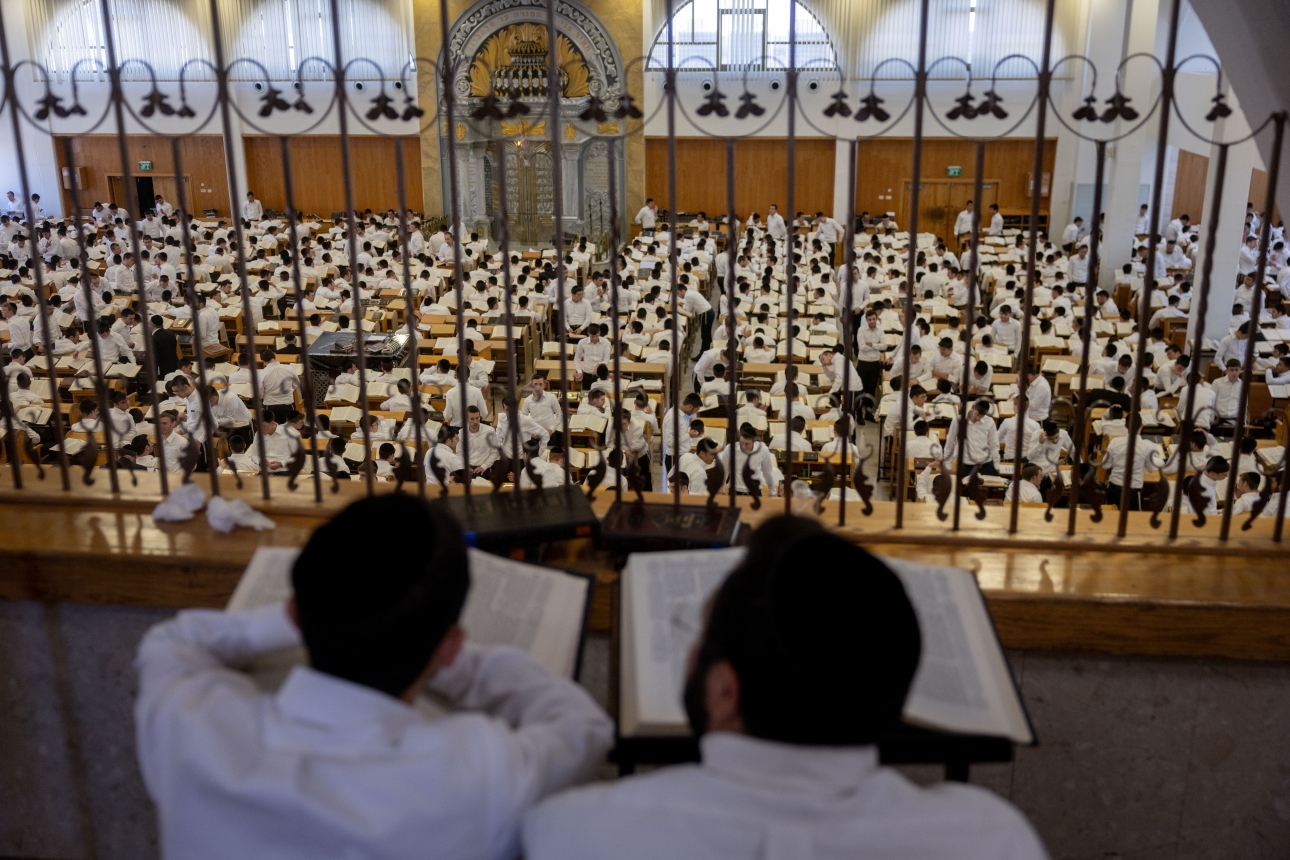
Photo by Chaim Goldberg/Flash90
Why was this a dramatic ruling?
This ruling marks the end of the government’s attempts to drag its feet over enforcing the Defense Service Law which imposes Israel's mandatory draft. For the first time, there is now a change in equilibrium from collective sanctions (such as cuts to yeshiva budgets) to personal economic sanctions that directly affect each individual. This is a paradigm shift: the responsibility for non-enlistment no longer rests solely on Haredi institutions, but also on the draft evaders themselves. While steps have been taken in the past that were felt by individuals (removal of daycare subsidies and of reductions in National Insurance Institute contributions), this ruling places a greater focus on such individual measures than in the past.
What operative steps did the Court impose?
The ruling targets the social safety net received by Haredi draft evaders on three main fronts:
- Housing: Denial of access to “target price” deals for discounted homes, which were received by a high percentage of Haredi yeshiva students under the current government.
- Education: Complete cancellation of subsidies for daycare centers and after-school programs (for preschoolers and elementary school students). There is a dual novelty in this ruling: First, until now, daycare center subsidies were denied solely to yeshiva students who only study Torah and do not work; from now on, they will be denied to all yeshiva students subject to the draft, including those who work. The second innovation relates to subsidies for after-school programs, which are relevant to everyone with children aged 3–9 (whereas the daycare center subsidies affect only those yeshiva students who send their children to such centers).
- Regular expenses: Cancellation of discounts on municipal taxes and public transportation, which constitute a segment of average monthly Haredi expenditures that is not insignificant.
Put simply, the ruling is saying that if you break the law (by avoiding the draft in any way) you are not entitled to these benefits.
What is the most significant impact of the ruling?
The housing issue has the most significant economic impact. In recent years, at least 6,500 Haredi households have received benefits totaling some NIS 3.25 billion. Denying access to housing discounts of approximately half a million shekels per apartment creates a barrier to entry into the housing market for young couples who do not perform military service, and makes the price of draft evasion tangible and immediate.
Does the ruling affect all draft evaders?
Yes, but to varying degrees.
For married men, it constitutes a severe blow due to the removal of subsidies for daycare centers and after-school programs, as well as discounts on municipal tax, which can amount to thousands of shekels per month.
Single men will also be impacted, though in a more limited manner I In addition to losing future access to housing discounts, they will feel the immediate impact of the cancellation of the significant discount on public transportation, which almost every yeshiva student uses on a daily basis, with the value of this benefit amounting to several hundred shekels a month.
How will the government respond?
The response will differ between the political and the professional echelon of the government.
Government ministries are subject to the rapid and rigid timetables set by the High Court of Justice for implementing the decisions contained in its ruling, of between 21 and 35 days, depending on the sanction.
Political leaders are expected to attempt to delay implementation and to advance a new conscription law that will remove the sanctions. However, in light of the short timetable—a matter of weeks—and internal opposition within the coalition (in both the Likud and Religious Zionist parties), the likelihood of successfully passing such a law is currently considered low.
Will the ruling lead to mass Haredi conscription?
The existing sanctions have already led to a certain rise in conscription numbers, from 1,700 to 2,800 in the last year, and their current expansion would be expected to bolster this trend. However, without a comprehensive conscription law that includes complementary measures, and without a widespread sense in the Haredi public and leadership that this is the end of the era of exemptions, it is difficult to foresee a dramatic change in behavior in the short term. The ruling is a necessary first step, but not the last.