

The October 7 inquiry Israel still needs
Israelis will vote on Election Day, more than three years after the October 7 massacre, as some of the most consequential questions about the attack remain unanswered. The establishment of a state commission of inquiry is a critical for the country.
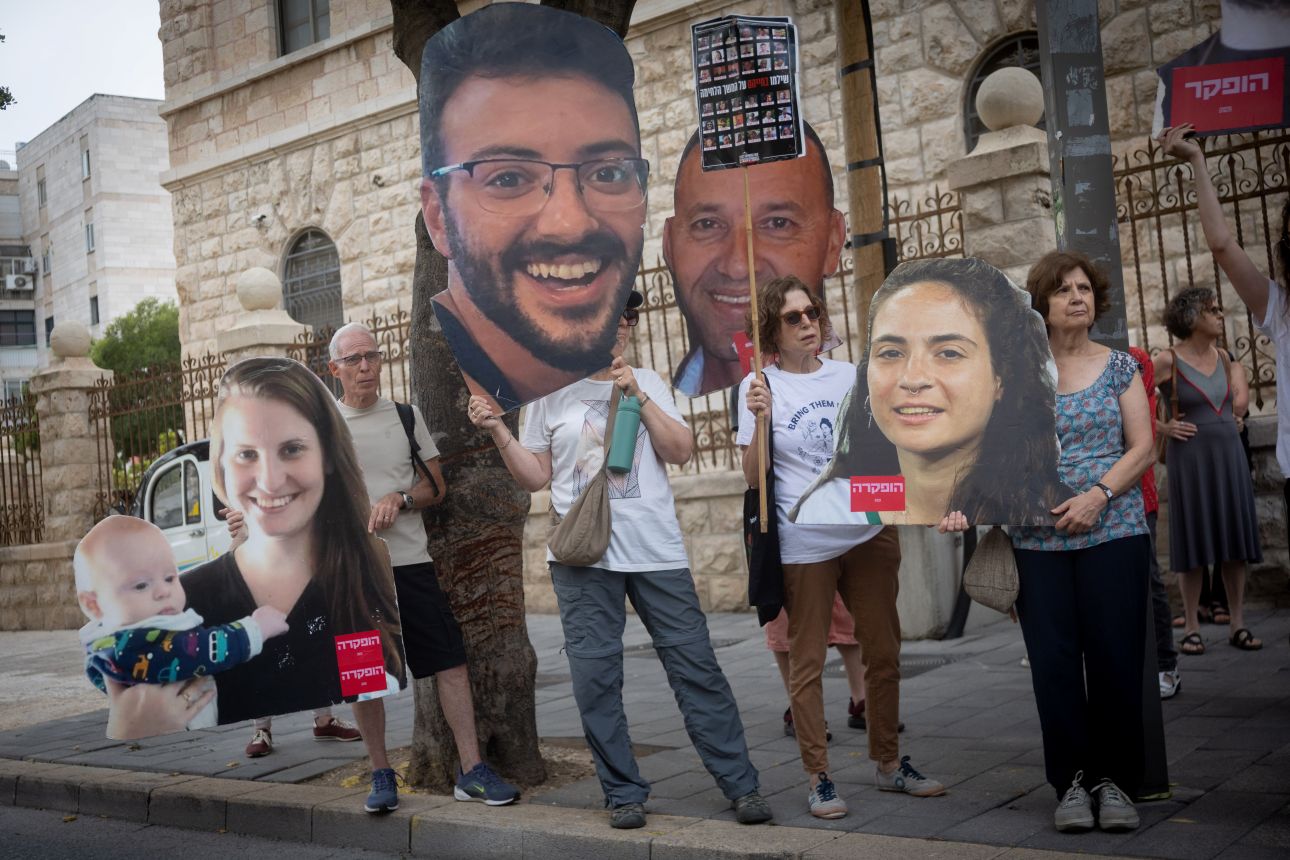
Photo by Chaim Goldberg/FLASH90
On October 27, 2026, Israelis will choose their next government without an independent, authoritative account of the decisions and failures that led to October 7. More than three years after the attacks, some of the election’s most consequential questions remain unresolved: Who bears responsibility, and what must change to protect citizens from another catastrophe? Yet, in a recent Israel Democracy Institute survey, two thirds of Israeli Jews said that the events of October 7th are central to the decision of which party they will vote.
In the days after the massacre, few would have believed Israel could reach this point without establishing a state commission of inquiry. The years since then have brought thousands of testimonies and personal stories. The military has investigated specific incidents in detail. Books have been written, organizations have offered their accounts, and journalists have reported on the warnings Prime Minister Benjamin Netanyahu did or did not receive before the attack. With some accounts conflicting with each other and some questions remaining wide open, Israelis have been left to piece an incomplete picture together as they struggle to understand what happened.
What an inquiry must answer
A state commission of inquiry is the long-standing institution in Israel for investigating matters of national importance. Under the Commissions of Inquiry Law, the government decides to establish a state commission and sets its mandate. Its members, however, are appointed by the president of the Supreme Court. The government thus determines what should be investigated, as governments do elsewhere, while an independent authority chooses the investigators. That division of authority protects the commission’s independence.
Regarding the events of October 7th, a state commission of inquiry would have to examine the full chain of decisions and failures. That means looking at Israel’s policy and strategy toward Gaza and Hamas, how intelligence was collected and assessed, and how it was translated into warnings. It means examining defense arrangements, force development and readiness along the border and in nearby communities.
The inquiry would also need to establish how political leaders, security agencies and civilian authorities divided responsibilities and made decisions. What information did they have in the days and hours before the attack, and what did they do with it? How did the response unfold, from the first hours of the assault until operational control was restored?
Why no commission has been established
No government welcomes an inquiry into its own policies, conduct and judgment, especially one that may find it responsible for failure. Previous governments nevertheless acted out of public duty and integrity. Golda Meir’s government established the Agranat Commission to investigate the Yom Kippur War less than a month after the fighting subsided. Menachem Begin’s government established the Kahan Commission shortly after the Sabra and Shatila massacre. Public, political and international pressure mattered, as did the need to learn from what had gone wrong.
The Netanyahu-led government has deliberately avoided establishing such a commission. Responding to petitions before the High Court of Justice, it initially argued that an inquiry could not begin while the war continued. Later, it claimed the public would not trust a state commission because the Supreme Court president appoints its members and a judge chairs it.
What the Israeli public wants
That claim is hard to reconcile with the polling. In September 2025, 68% of Jewish respondents on the right supported establishing a state commission of inquiry, alongside 85.5% in the center and 97% on the left. Support stood at 74% among Israelis overall, including 75.5% of Jewish respondents and 68% of Arab respondents.
Asked in a December 2025 Israel Democracy Institute survey which mechanism was most suitable for investigating October 7, 55% chose a state commission, compared with 22% who preferred a government-appointed commission. A February 2026 survey asked about the importance of investigating the events: 92% of Israelis said it was important, including 95% of Jews and 76% of Arabs.
Nor does the comparison of public trust favor the government. Trust in the Supreme Court stands at 42% among Jewish respondents, compared with 23% for the government. Among Arab respondents, the figures are 40% and 18%, respectively.
Despite this public preference, the government sought to create a political commission through a private member’s bill. The legislation was not completed before the Knesset was dissolved. Israel already has a statutory arrangement that separates the decision to investigate from the appointment of investigators. The proposed alternative would have put appointments in politicians’ hands, allowing the governing coalition to shape the body investigating its own conduct. That would have been a recipe for burying the truth and politicizing the facts, deepening divisions within Israeli society. The dispute has even opened a rift among families of victims of October 7 and the war.
Why the inquiry matters
Meanwhile, the absence of an independent, professional inquiry with access to documents and testimony has left room for conspiracy theories to flourish. Without an authoritative investigation to establish the facts, false accounts can take on a reality of their own, fueling polarization and incitement.
An independent inquiry is also essential to rebuilding trust in Israel’s political and security institutions. IDI's annual Israeli Democracy Index shows that fewer than a quarter of citizens trust the government; an even smaller share trust the Knesset. A state that investigates its failures, acknowledges mistakes and learns from them helps rebuild trust in institutions.
Some parties have promised that their first decision, if elected, will be to establish a state commission of inquiry. They should keep that promise. The truth becomes harder to establish with each and every delay. To be clear, there are limitations - the investigation will be complex, years may pass before a final report appears and past experience gives little assurance that its recommendations will be implemented promptly, or at all.
Even with those limitations, a state commission can establish the facts, affirm standards of public accountability and draw lessons that help protect citizens. An independent inquiry is essential if Israeli society is to turn the still-bleeding wound of October 7 into a scar.