








Demography
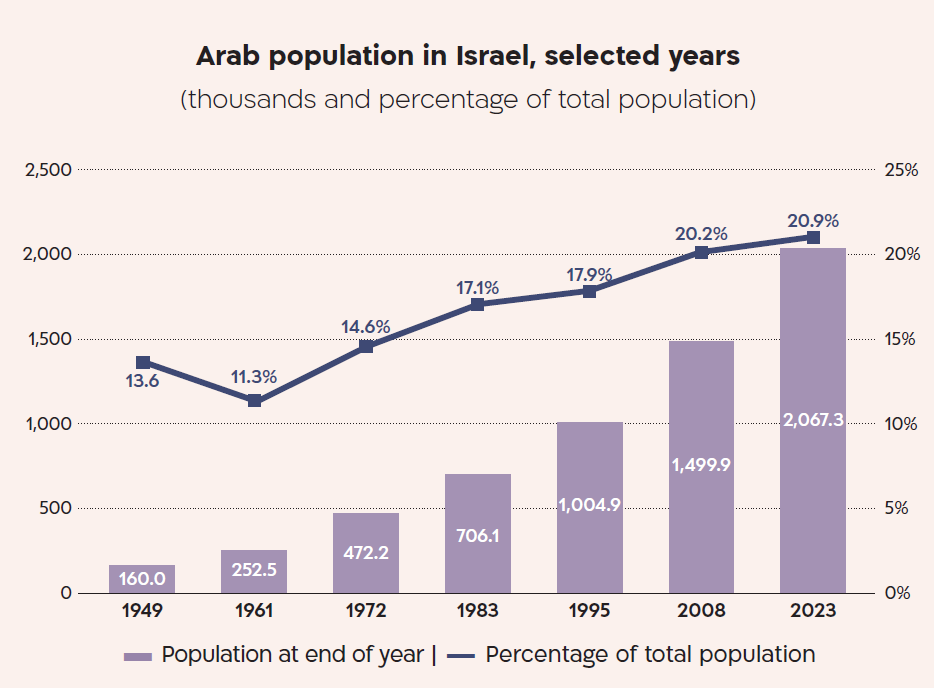
According to data from the Central Bureau of Statistics, the Arab population of Israel stood at approximately 2.1 million at the end of 2023, constituting 20.9% of the total population. This percentage is made up of 17.2% who hold Israeli citizenship and 3.7% who are defined as “permanent residents” living in East Jerusalem.
There are 163 localities in Israel (including 14 cities and 67 local councils) whose residents are all Arab citizens. The two largest Arab cities are Nazareth (77,200 residents) and Rahat (75,700 residents).
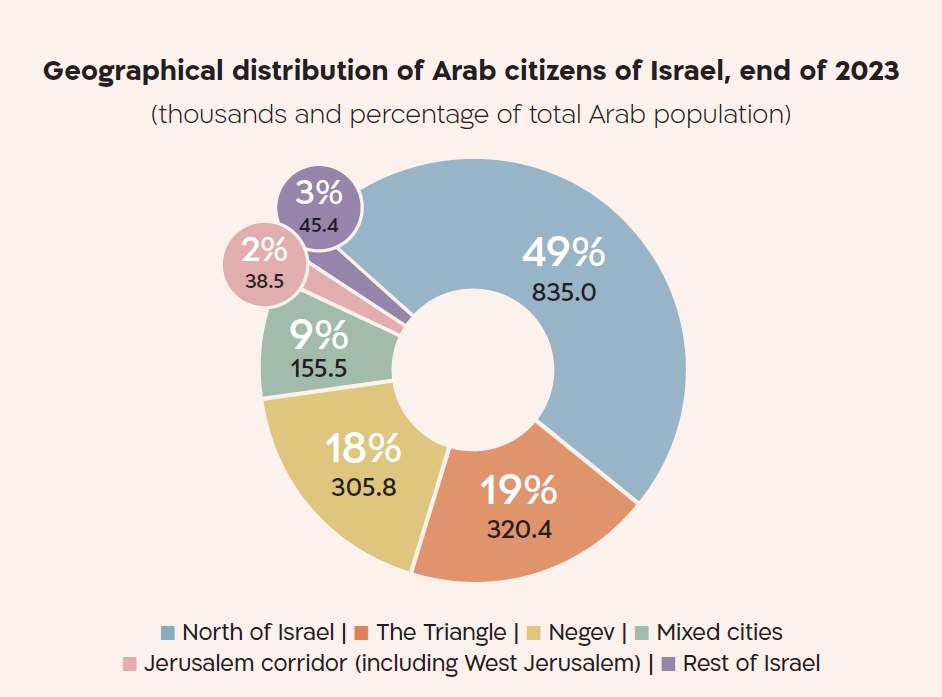
The majority of Arab citizens are Muslims (83.5%), and the rest are Druze (8.9%) and Christians (7.6%). Half of the Arab population (49%, not including East Jerusalem) live in northern Israel, and the rest reside in three main regions: the Triangle (19%), the Negev (18%), and the mixed cities (9%).
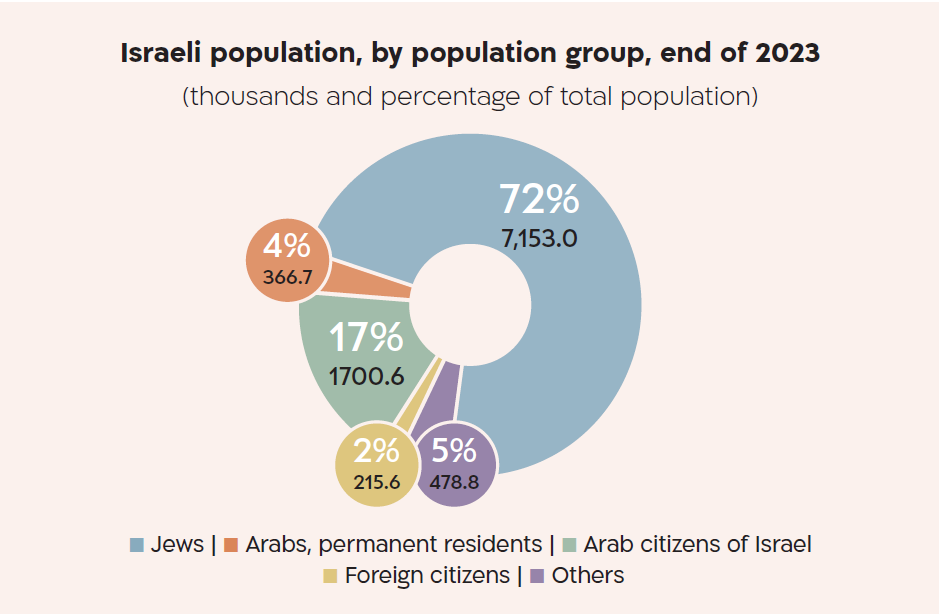
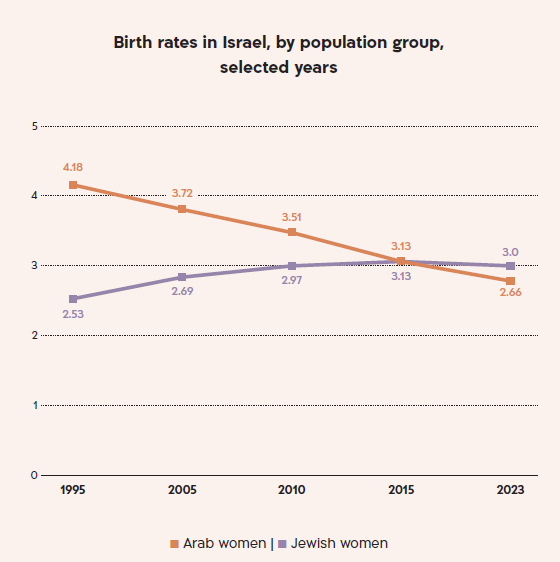
The overall birth rate among Arab women in 2023 (2.66) was lower than that among Jewish women (3.00, including Haredi women). In Arab society, the highest birth rate was measured among Muslim women (2.81), followed by Druze (1.75) and Christian women (1.52).
Due to high birth rates in the past, the proportion of children up to the age of 18 in Arab society (35.2%) continues to be higher than the corresponding proportion in Jewish society (31.4%). The proportion of children among Muslims (36.7%) is higher than that among Druze (27.6%) and Christians (23.6%).
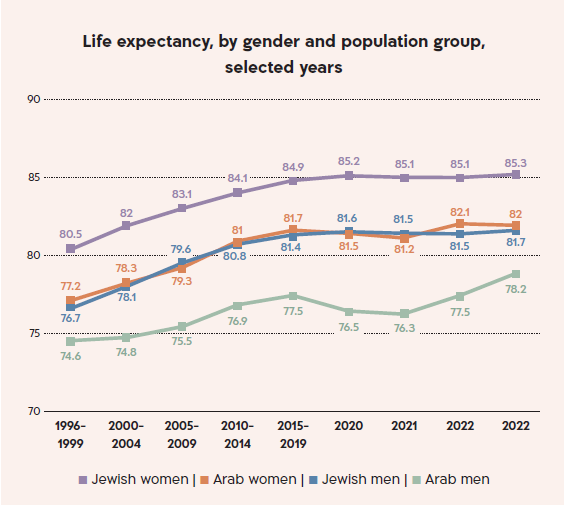
Life expectancy in Arab society is rising steadily thanks to improvements in health indicators, but there is still a clear divide between Arabs and Jews: the life expectancy of men and women in Arab society today is the same as that of men and women in Jewish society two decades ago.
In the period between 2020 and 2023, Israel experienced two dramatic events that negatively affected the life expectancy of the population: the COVID-19 pandemic in 2020–2021 had a negative impact on life expectancy for Arab men, while the Swords of Iron War, which broke out on October 7, 2023, harmed the life expectancy of Jewish men. Both these events slowed the rate of increase in life expectancy for men in both population groups.