The Rise in Voter Turnout in Arab Society in the Elections for the 26th Knesset
The October 27, 2026 elections saw a sharp rise in voter turnout among Israel's Arab population. IDI experts break down the numbers so far and explain the key reasons.
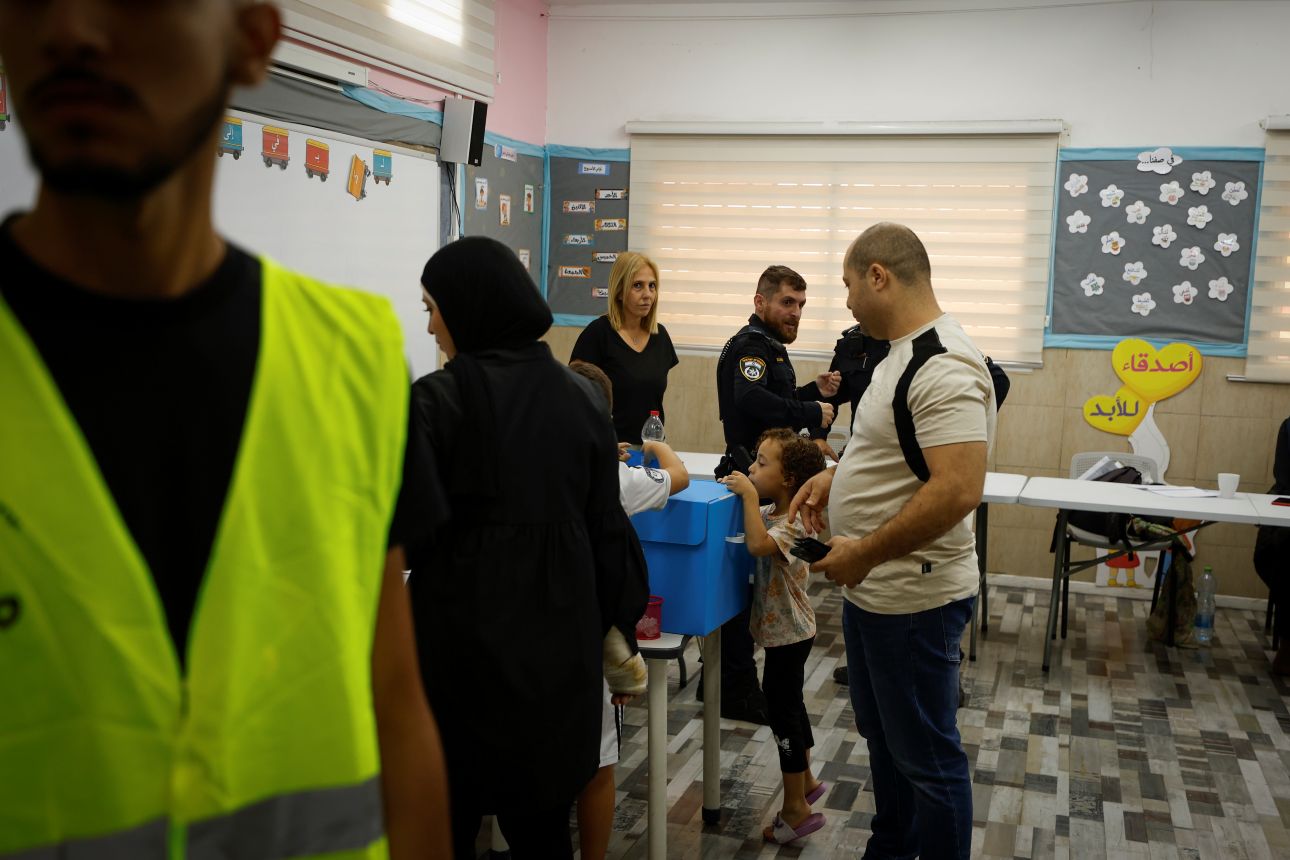
Photo by Jamal Awad/Flash90
The elections for the 26th Knesset have seen what appears to be an extraordinary electoral mobilization among Israel’s Arab minority, reflected in a sharp rise in voter turnout. According to a preliminary analysis of polling station data from Arab and Druze localities, which, at the time of writing this piece, does not include Arab voters in mixed cities, turnout stands at approximately 77% and may even exceed that figure. This is close to the turnout recorded in the 1996 elections and among the highest levels in recent decades. Compared with the turnout rate of 53.2% in the 2022 elections for the 25th Knesset, the initial figures indicate an increase of approximately 24 percentage points—a substantial shift in electoral participation in Arab society.
The increase is particularly striking among the Bedouin population in the Negev. Including the unrecognized villages, voter turnout is approaching 80%, compared with approximately 51% in the 2022 elections. In the unrecognized villages themselves, turnout appears to have risen significantly, reaching approximately 74%, compared with approximately 38% in the previous elections. A similar trend is emerging in the Galilee and northern Israel, as well as in the Triangle region. According to the interim figures, 463,824 of the 608,362 eligible voters in the Arab and Druze localities in the Galilee and northern Israel included in the analysis cast their ballots—a turnout rate of 76.24%, compared with 54.24% in 2022, an increase of 22 percentage points. In the Triangle, 180,629 of 230,512 eligible voters cast their ballots—a turnout rate of 78.36%, compared with 52.49% in the previous elections, an increase of approximately 25.9 percentage points.
Meanwhile, according to the provisional allocation of Knesset seats, based on a vote count that has reached nearly 100%, excluding double-envelope ballots, the Joint List and Ra’am are projected to win a combined 19 seats. According to the parties’ own assessments, this is an exceptional achievement in the history of Israel’s Arab minority. The figures point to a substantial expansion in electoral participation, including among populations that have historically recorded low turnout in previous elections.
One of the main explanations for the high voter turnout in Arab society lies in the cumulative experiences of the Arab minority over the past four years under the current government. Certain government policies, racist remarks from members of the government, and a sense that the status and rights of Arab citizens have been undermined have deepened feelings of alienation and the perception that their ability to exert influence is steadily diminishing. Following the events of October 7, feelings of being silenced and fears of expressing opinions intensified, alongside the perception that the rhetoric and conduct of some officials in government have lent legitimacy to violations of rights and democratic principles. Against this backdrop, participation in the elections can be understood as an expression of the desire to break the cycle of silence and powerlessness, make their voices heard, and work toward change. In this sense, voting reflects more than a party preference; it is also an effort to defend their civic standing and exercise their ability to influence the political reality through democratic means.
A second explanation for the increased turnout is the effective campaigns conducted by the parties, each of which presented Arab voters with its plans for the next Knesset. Ra’am strongly promoted participation in government, persuading Arab voters that their interests would be addressed only if an Arab party became part of the governing coalition. The Joint List presented Arab voters with two objectives: first, to form a blocking bloc that would deny a Netanyahu-led bloc a majority in the Knesset, thereby preventing the right-wing parties from forming the next government; and second, to provide a parliamentary safety net for a government that includes the change bloc, ensuring that even if Arab citizens were not represented in the government, they would still have a say in determining which government takes office.
A third explanation for the increase in voter turnout lies in the exceptional consensus that emerged within Arab society around participation in Knesset elections. It is worth noting that over the past three decades, every election campaign has been accompanied by a political debate within the Arab community over whether voting offers any real benefit and whether participation can be justified from a Palestinian perspective. Until these elections, grassroots groups advocating an election boycott had rejected participation on ideological grounds, arguing that it was unacceptable to confer legitimacy on the parliament of the Jewish state. This time, however, the picture changed. For the first time, voices within these circles also argued that, in the current elections, the benefits of participation outweighed any potential harm or drawbacks. Replacing the right-wing government, they contended, could benefit not only Arab citizens of Israel but also Palestinians in Gaza and the West Bank. Moreover, a new government established with the direct or indirect support of the Arab parties would be compelled to change its policies toward both Israel’s Arab citizens and Palestinians who are not Israeli citizens.
The increase in voter turnout points to widespread political mobilization among Israel’s Arab minority and may also indicate a heightened awareness of its status in the country, its rights, and its ability to influence the political reality. The circumstances described above can be understood as factors that heightened the sense of urgency and the desire for change, reflected in a greater willingness to participate in elections. Choosing the ballot box as a means of expressing the desire for change signals a continued willingness to work within the democratic framework and an expectation that such participation can yield tangible influence. Even against the backdrop of feelings of exclusion and alienation in recent years, there is a clear demand for a role in shaping the country’s future and for the realization of equal citizenship. In this sense, the high turnout carries a political message: Arab citizens want their voices to be reflected in decisions affecting their lives, rights, and status.
This mobilization presents both an opportunity and a test for Israeli democracy, particularly for the parties identified with the change bloc. If the election results allow it, cooperation with the Arab lists could produce a parliamentary majority capable of bringing about a change of government and establishing a government with a broad base of public support. Such a government’s ability to govern over time would depend on political agreements and a partnership grounded in trust, mutual recognition, and a commitment to the interests of all citizens. Realizing this possibility also requires a willingness on the part of the change bloc to recognize the Arab lists as legitimate and equal political partners and to negotiate with them on that basis. For those who present themselves as an alternative to Netanyahu’s leadership and the policies of the bloc he leads, this is a practical test of their commitment to democracy and equality: a willingness to allow Arab citizens and their representatives to play a meaningful role in shaping the agenda, forming the government, and making decisions.
Alongside the responsibility borne by the change bloc, the high turnout and broad mobilization place a considerable responsibility on Arab leadership and the representatives of the Arab parties as well. This mobilization can be seen as an expression of a desire for a change in government, accompanied by expectations for practical solutions to the most pressing problems facing Arab society: crime and violence, social hardship, home demolitions, and the status of the unrecognized Bedouin villages in the Negev. Those who turned out to vote expect the political power they have entrusted to their representatives to translate into improvements in their personal security, living conditions, and ability to exercise their rights. Arab leadership therefore has a responsibility to work toward a political partnership with the change bloc and seriously consider ways of advancing these goals—either by joining the coalition or by providing a parliamentary safety net for the next government. Such a partnership must rest on clear agreements and concrete commitments, backed by budgets and timetables that will allow the public to assess their implementation and results. The broad support received by the Arab lists against the backdrop of extraordinary circumstances demands a corresponding degree of public responsibility, together with political flexibility, creative thinking, and a willingness to consider new courses of action.
- Tags:
- National Elections 2026,
- Elections and Parties,
- Arab citizens of Israel,
- Arab-Jewish relations,
- democracy,
- Election Results,
- Elections,
- Elections in Israel,
- equal opportunity,
- Israeli political system,
- Israeli society,
- political participation,
- political parties,
- Arab Society in Israel
