
A Unity Government: A Remedy for Political Deadlock?
The results of Israel's 2026 elections have brought the possibility of forming a unity government back into public debate. However, cooperation between the main political rivals is neither a simple solution nor one without democratic and electoral costs.
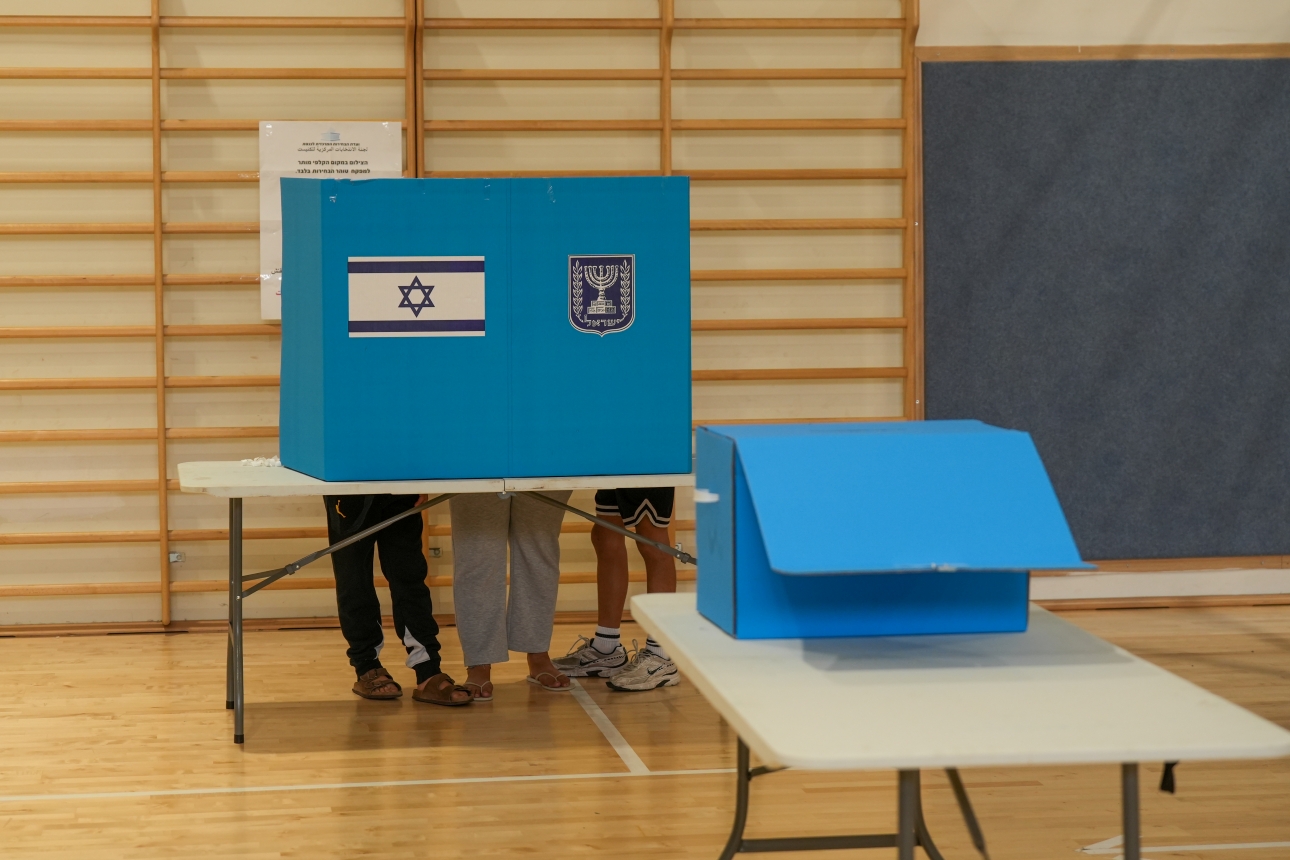
Photo by Ayal Margolin/Flash90
A unity government (commonly referred to in many democracies as a "grand coalition") is a particular form of coalition government with a broad political base. Its defining characteristic is that it includes at least the two main parties in the political system—those perceived as the principal governing alternatives. For example, in 2026, the two largest parties representing alternative governing options are Likud, led by Benjamin Netanyahu, and Yashar, led by Gadi Eisenkot. A coalition formed through cooperation between these parties would meet the definition of a unity government. However, given the highly fragmented composition of the Knesset, even such a partnership would not command a majority. This stands in contrast to the unity governments that served in Israel during the 1980s (see below), when cooperation between the two largest parties was sufficient to establish a broad coalition.
Although cooperation between the two main political forces, typically bitter rivals, is unusual, the political history of established democracies includes several prominent examples of unity governments. Two main factors drive their formation: the need to respond to a national emergency and the need to resolve political deadlock.
Unity governments formed in response to national emergencies are consensus-based governments established in the face of particularly severe security or economic crises. Such governments create a foundation for solidarity and provide the political system with a "timeout," allowing decisions to be made on issues that enjoy broad national consensus.
In other cases, unity governments are formed as a way out of political deadlock resulting from inconclusive elections or from the reluctance of the two main parties to cooperate with extremist parties and thereby grant them legitimacy. This reluctance pushes the mainstream parties toward cooperation as the "lesser of two evils."
Alongside their ability to address national emergencies, overcome political deadlock, and provide stability, unity governments can have significant implications for the political system in a parliamentary democracy. A government backed by a particularly broad coalition gains considerable power, while the parliamentary opposition becomes exceptionally small and weak. This can undermine parliament's ability to exercise effective oversight, to the point that the executive branch may come to regard it as little more than a "rubber stamp."
On the other hand, broad coalition support reduces the need for strict coalition discipline, potentially allowing coalition members to cooperate with opposition members in ways that would not be possible if the balance of power between the coalition and opposition were more evenly matched.
Another characteristic of grand coalitions is that while broad agreement among coalition partners provides a stable foundation for taking far-reaching measures during a crisis, disagreements over other substantive issues, combined with the partners' mutual veto powers, can undermine the government's ability to make decisions and lead to political paralysis.
Moreover, the very existence of a grand coalition is at odds with essential elements of democracy, including political competition, freedom of choice between ideological and policy alternatives, checks and balances between the executive and legislative branches, and the independent identities of political parties. In some cases, participation in a unity government itself amounts to an abandonment of party ideology and pre-election promises, potentially eroding public trust in political parties and their elected representatives.
Since the establishment of the State of Israel, several governments have clearly met the definition of a unity government.
The National Unity Government of 1967
On the eve of the Six-Day War, a national unity government was formed in response to a situation perceived as an existential threat to the State of Israel.
This was essentially an ad hoc expansion of the existing government led by Levi Eshkol, which had been formed following the 1965 elections. The right-wing faction Gahal headed by Menachem Begin and Rafi (headed by Ben-Gurion and Moshe Dayan) joined the governing coalition. Following the 1969 elections, the unity government continued to function as a regular coalition government for approximately another year, until Gahal withdrew in the summer of 1970 over the Rogers Peace Plan.
The National Unity Government of 1984 (The Rotation Government)
This unity government was formed against the backdrop of a political stalemate between the Alignment and Likud blocs. To ensure its survival, unique ad hoc arrangements were adopted, including an inner cabinet with equal representation and mutual veto powers, as well as a rotation agreement for the position of prime minister. Its most notable achievements were reducing inflation and withdrawing the IDF from deep inside Lebanese territory to a narrow security zone.
The Unity Government Following the 1988 Elections
This government emerged from coalition negotiations aimed at finding the least objectionable political arrangement. Political fragmentation, and particularly the growing strength of the ultra-Orthodox parties, generated a wave of public support for the establishment of a national unity government.
The government was headed by Likud's Yitzhak Shamir and, unlike its predecessor, did not include a rotation arrangement for the prime minister. It served for only two years before collapsing in 1990.
"Unity" Governments from 2000 onwards
The introduction of direct elections for prime minister, combined with demographic changes in Israeli society, weakened the major parties and transformed the party system. As a result, it became increasingly difficult to identify two distinct parties that consistently represented alternative governing options. This development effectively emptied the concept of a "unity government" of its meaning.
Consequently, whether the government established by Ariel Sharon in 2001 should be classified as a unity government remains a matter of debate. Although it included what were then perceived as the two principal governing alternatives, both parties had become considerably smaller and weaker: Likud held 19 Knesset seats, while One Israel held only slightly more.
In January 2005, the composition of Sharon's second government changed, once again bringing together the two main parties of the time—Likud and the Labor Party. The principal objective of this coalition, which also included United Torah Judaism, was to implement the disengagement plan.
Israel's 31st government (headed by Ehud Olmert, 2006–2009) and its 33rd government (Netanyahu's third government, 2013–2015) both included the two largest parliamentary factions, but neither was considered a “classic” unity government. In both cases, there was a substantial gap in the number of seats held by the largest and second-largest parties. In the first case, Kadima held 29 seats compared with Labor's 19, while in the second, Likud Beiteinu held 31 seats compared with Yesh Atid's 19.
Moreover, neither government brought together parties separated by major ideological divides. Cooperation between Kadima and Labor was essentially a partnership between a centrist party and a center-left party, while cooperation between Likud Beiteinu and Yesh Atid was fundamentally between a moderate right-wing electoral list and a clearly centrist party.
Since 2015, it can be argued that Israel has returned to a two-bloc party system in which two distinct alternatives for government can be identified. In 2015, these were Likud and the Zionist Union; in 2019–2020, they were Likud and Blue and White.
Under these circumstances, the possibility of forming a unity government returned to public debate, initially as a solution to political deadlock and subsequently as a response to the emergency created by the coronavirus pandemic.
Against this backdrop, Israel's 35th government, the Netanyahu–Gantz government, was sworn in in 2020. It included Likud, parts of the Blue and White faction, and additional parties from both political blocs. Importantly, the circumstances surrounding its formation differed fundamentally from previous cases, primarily because of the growing polarization between the two political camps, which had intensified, among other factors, following the filing of criminal charges against Benjamin Netanyahu.
This polarization was reflected in tightly consolidated and inflexible political blocs, mutual political boycotts ("refusals to sit together"), and deep mistrust. Consequently, the government's formation required a fundamental amendment to Basic Law: The Government, creating an entirely new institutional arrangement known as a "government of alternates." Unlike conventional rotation arrangements, under this model both the prime minister and the alternate prime minister are sworn in when the government is established, and the transition between them takes place automatically on a predetermined date, without the need to swear in a new government.
Although the rival parties in earlier unity governments were hardly fond of one another, the political actors at the time generally respected the rules of the political game. As a result, there was no need to amend Israel's Basic Laws to create a new and rigid model of government in order to sustain a unity coalition.
A brief attempt to establish a unity government also followed the events of October 7. In light of the scale of the disaster and the resulting trauma, calls emerged for the formation of a unity government. Amid the crisis, a form of national emergency government was established just days after the massacre. It did not include Yesh Atid, the second-largest Knesset faction, but rather the National Unity faction, which comprised representatives of Blue and White (Benny Gantz) and New Hope (Gideon Sa'ar).
It is worth noting that, contrary to a common perception, the "Government of Change" formed in 2021 did not meet the definition of a unity government. Although it was an ideologically diverse coalition whose members came together to advance a shared agenda despite their profound political differences, and although it also operated under the government-of-alternates model, it was a very narrow coalition and, for part of its tenure, a minority government. Furthermore, it did not include the two largest parties that represented the principal alternatives for government at the time.
The results of Israel's 2026 elections have once again left the political system in a state of deadlock. Netanyahu's bloc does have a majority sufficient to form a government. The "change bloc" is likewise unable to form a majority government without the participation of Arab or ultra-Orthodox parties. Moreover, because some parties within the change bloc are reluctant to rely on even limited cooperation with the Arab parties, the bloc currently lacks a viable path to forming a minority government as well.
Under these circumstances, some voices in the public debate have called for the establishment of a unity government as a way out of the deadlock and a means of avoiding another election. Some have suggested that President Isaac Herzog may seek to promote such a solution in the event of an inconclusive outcome.
A unity government scenario would require cooperation and agreement between the two "large" parties—Likud and Yashar—which are, in fact, medium-sized parties. Yet even this would not be enough to secure a majority: together, the two parties hold only 48 Knesset seats, meaning that additional coalition partners would still be required.
Even if such an agreement were based on the government-of-alternates model (a model that has since been abolished, with the repeal taking effect from the 26th Knesset), under which Netanyahu and Eisenkot would each serve as prime minister, its prospects for long-term survival would be doubtful. The political experience of the past decade, particularly that of governments built around rotation arrangements and mutual veto powers, raises serious questions about the viability of such an arrangement. Cooperation could also carry a heavy electoral price for the potential partners, given the commitments they made during the election campaign.
Nor did the Israeli public regard a unity government as the preferred solution to an inconclusive election outcome in the period immediately preceding the vote. In a survey conducted by the Israel Democracy Institute several days before the elections, only 28% of Jewish respondents and 9% of Arab respondents preferred a unity government with a rotation arrangement if neither side succeeded in forming a government backed by a Knesset majority.
Approximately one-quarter of Jewish respondents and one-quarter of Arab respondents supported the formation of a minority government, while the most widely preferred option was another election, favored by 35% of Jewish respondents and 46% of Arab respondents.
It is possible that the election results have since changed public preferences, and this warrants renewed examination. Nevertheless, it can generally be said that the Israeli public is not particularly enthusiastic about the idea of a unity government and is similarly reluctant to embrace the possibility of a minority government.
In light of the election results, and as long as neither bloc succeeds in forming a stable coalition, finding a way out of the political impasse will likely require Israeli politics to demonstrate, once again, that it is the art of the impossible.
During World War II, broad national coalitions were formed in several European countries to confront the crisis brought about by the war. The most famous was Winston Churchill's unity government (Churchill's War Cabinet), which brought together virtually the entire political establishment and enjoyed the support of the British public at large. What made this unity government particularly unusual was that it was formed in a country with little tradition of coalition governments.
Between 1945 and 1966, Austria was governed by a grand coalition comprising the country's two main parties: the center-right Austrian People's Party (ÖVP) and the center-left Social Democratic Party (SPÖ). Its purpose was to rebuild Austria following World War II. In 1987, the grand coalition was reestablished to secure legitimacy for unpopular economic and social measures. It has since been renewed several times, primarily as a preventive measure intended to keep the extremist Freedom Party (FPÖ) out of government. Today, Austria is governed by a broad coalition that includes the People's Party, the Social Democrats, and a third, smaller party. Meanwhile, the Freedom Party, which won the largest number of seats in the most recent elections, remains in opposition.
Germany's first grand coalition was formed between 1966 and 1969, with the aim of restoring confidence in the country's economic prospects amid the crisis it was facing. The coalition brought together the two largest political forces at the time: the Christian Democrats (CDU/CSU) and the Social Democrats (SPD). Since 2005, unity governments have become a common feature of German politics, accounting for four of the six governments formed during this period. The growing strength of parties at the political extremes—The Left on the far left and Alternative for Germany (AfD) on the far right—which are not regarded as legitimate coalition partners, has compelled these longstanding rivals to cooperate despite their substantial ideological differences.
Ireland has also periodically been governed by unity governments comprising its two longstanding political rivals, Fine Gael (FG) and Fianna Fáil (FF). The growing strength of the nationalist Sinn Féin party led to cooperation between these rivals and the formation of unity governments following the last two elections, one of which included a rotation arrangement for the prime minister.
In other democracies, political traditions and political culture are less receptive to cooperation between rival parties within a unity government. In countries such as Sweden, Norway, Canada, Australia, and Spain, minority governments are a more common response to inconclusive election results. Such governments are regarded as democratically legitimate, allowing parties to maintain their principles rather than compromise them in pursuit of a coalition majority at any cost.
