











Standard of Living
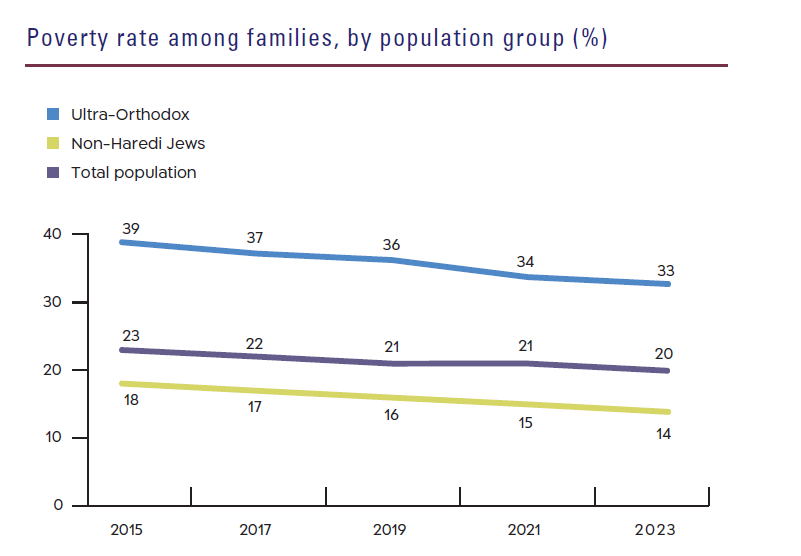
The prevalence of poverty among Israel's ultra-Orthodox population and its impact on the standard of living, is much greater than in the rest of the Israeli population. While there has been a sizable decline in the poverty rate among the ultra-Orthodox since 2015, it remains very high, standing at 33% in 2023—significantly higher than among the rest of the Jewish population (14%).
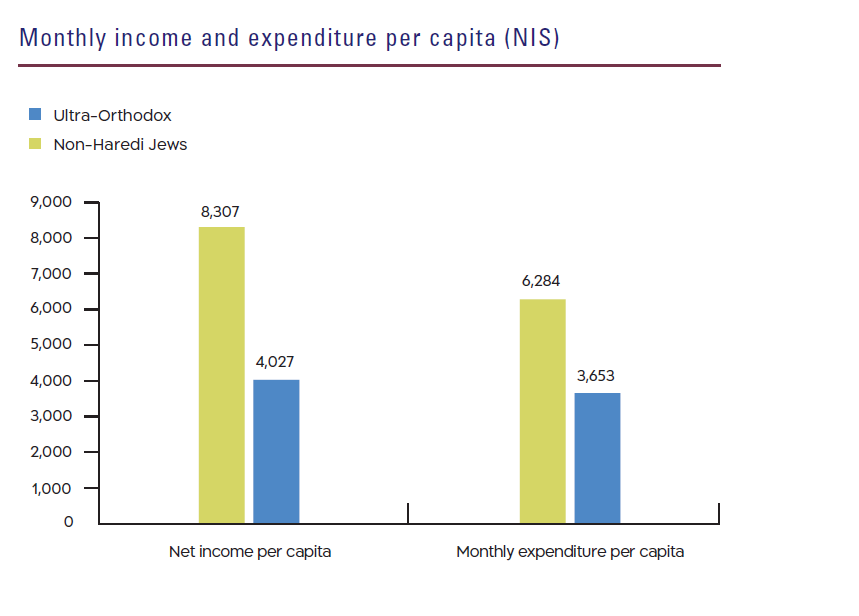
Standard of living is closely linked to household income and expenditures. In 2022, the average gross monthly income for Haredi households was NIS 14,816—far lower than the average for other Jewish households in Israel (NIS 24,466). The factors behind this low level of income include the fact that many households rely on the earnings of a single breadwinner (almost always the woman), working relatively few weekly hours in a low-paying job, and with fewer funds in investments or in pension plans.
An assessment of monthly household expenditure reveals that the ultra-Orthodox spent an average of NIS 3,653 per capita, compared to NIS 6,284 per capita among other Jews. To some extent, these differences can be explained by the ultra-Orthodox consumer culture, which puts a high premium on thriftiness, as well as by consumer outlets for the ultra-Orthodox population, at which shoppers can buy products more cheaply, and even receive them for free on occasion.
The expenditure of ultra-Orthodox households on income taxes, social security and health insurance is on average only 33% of the expenditure of non-Haredi households.
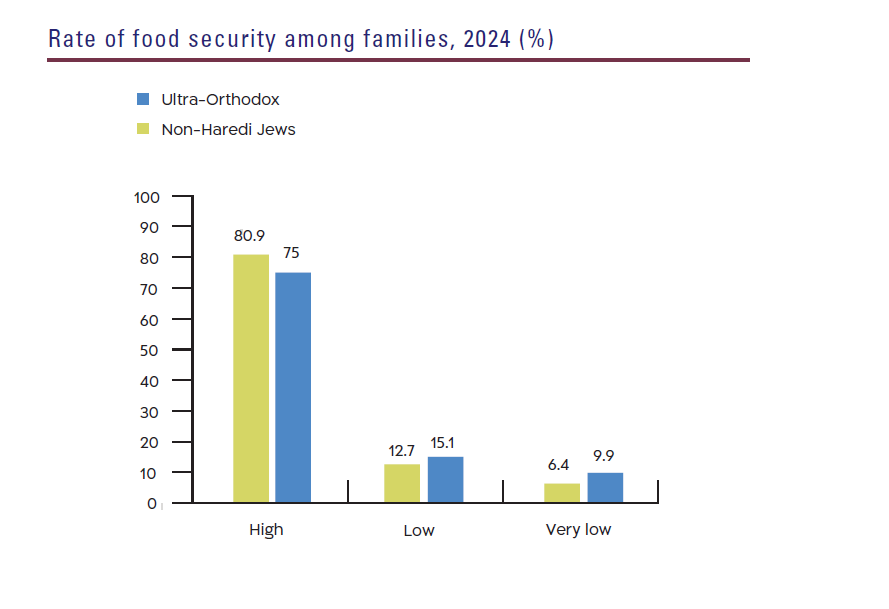
According to the definition of the National Insurance Institute, the level of food security includes the availability of food and of resources for purchasing food, as well as the quality of the food from a sanitary and nutritional standpoint. According to a survey conducted by the National Insurance Institute in 2024, the share of households in the ultra-Orthodox population living in food insecurity (low or very low food security) stands at 25%. This rate is slightly lower than that of the general population (27%), higher than the rate among the non-Haredi Jewish population (19%), but substantially lower than the rate among the Arab population (58%). Research indicates a far higher rate of Haredim live in poverty than the share who experience food insecurity.
In 2024, there was a decline of nearly four percentage points in the share of ultra-Orthodox households experiencing food insecurity compared to 2023 (29%). A decline of a similar magnitude was recorded among households in Israel overall, and the National Insurance Institute’s explanation for these findings is state support for evacuees from the south and the north during the period of the war.