









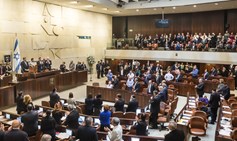
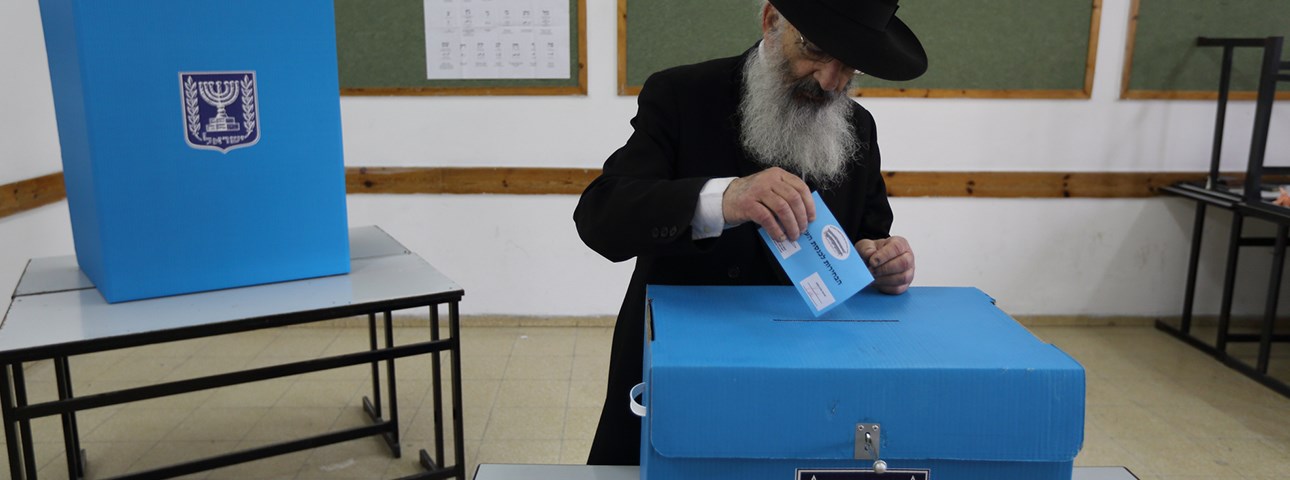
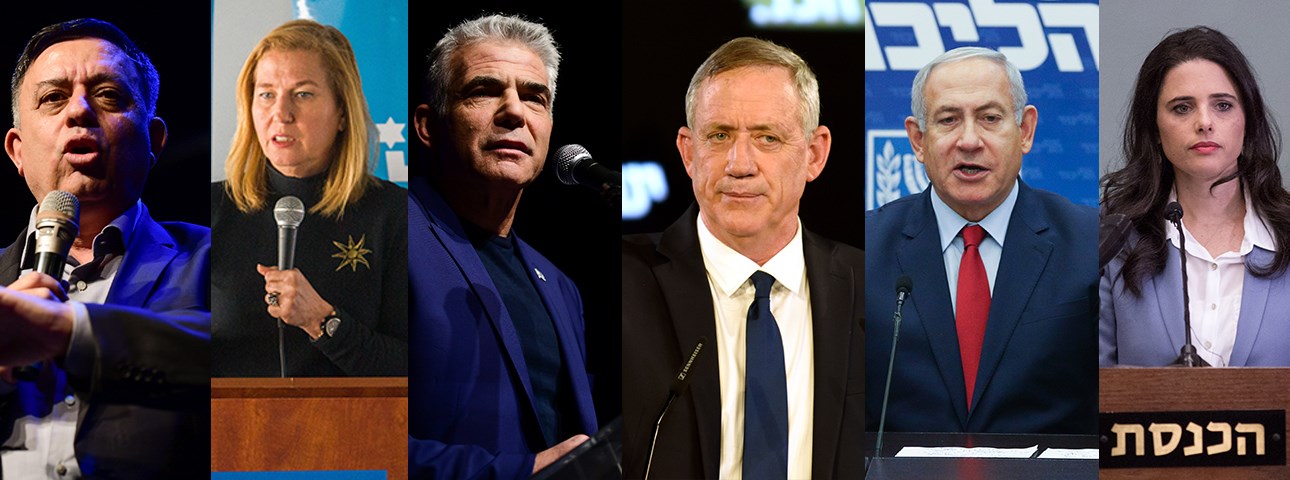









2019 Elections

2019 election campain

It is commonly accepted that in order to defeat Netanyahu, the political parties in the center and on the Left must unite and present a single and clear alternative. However, under the current system, this claim is simply not true.


Running Parties

Articles

As Israel marks Tisha B'Av, we recall that the Prophet Jeremiah manages to hold together pain, accusation, and despair, alongside mutual responsibility, accountability, and hope for the future. In 2026, Israel can learn several lessons from the way Jeremiah chooses to conduct a conversation.

play

As Israel’s 2026 election campaign unfolds, IDI experts are examining the major questions shaping the campaign—and the country’s future. In the latest video in our special election series, Prof. Amichai Cohen, IDI’s newly appointed Vice President of Research, shares three key issues he’s watching.

28% of Israelis think Israel's security is a central consideration for President Trump, down from 44% last month. 72% of Israelis think Israel should maintain a permanent security zone in South Lebanon. A plurality (50.5%) of Israelis think it is inappropriate to advance legislation with a substantive impact on Israel's system so close to elections.

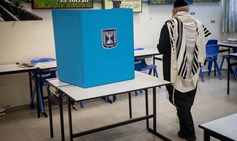
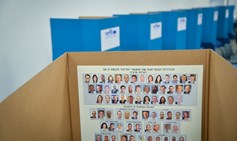
A semi-open ballot system would give voters the chance to express preference for particular candidates on election day, not just a pre-determined party list. This would improve accountability to the voters and resolve many of the shortcomings in the current methods of candidate selection.

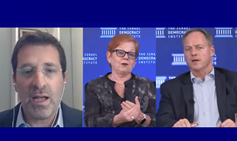
IDI President Yohanan Plesner and Prof. Tamar Hermann, Academic Director of IDI's Viterbi Family Center for Public Opinion and Policy Research, join Dr. Natan Sachs from the Middle East Institute to discuss Israel’s upcoming elections, why they are viewed as especially consequential, the role of Arab parties in future coalitions, and what might change under a different government.

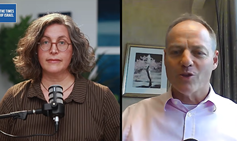
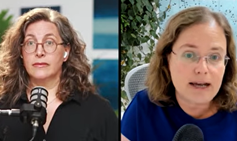
Dr. Tehilla Shwartz Altshuler, Head of IDI’s Democracy in the Digital Age Program, joins host Amanda Borschel-Dan on the Times of Israel weekly podcast, What Matters Now. They discuss how various actors can use AI to flood the public sphere with confusion and disinformation, the potential impact this can have in an election year, and key policy and regulatory steps that can be taken to ensure Israel's democracy is prepared for the AI-era.

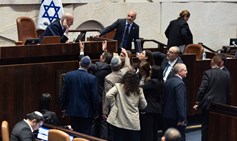
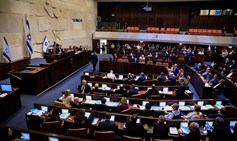
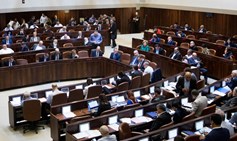
What is the process and timing involved in dissolving Knesset and initiating elections? What happens between a Knesset dissolution and the forming of a new government? Is Israel's process typical compared to other countries? All your questions answered about dissolving Israeli Knesset.

The events of October 7, the judicial overhaul, continuous war, murderous violence on the streets, a spiraling cost of living—none of these have been enough to destabilize the coalition. Will it be the conflict over drafting yeshiva students that ultimately brings down the Netanyahu government?

Expanding the institutional arenas for democratic participation in Israel - through electoral and structural reforms - can help address the growing sense of political helplessness and strengthen the responsiveness of its democratic system. 

An analysis of the potential voting patterns for future elections, voter transitions between parties, and an exploration of the potential electoral power of the Democrats party in upcoming elections. 

Israel is the only OECD member that has neither regional elections nor a personal element in the electoral system. This is not simply a technical issue but has far-reaching implications relating to the quality of representation and the obligation elected officials have toward their voters.

What are the views of Israelis on a range of subjects, and how do these views relate to their decision on who to vote for in the upcoming elections?

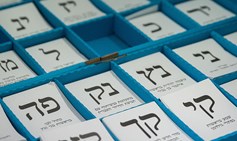
The fourth in a series of articles and videos prepared by the Israel Democracy Institute in the run-up to April 9, explaining and critiquing what goes on during an election period

Such a code will not only prevent corruption, but in addition will prevent serious damage to the government’s image and attacks on law enforcement

Israel has had 12 prime ministers in its 70 years, but none provoked such fierce emotional debates as Netanyahu.

Primaries often don't reflect the true will of actual party supporters -- voters should weigh in on Election Day

What is the secret behind the power of the ultra-Orthodox political parties in Israel and how has it changed over the years? The article presents an overview of the development of the ultra-Orthodox political parties in Israel from the establishment of the State as well as insights as to future developments.

“The great task before all — right and left, religious and secular, Jew and Arab — is to break down the veto power that the extremists among us wield over the center on various fronts”

The Jewish public is divided over the question whether the prime minister should resign if indicted by the Attorney General, pending a hearing; 52% of the Jewish public believes that Israelis living abroad should also have the right to vote

A review of political and ideological streams in Arab society in Israel - towards 2019 elections.

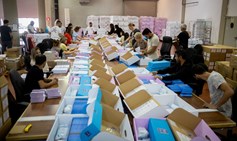
Threats to Israel's Knesset elections - by means of Cyber-attacks are very real, as recent years have seen multiple cases of states intervening in elections in other countries through the use of internet-based technology. This new study aims to map and identify the main threats to the electoral process and to public trust in the election results. 


Democracy is at risk when the responsiveness between the public and its elected representatives is severed. Without accountability, political extremism and populism will become more prevalent.

The majority of Israelis think that Trump’s decision to withdraw from Syria harms Israel’s security and want a right or center-right government. Read more in the latest Peace Index. 

The monthly Peace Index reveals that: 46% of Jewish Israelis name Benjamin Netanyahu as their preferred candidate for the next prime minister.

Israel’s system of local elections has been in place since the 1970s - but is it optimal? Prof. Gideon Rahat proposes reform to enhance the compatibility of the system to the characteristics and needs of different localities.

In an op-ed for the Jerusalem Post, Dr. Shuki Friedman, Head of IDI's Center for Religion, Nation and State, explains how local government plays a critical role in balancing religion and state in day-to-day life in Israel.

The digital domain has developed into something of a wild west for election campaigning in recent years. While there are strict laws governing the press, radio, and television, there are almost no restrictions on online campaigning, such as on the forms of advertising permitted, the use of personal data, and advertising budgets. This lack of regulation has already been shown to potentially affect election results, and may lead to the misuse of information on residents, routinely collected by the municipality as part of its function by those in positions of power in local government. 

"While Israeli national politics get most of the coverage, it is the local level that in many cases has the greatest impact on Israeli lives." Read Yohanan Plesner's op-ed on the upcoming municipal elections and why electoral reform is required, both on the local and national level.

The absolute exclusion of women from ultra-Orthodox parties keeps their specific interests from being addressed effectively in the public sphere.

As of November 22, 2016, Benjamin Netanyahu will have occupied the Prime Minister’s Office for 2,793 days in a row, thereby surpassing David Ben-Gurion for the longest continuous tenure as premier in Israeli history. 

In an op-ed in Maariv, IDI Vice President Prof. Mordechai Kremnitzer calls for an election campaign that focuses not only on foreign policy and Israel's social gap, but on the nature of Israeli identity and the value of Israeli democracy itself.

As the 2014 presidential election draws near, once again there have been calls to do away with the institution of the presidency. Is the President of Israel an unnecessary position or a vital symbol? IDI researcher Dr. Dana Blander analyzes the two sides of this question.

Dr. Ofer Kenig presents some of the milestones in the career of Ariel Sharon, the 11th Prime Minister of the State of Israel.

Tomorrow's elections will determine the local government in 251 cities, towns and municipalities. Of all the political parties represented at a national level in Israel, the ultra-Orthodox parties are the most successful in local government. What are the reasons behind this interesting trend? Read Dr. Gilad Malach's fascinating findings.

Recent years have seen the emergence of dozens of corruption scandals involving local government in Israel. Subsequently there have been calls to set mayoral term limits to prevent graft and corruption. Dr. Ofer Kenig and Shahaf Zamir's dispel the idea that there is a connection between the length of a mayors term and levels of corruption.

Hungary's incoming prime minister declared his intention to institute term limits for the prime minister – an exceptional move for a parliament. While similar ideas have been proposed in Israel, term limits are not a substitute for strong democratic institutions based on oversight and checks and balances.